

Patients and residents in care homes, hospitals and hospices will no longer be cut off from family and friends except in genuinely exceptional circumstances, under a new government drive to strengthen visiting rights across all health and care services.
The move follows a government review which found that too many people were still facing unnecessary barriers to visiting, including blanket restrictions, unclear rules and being excluded from decisions about their loved ones’ care.
Although health and care providers are already required to allow visiting, the review found widespread problems, including:
- Families being denied access to vulnerable patients
- Residents and relatives being excluded from decisions around restrictions
- Blanket visiting bans being imposed rather than case‑by‑case assessments
Ministers say this must change, stressing that contact with loved ones is essential to wellbeing, dignity and person‑centred care, and can significantly reduce the emotional harm caused by isolation.
To secure consistent practice nationwide, the government will distribute comprehensive resources to all care homes, hospitals and hospices. These include:
- A visiting‑rights explainer sheet/poster detailing people’s rights under Regulation 9A, plus information on how to complain if those rights are not upheld
- Draft advice for providers to help them clearly explain any necessary restrictions to residents, patients and families
- A public‑facing decision‑making map, setting out what providers must consider before restricting visits
These tools will be co‑produced with people with lived experience, ensuring they reflect the realities faced by families and patients.
To ensure visiting rights are upheld, the government will work closely with the Care Quality Commission to monitor how settings implement the new guidance.
The CQC will have a strengthened role in assessing whether providers are making proportionate, person‑centred decisions, are following the decision‑making process consistently, and have appropriate policies in place that align with national guidance.
Where providers fall short, the CQC will be able to intervene, ensuring that visiting restrictions are always justified, time‑limited and transparent.
Ministers emphasise that meaningful contact with loved ones must be considered a core aspect of high‑quality care, not an optional extra.
The government is examining future legislation to enshrine visiting rights in law, strengthening the framework further and embedding a culture of openness across health and social care. The proposed reforms would make the right to be supported by loved ones a consistent expectation in all settings.
Stephen Kinnock, Minister of State for Care, said:
“No one should be separated from their loved ones unnecessarily. Contact with family and friends should not be seen as a luxury but a basic part of good care.
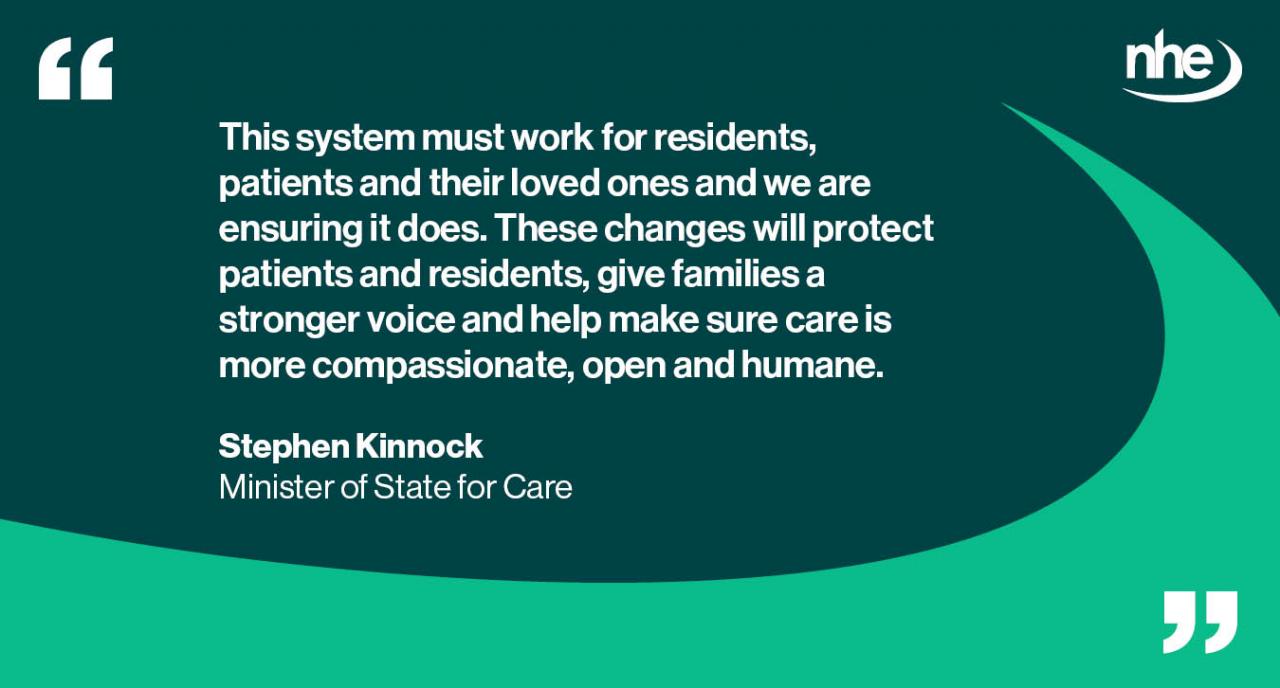
“This system must work for residents, patients and their loved ones and we are ensuring it does. These changes will protect patients and residents, give families a stronger voice and help make sure care is more compassionate, open and humane.”
The reforms reflect lessons learned from the pandemic and its aftermath, when restrictions often remained in place long after the need for them had passed.
By prioritising compassion, dignity and family connection, the government aims to make sure no one in a care home, hospital or hospice faces serious illness – or the end of life – without access to the people who matter most.
Image credit: iStock