

The Medicines and Healthcare products Regulatory Agency (MHRA) has today, 10 April 2026, approved olezarsen (Tryngolza) for the treatment of adults with familial chylomicronemia syndrome (FCS), a rare and potentially life‑threatening inherited condition.
The approval marks an important step forward for people living with FCS, a disorder characterised by severely elevated levels of triglycerides in the blood. FCS is a rare genetic disease that causes the body to be unable to properly break down fats, leading to extremely high triglyceride levels.
These abnormal fat levels can trigger acute inflammation of the pancreas (pancreatitis), which can cause:
- Severe and recurring abdominal pain
- Long‑term pancreatic damage
- Life‑threatening complications
Managing the condition can be challenging, often requiring strict dietary control alongside medical treatment.
The treatment is used alongside a controlled, low‑fat diet, which remains a core part of managing FCS.
The MHRA’s approval follows results from a key clinical study involving 66 adult patients with familial chylomicronemia syndrome.
All participants followed a controlled diet and were randomly assigned to receive either Tryngolza or a placebo.
After six months of treatment:
- Patients receiving Tryngolza experienced an average reduction in triglyceride levels of 32%
- Patients in the placebo group saw an average increase of 12%
The benefits of treatment were shown to be maintained and further improved after one year of use.
Importantly, patients treated with Tryngolza also experienced fewer cases of acute pancreatitis, one of the most serious complications associated with FCS.
The approval of olezarsen provides a new therapeutic option for adults with this rare inherited condition, where treatment choices have historically been limited.
Julian Beach, MHRA Interim Executive Director of Healthcare Quality and Access, said:
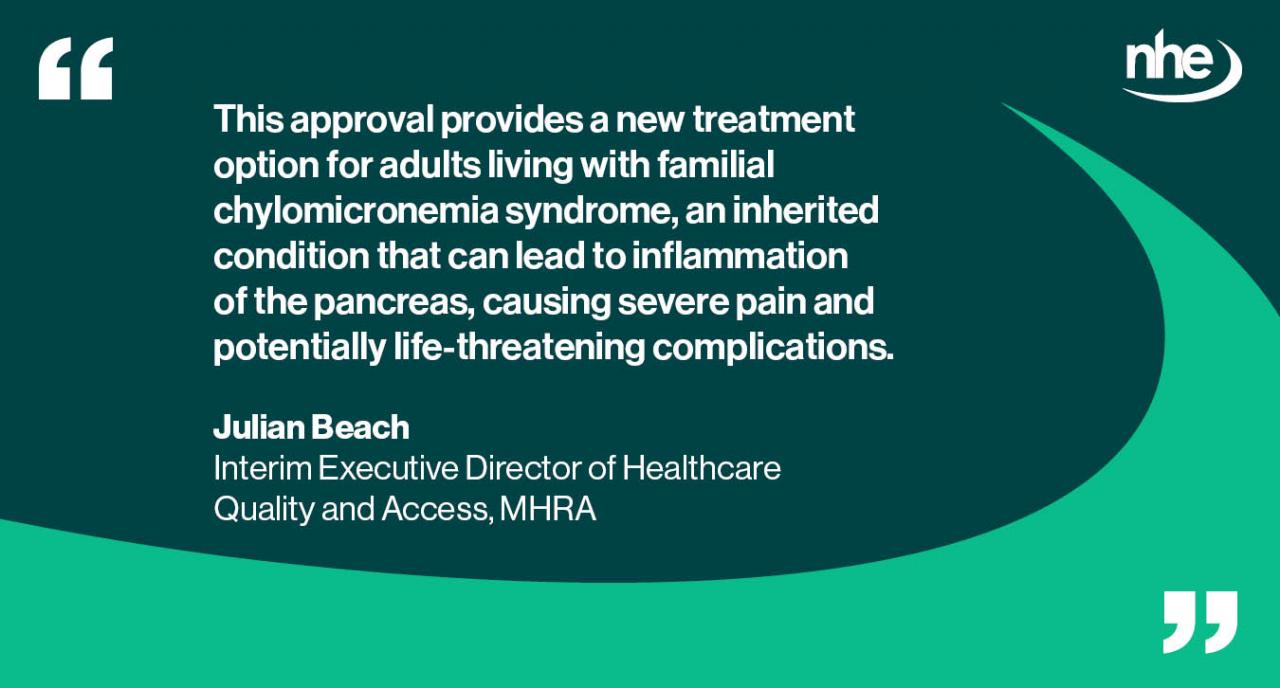
“This approval provides a new treatment option for adults living with familial chylomicronemia syndrome, an inherited condition that can lead to inflammation of the pancreas, causing severe pain and potentially life-threatening complications.
“As with all medicines, we will continue to closely monitor the safety and effectiveness of olezarsen as it is used more widely.”
By significantly reducing triglyceride levels and lowering the risk of pancreatitis, the MHRA said the treatment has the potential to improve clinical outcomes and quality of life for people living with familial chylomicronemia syndrome.
The decision reflects the regulator’s ongoing commitment to ensuring patients with rare and serious conditions have access to safe and effective medicines, supported by robust clinical evidence.
Image credit: iStock