
The government has welcomed new guidance designed to help GPs and other healthcare professionals spot the signs of childhood abdominal cancers sooner, reducing delays in diagnosis and improving outcomes for young patients.
The guidance has been launched through the Child Cancer Smart campaign, led by CCLG: The Children & Young People’s Cancer Association, and includes new referral guidelines, decision support tools for clinicians, and symptom lists for families.
Childhood abdominal tumours can be particularly difficult to detect because symptoms often overlap with common childhood illnesses, such as stomach pain, bloating or changes in appetite.
As a result, diagnosis can be delayed, allowing cancers to progress before treatment begins. The new Child Cancer Smart guidance aims to shorten diagnosis times for under‑18s, ensuring children receive appropriate assessment and referral as early as possible.
The work has been supported by funding from an NIHR Doctoral Award, underlining its evidence‑based approach and national importance.
Research has shown that some abdominal cancers are diagnosed later in the UK compared with other European countries.
In particular, kidney tumours and neuroblastoma have been found to be larger or more advanced at diagnosis in the UK than in other EU nations. Experts have linked this to delays in recognising symptoms and referring children for specialist care.
By improving awareness among healthcare professionals and families, the new guidance seeks to address this gap and support faster diagnosis.
The Child Cancer Smart campaign has developed clear referral guidelines to support GPs and clinicians in identifying when symptoms may warrant further investigation.
Alongside this, decision support tools have been introduced to aid clinical judgment, helping healthcare professionals distinguish between common illnesses and potential warning signs of cancer.
These tools are intended to support consistent, confident decision‑making in primary care and reduce missed opportunities for early referral.
Recognising that parents and carers play a vital role in early detection, Child Cancer Smart has also created abdominal tumour symptom lists for families.
These resources are designed to help parents:
- Understand potential warning signs
- Recognise when symptoms persist or worsen
- Seek medical advice sooner if concerned
The campaign hopes this will empower families to advocate for their child and support timely conversations with healthcare professionals.
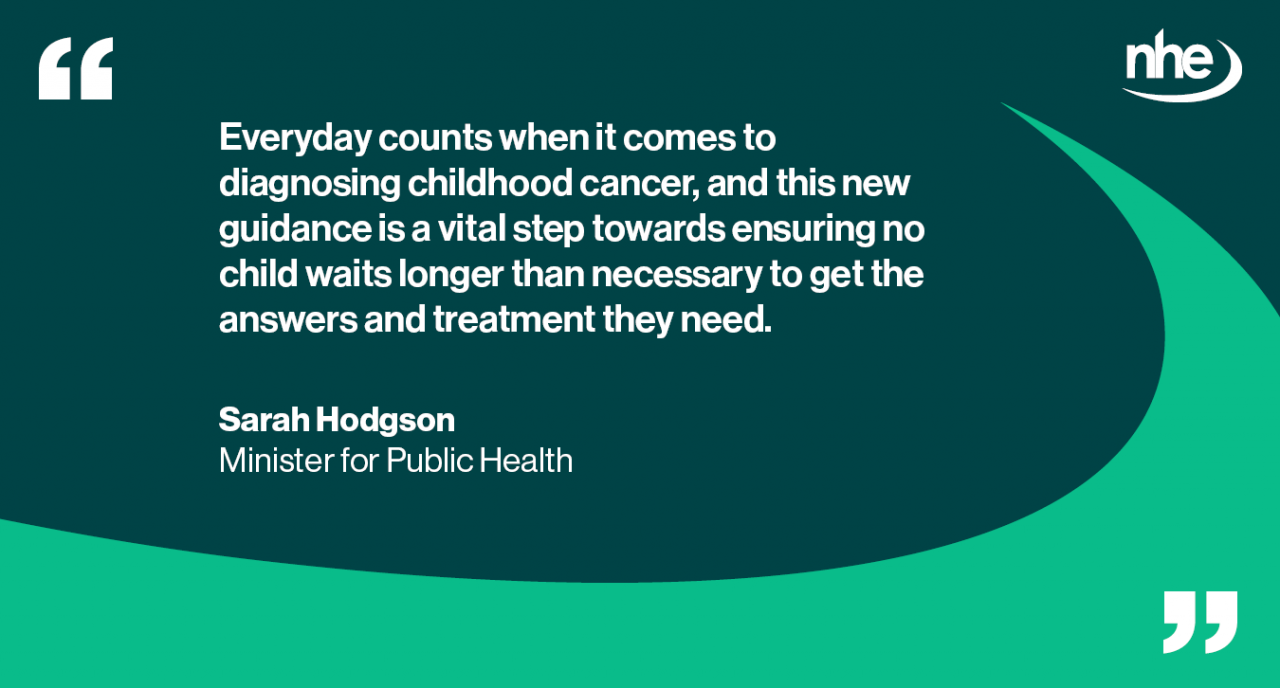
Sharon Hodgson, Minister for Public Health, said:
“Every day counts when it comes to diagnosing childhood cancer, and this new guidance is a vital step towards ensuring no child waits longer than necessary to get the answers and treatment they need.
“Our National Cancer Plan sets out an ambitious goal - for three in four people diagnosed with cancer in 2035 to be cancer-free or living well after five years. Early diagnosis is fundamental to achieving that.
“I want to thank CCLG and the researchers behind Child Cancer Smart for their tireless work in equipping GPs and families with the tools to spot the signs sooner. We’re committed to supporting the brilliant science and dedicated professionals who make that possible.”
Earlier diagnosis is critical in childhood cancer, where outcomes can vary significantly depending on how advanced the disease is at the point of detection.
By equipping GPs, clinicians and families with clearer guidance and practical tools, the Child Cancer Smart campaign aims to reduce diagnosis delays, improve survival rates and ensure children and young people receive the right care at the right time.
Image credit: iStock