

Researchers at the University of Manchester have developed and evaluated a new tool to help people with dementia transition more safely and smoothly from mental health hospitals back into their communities, improving communication, safety and person‑centred care.
The project, known as SAFER‑Dem, has been shown to improve discharge processes, align care with national best‑practice guidance and address the specific needs of people living with dementia at a critical point in their care journey.
The study was funded by the National Institute for Health and Care Research through its Three Schools Dementia Career Development Award and the NIHR Greater Manchester Patient Safety Research Collaboration.
Moving from hospital back into the community can be a confusing and distressing experience for many people with dementia. Patients and their families frequently report feeling excluded from decisions and unprepared for what comes next.
Common concerns highlighted by patients and carers include:
- Poor communication, such as unclear information about next steps or how to manage new medications
- Feeling ignored, with patients reporting little involvement in decisions about their own recovery
- Overwhelming environments, where busy mental health wards make it difficult to absorb important information
These challenges can increase anxiety, undermine patient safety and place additional pressure on families and carers following discharge.
To tackle these issues, researchers worked closely with people living with dementia, unpaid carers and mental health hospital staff to co‑design a simplified checklist and guidance specifically tailored to dementia patients.
The result is the SAFER‑Dem care bundle – a clear, accessible tool designed to support better conversations, shared decision‑making and a more person‑centred discharge process.
SAFER‑Dem builds on existing NHS initiatives designed to improve patient flow, safety and quality of care:
- The NHS Improvement SAFER patient flow bundle, created to reduce delays and improve safety in adult inpatient wards
- SAFER Mental Health (SAFER‑MH), which adapted the NHS SAFER bundle to meet the needs of mental health settings
- SAFER‑Dem, the latest evolution, co‑designed to be clearer, simpler and fully dementia‑inclusive
This step‑by‑step development ensures the tool is rooted in proven safety principles while being accessible to people with cognitive impairment.
Participants in the study reported that SAFER‑Dem helped to improve communication between patients, carers and staff, encourage shared decision‑making, and make hospital discharge feel more person‑centred and supportive.
By focusing on the needs of people with dementia, the tool helps ensure care planning is clearer, more compassionate and better aligned with individual circumstances.
Researchers also noted that people with more severe dementia may require additional help and may not always be able to use the materials independently. The findings underline the importance of flexibility, with carers and staff playing a key role in supporting understanding and engagement.
University of Manchester Research Fellow, and Leader of the Study, Dr Natasha Tyler commented:
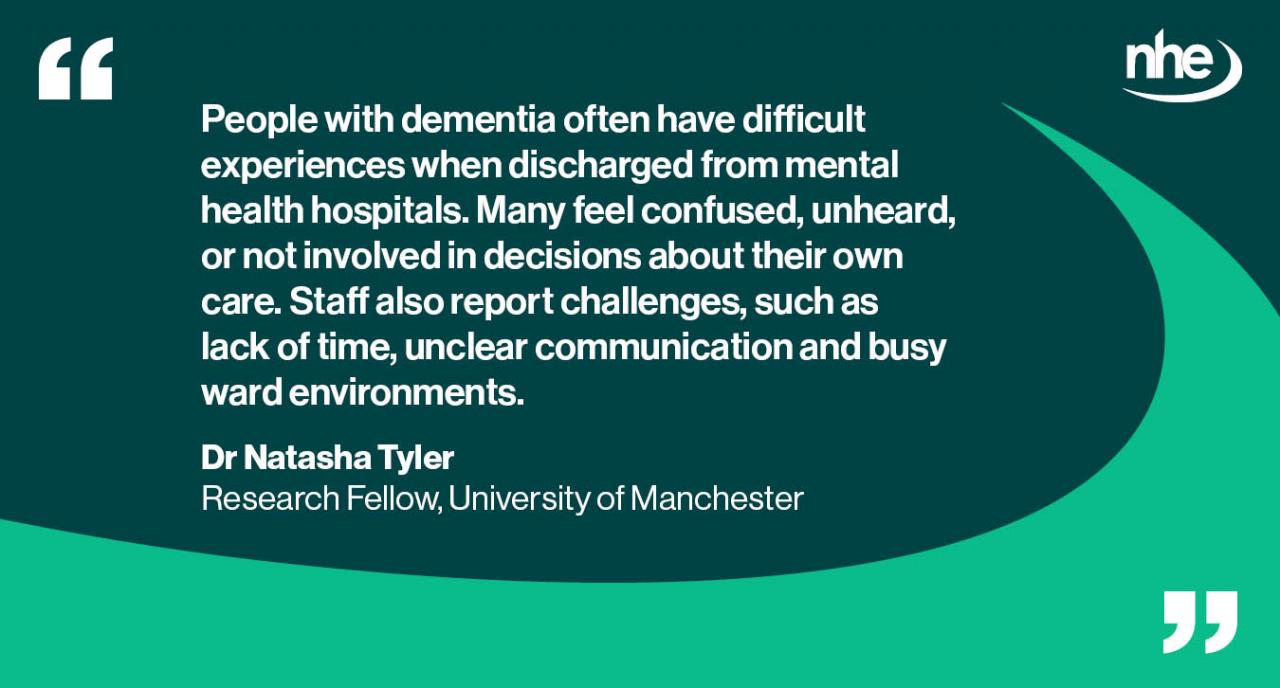
“People with dementia often have difficult experiences when discharged from mental health hospitals. Many feel confused, unheard, or not involved in decisions about their own care. Staff also report challenges, such as lack of time, unclear communication and busy ward environments.
“We worked directly with people living with dementia, unpaid carers, and healthcare professionals to help improve the discharge process from hospital to community for people with dementia. Our study participants took part in workshops and interviews, where they tried out early versions of the SAFER Dem materials and gave feedback.”
The SAFER‑Dem project represents an important step in improving patient safety and experience for people living with dementia within mental health services. By embedding co‑production, clarity and compassion into discharge planning, the tool supports safer transitions, better outcomes and improved confidence for patients and their families.
Researchers hope the findings will inform wider adoption and adaptation of dementia‑inclusive discharge practices across the NHS.
Image credit: iStock