
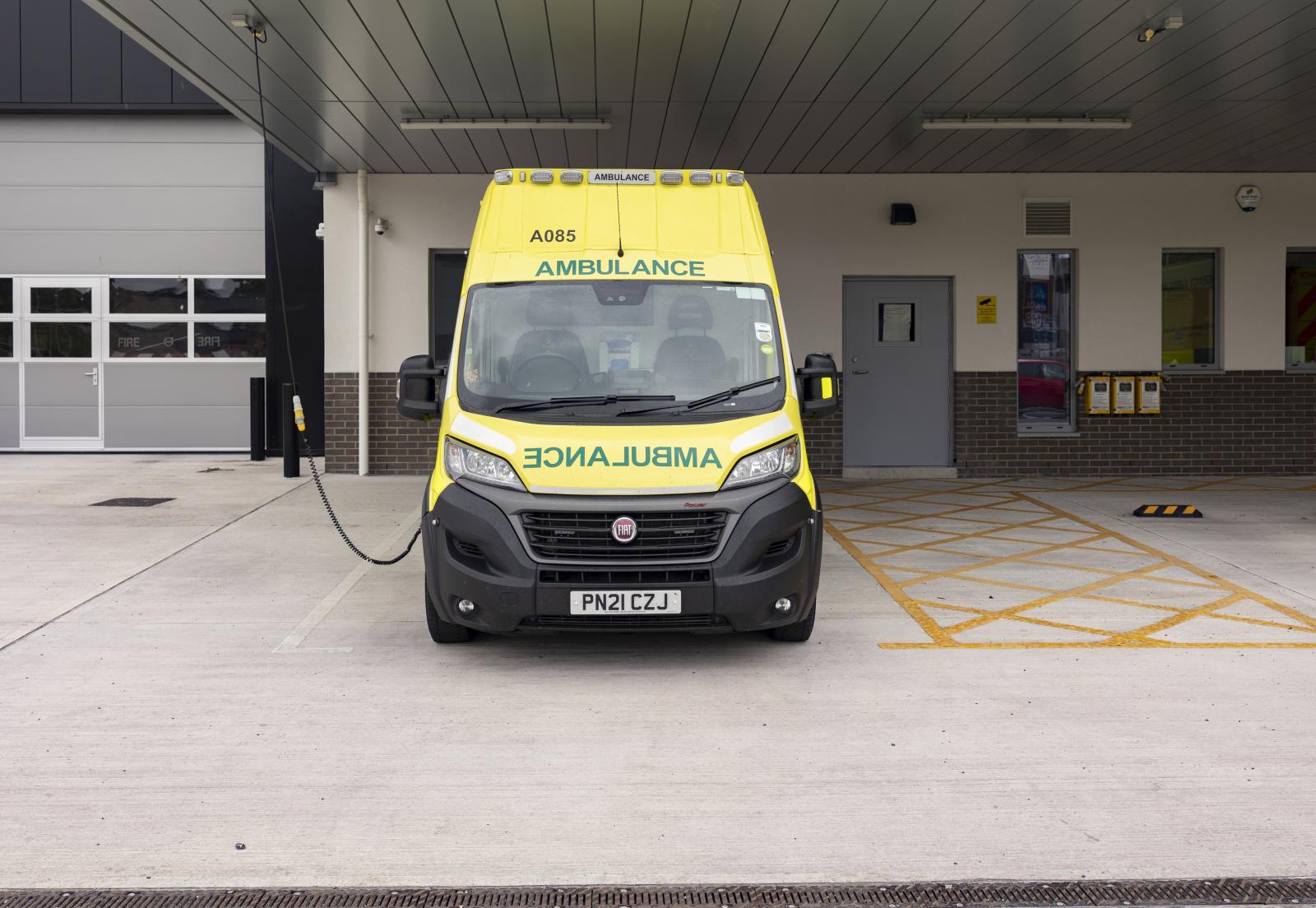

The NHS in England will receive a £4 million funding boost to install hundreds of new electric vehicle charging sockets, following an extension to the Department for Transport’s NHS Chargepoint Accelerator Scheme, announced on 27 February 2026.
This latest investment builds on previous government support that has already delivered over 1,000 EV charging sockets, helping to power electric ambulances and NHS fleet vehicles. The move is expected to save the NHS millions in fuel and maintenance costs, freeing up funds for frontline care.
The announcement brings total government investment in NHS charging infrastructure to £22 million, including:
- £10m awarded to NHS trusts by the Department of Health and Social Care last month
- £8m from the Department for Transport in 2025
- £4m from today’s funding extension
The NHS operates a fleet of around 20,000 medical vehicles and covers approximately 460 million miles of travel each year. The expanded charging network will support the health service in modernising its vehicles and cutting emissions.
Savings generated through fleet electrification will contribute to the government’s wider work to create a more efficient, modern healthcare system, supporting progress such as:
- 5 million additional outpatient appointments delivered in the past year
- A reduction of 330,000 people on waiting lists since July 2024 – the lowest level in three years
To see the impact of existing EV investment, EV Minister Keir Mather visited the London Ambulance Service HQ in Waterloo, where government funding has already supported charger installation as part of the green transformation of the fleet.
The government says electrifying NHS vehicles helps reduce wasteful spending, increases productivity, and ensures value for taxpayers.
Karin Smyth, Minister of State for Health, said:
“With cleaner vehicles and lower fuel bills for the NHS, everybody wins. Savings made from this investment will be redirected back to where they’re needed – getting patients seen on time again.
“With taxpayers getting more bang for their buck and more money for patient care, there is not just a moral case for this investment, but a pragmatic one, too.
“This funding is clear proof we’re upgrading and modernising the NHS and making it fit for the next century and beyond.”
Latest data shows that NHS productivity increased by 2.8% between April and October 2025 compared with the previous year – exceeding the government’s annual target of 2%.
New Department for Transport figures show that the UK now has 116,052 public EV chargers, far more than previously estimated. The updated methodology reports individual charging sockets rather than devices containing multiple chargers, giving the clearest picture yet of real charging capacity.
Data suggests the UK now has significantly more EV chargers than fuel pumps, marking a key milestone in the transition to cleaner road transport.
The government is providing record levels of funding to expand the UK’s EV charging network, including:
- £600 million announced last year
- £400 million for local councils to deliver 100,000 additional charge points
Together with the NHS Chargepoint Accelerator Scheme, this funding aims to support cleaner fleets, lower emissions, and a more sustainable transport system across the country.
Image credit: iStock