
The National Institute for Health and Care Excellence (NICE) has recommended a new treatment, rozanolixizumab, for some adults living with generalised myasthenia gravis (gMG) whose symptoms are not controlled by existing therapies.
The recommendation, published in final draft guidance, means the treatment can be made available immediately on the NHS in England through interim funding from the Innovative Medicines Fund.
Generalised myasthenia gravis is a rare, long‑term autoimmune condition that causes fluctuating muscle weakness and extreme fatigue.
The condition can severely affect breathing, speech, swallowing, eyesight and movement, often flaring unpredictably and leading to repeated hospital visits. While symptoms can sometimes be managed, there is currently no cure.
NICE said the approval of a new therapeutic option represents an important step forward for people whose disease remains poorly controlled.
NICE has recommended rozanolixizumab (also known as Rystiggo, manufactured by UCB Pharma) for adults with gMG who:
- Test positive for AChR or MuSK antibodies, and
- Continue to experience poorly controlled symptoms despite standard treatments, which may include steroids
Around 800 adults in England are expected to be eligible for the treatment.
This recommendation makes rozanolixizumab the first treatment NICE has specifically recommended for people with generalised myasthenia gravis.
Clinical studies reviewed by NICE show that when rozanolixizumab is added to existing treatment:
- The severity of symptoms is reduced
- People are better able to manage everyday activities
Clinical experts advised NICE that even modest improvements can have a significant impact on a person’s independence, mental wellbeing and overall quality of life.
People with poorly controlled gMG often require treatments such as intravenous immunoglobulin (IVIg) or plasma exchange (PLEX), which usually involve frequent hospital visits or inpatient stays.
By contrast, rozanolixizumab is given as a short course of injections under the skin and can be supported through a homecare service, allowing many patients to self‑administer treatment at home.
NICE highlighted several potential benefits of this approach, including reduced disruption to work and family life, less pressure on carers, and improved wellbeing for people who find hospital‑based treatment stressful or difficult.
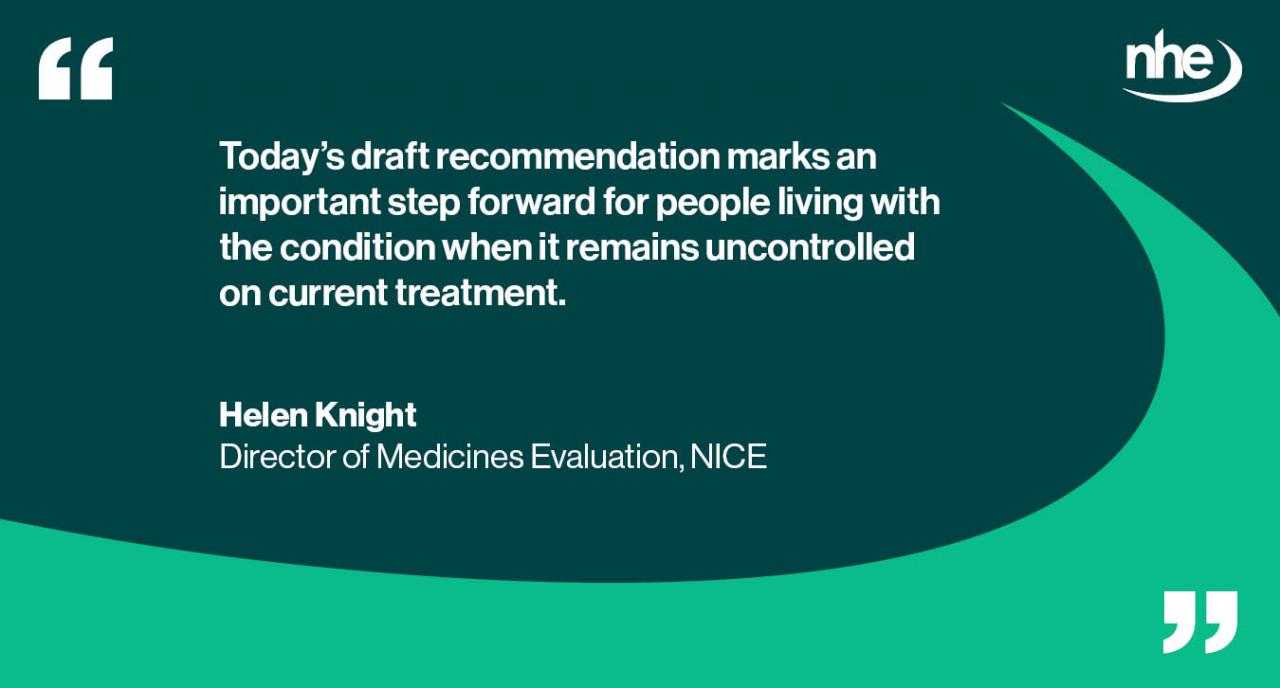
Helen Knight, Director of Medicines Evaluation at NICE, said:
“Generalised myasthenia gravis can severely limit people’s independence and place a heavy burden on patients, families and carers. Today’s draft recommendation marks an important step forward for people living with the condition when it remains uncontrolled on current treatment. Rozanolixizumab offers a new targeted treatment option with the potential to improve symptoms and help people carry out their day‑to‑day activities.”
Better symptom control may also enable some patients to reduce long‑term steroid use, lowering the risk of side effects associated with prolonged steroid treatment.
Although final NICE guidance is still expected to be confirmed, the recommendation allows immediate NHS access through the Innovative Medicines Fund, ensuring eligible patients do not face unnecessary delays in starting treatment.
Image credit: iStock