

More than one million people in England are now using a new style of asthma inhaler that both prevents and relieves symptoms, marking a major shift in how asthma is treated and managed.
For the first time, the number of people using these combination inhalers has overtaken those relying solely on the traditional blue reliever inhaler, a milestone clinicians describe as a life‑saving cultural change in asthma care.
The shift follows a landmark guideline published jointly in 2024 by NICE, the British Thoracic Society (BTS) and the Scottish Intercollegiate Guidelines Network (SIGN).
For decades, the blue inhaler – known clinically as a short‑acting beta‑2 agonist (SABA) – has been the mainstay of asthma treatment. While effective at relieving symptoms, doctors now recognise that using a reliever alone can mask underlying inflammation, potentially increasing the risk of asthma attacks, hospital admissions and death.
The new guidance recommends moving away from blue‑inhaler‑only treatment towards inhalers that treat the cause of asthma, not just the symptoms.
One of those to benefit is Lee Newton‑Proctor, who has lived with asthma since childhood.
By his late thirties, Lee had been hospitalised 18 times, was using up to 18 blue inhalers a year, and missed over five weeks of work in a single year. After switching inhaler on his doctor’s advice, his quality of life changed dramatically.
Now 41, Lee runs, cycles and exercises regularly. “My life has been transformed,” he says. “I no longer feel asthmatic. I can do what I want, when I want.”
The new guideline recommends combination inhalers for people aged 12 and over who are newly diagnosed or need step‑up treatment.
These inhalers combine:
- an inhaled steroid, which treats airway inflammation, and
- a long‑acting beta‑2 agonist (LABA) called formoterol, which provides fast symptom relief
Together, they prevent flare‑ups while offering immediate relief — reducing reliance on separate reliever inhalers.
The treatment approaches are known as:
- AIR (Anti‑inflammatory Reliever) – using the inhaler only when needed
- MART (Maintenance and Reliever Therapy) – daily use plus additional doses when required
Specialists warn that frequent use of blue inhalers is a red flag for poor asthma control.
Nearly half of people using a blue inhaler in England (48%) were prescribed more than two in 2024–25, a level clinicians consider a warning sign.
With well‑controlled asthma, patients should have few or no symptoms and only rarely need a reliever inhaler.
Use of AIR and MART inhalers has risen sharply, while reliance on blue inhalers alone has fallen.
Between October and December 2025, around 1.09 million people were using a combination inhaler without a SABA inhaler, which is a 63% increase compared with the same period the year before.
By contrast, approximately 800,000 people were still using a blue inhaler alone, a 16% reduction year‑on‑year.
Clinicians say this marks a tipping point in asthma treatment practice.
While combination inhalers are more expensive, experts say they can save NHS resources overall by reducing emergency admissions, hospital stays and GP appointments.
There are also wider benefits, including fewer sick days at school and work, improved wellbeing, and better long‑term disease control.
Most people are expected to benefit from the new inhalers, but clinicians stress that support is essential when switching treatment.
A small number of patients may not tolerate combination inhalers, and correct inhaler technique is critical to achieving good control.
NICE recommends that patients are given clear information about their treatment, and that inhaler technique is checked at every review or whenever a device is changed.
Dr Amina Al-Yassin, Clinical Lead for Children and Young People’s Services at Brent Integrated Care Partnership, commented:
"They make people feel better, but only briefly. We now know that over time they are likely to make asthma worse. Seeing a blue inhaler used alone is now a dangerous sign to me…
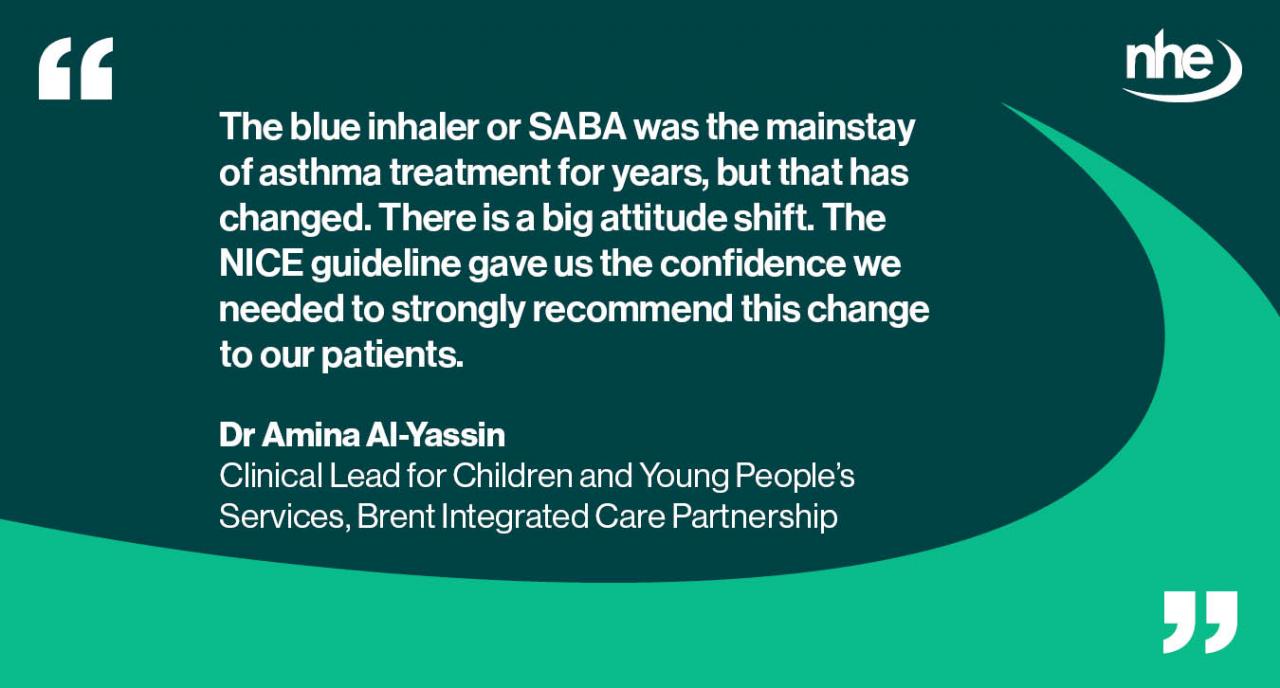
“The blue inhaler or SABA was the mainstay of asthma treatment for years, but that has changed. There is a big attitude shift. The NICE guideline gave us the confidence we needed to strongly recommend this change to our patients."
With more than a million people already benefitting, clinicians believe the shift has the potential to save lives, reduce inequalities, and ensure asthma is a condition people can live well with – not one that controls their lives.
Image credit: iStock