


NHS trusts with the highest levels of corridor care are receiving specialist, tailored support, as part of a national drive to eradicate corridor care by the end of this Parliament.
Expert clinical teams are being deployed to the most affected hospitals, offering bespoke support to NHS leaders. Early data shows that the majority of corridor care is concentrated in a relatively small number of trusts, allowing targeted intervention where it can make the biggest difference.
The initiative is being delivered through Getting It Right First Time, which is working with trusts facing the most severe pressures to learn from hospitals that have already made significant progress in reducing corridor care this year.
This comes at a time of wider improvement across urgent and emergency care, including the shortest A&E waiting times in four years and ambulance response times being at their fastest in five years, despite record demand.
GIRFT teams provide tailored clinical and operational support, including:
- Improving patient discharge and flow
- Helping trusts better understand and use their own data
- Improving predictions of demand surges
- Supporting clinical leaders with enhanced decision‑making
Alongside targeted support, NHS England has introduced a new, measurable definition of corridor care for the first time. This will allow trusts to collect consistent data, which will begin to be published from May.
The move is designed to improve transparency, accountability and progress tracking, and is part of a broader effort to demonstrate a firm commitment to improving patient experience.
To further ease pressure on busy hospital departments, the government has confirmed the locations of 40 new and expanded urgent care sites across England.
The £215.5 million programme includes:
- 10 new urgent treatment centres (UTCs)
- 4 expanded UTCs
- 5 new same day emergency care (SDEC) services
- 21 expanded SDECs
This significant boost in frontline capacity will help ensure patients are treated in the right setting, easing pressure on A&E departments and improving flow through hospitals.
Despite ongoing pressures in some hospitals, there are already encouraging signs of recovery.
At Queen’s Hospital in Romford, corridors that were full during the peak of winter are now clear. Improvements were achieved through better patient flow and stronger collaboration between urgent and primary care services.
A new initial assessment process reduced waiting times by 37 minutes and increased access to senior decision‑makers. The introduction of a frailty Same Day Emergency Care Centre has also helped reduce the number of older patients cared for in corridors.
GIRFT teams are making demonstrable improvements across the country, including in Hull, Blackpool, and Blackburn.
NHS England has also published its new “model emergency department”, setting out how services should operate from this year.
The model focuses on earlier assessment and triage by senior clinicians, as well as caring for patients in appropriate settings away from crowded A&Es.
Wes Streeting, Secretary of State for Health and Social Care, said:
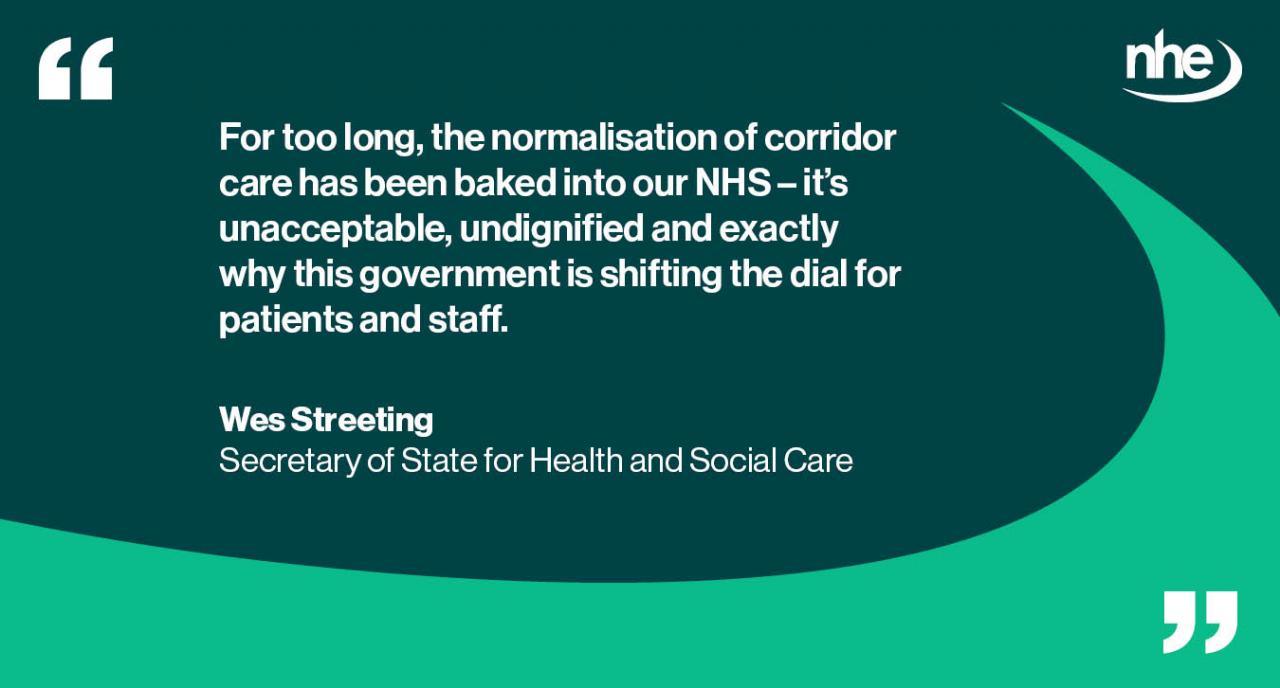
“For too long, the normalisation of corridor care has been baked into our NHS – it’s unacceptable, undignified and exactly why this government is shifting the dial for patients and staff.
“We’re sending in specialist teams of experts to identify the causes in some of the worst offending trusts and swiftly rectify the problems they find.
“That, plus new and expanded urgent care centres will mean patients are treated more quickly and in the right place, while easing pressure on busy A&Es to care for the most serious cases.
“We are cutting waiting times and moving away from unacceptable corridor care, building an NHS that treats patients with dignity.
“After the NHS performed significantly better this winter, we are going further to strengthen services and build a system fit for the future, backed by record investment.”
To tackle discharge delays, the NHS is also strengthening links with social care through Neighbourhood Health Teams, backed by a £4.6 billion adult social care funding boost, helping more people receive care safely at home.
Urgent treatment centres will continue to manage minor illnesses and injuries, while same day emergency care services provide rapid assessment and treatment for stable conditions – avoiding unnecessary admissions.
Some of the new and expanded services will open later this year, further strengthening NHS resilience ahead of winter and supporting the long‑term goal of ending corridor care.
Image credit: iStock