
A major international study supported by the National Institute for Health and Care Research has demonstrated that Alzheimer’s disease biomarkers can be accurately detected using simple finger-prick blood samples, which are collected at home and posted to laboratories without refrigeration or prior processing.
The DROP-AD project, conducted across seven European medical centres, including the University of Exeter, validated this innovative approach in 337 participants, marking the first large-scale evidence that remote blood collection could reliably measure key markers of Alzheimer’s pathology and brain damage.
Alzheimer’s disease is typically confirmed through brain scans or spinal fluid tests, which are invasive, costly and require specialist facilities. Blood tests measuring biomarkers such as p-tau217 have emerged as a less invasive alternative, but practical challenges remain – including sample handling and access to trained staff.
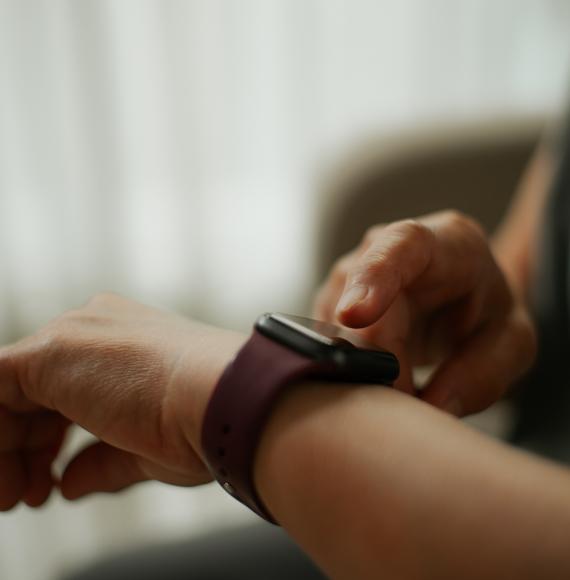
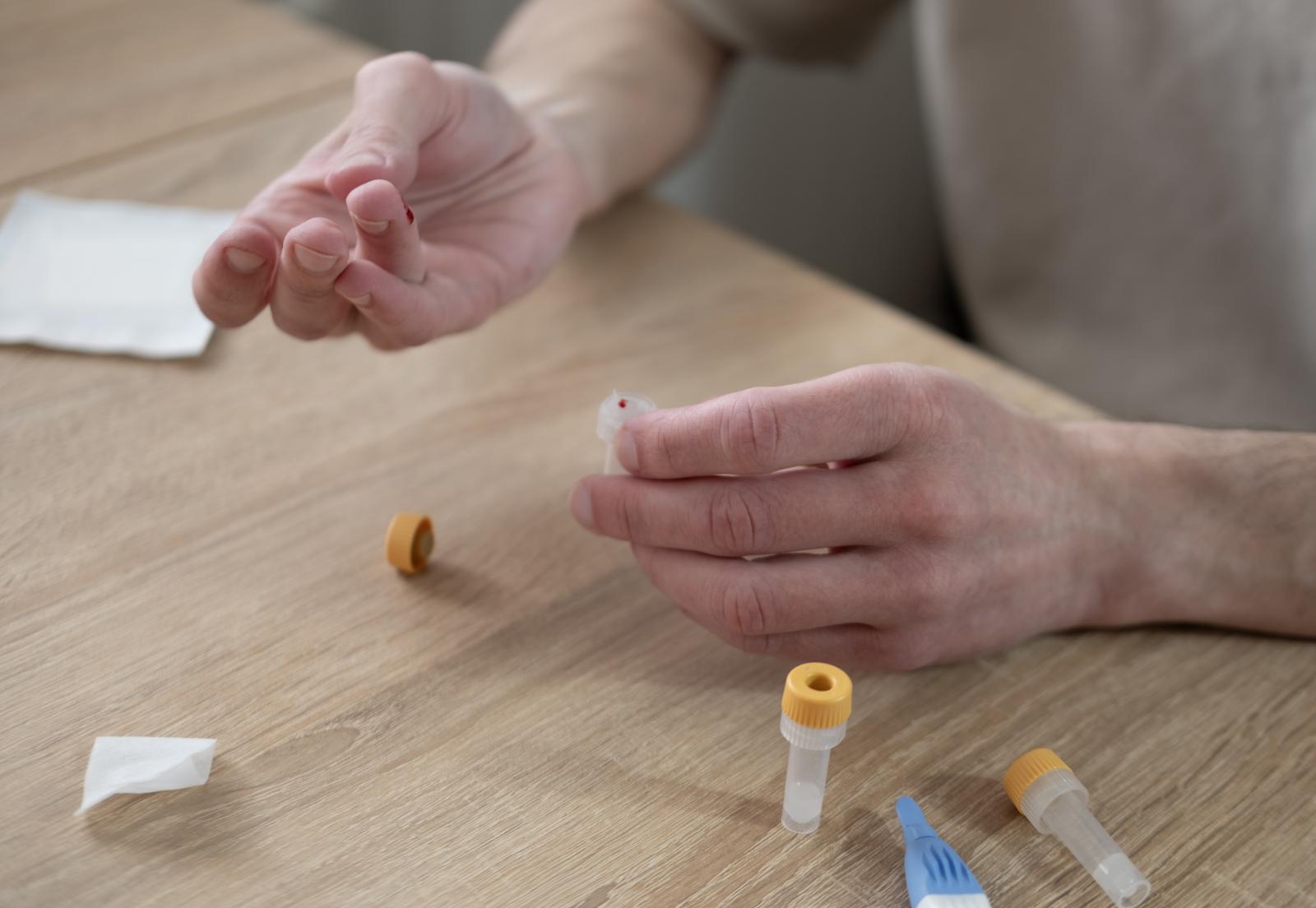
The new method uses a few drops of blood from the fingertip, dried on a card, and mailed to a lab. Researchers found that p-tau217 levels in finger-prick samples closely matched standard blood tests, identifying Alzheimer’s-related changes in spinal fluid with 86% accuracy. Two other biomarkers – Glial Fibrillary Acidic Protein (GFAP) and neurofilament light (NfL) – were also successfully measured.
The University of Exeter Medical School played a pivotal role by recruiting participants from the PROTECT-UK study and testing self-collection capabilities. Participants were able to collect their own samples at home after receiving instructions, proving the feasibility of remote testing.
Professor Marian Knight, Scientific Director for NIHR Infrastructure, said:
“This type of research – with the potential to transform diagnosis and care for people with Alzheimer’s disease – showcases the importance of NIHR infrastructure funding and the expertise of its researchers supporting internationally collaborative commercial research. The future potential to enable testing in different settings outside of hospital clinics is hugely exciting.”
Beyond Alzheimer’s, the technique could support research into Parkinson’s disease, multiple sclerosis, ALS and brain injuries, thanks to its ability to measure NfL. It could also enable large-scale studies in underserved populations, including people with Down syndrome, who face a higher risk of Alzheimer’s.
Researchers caution that while the findings are promising, further validation is needed before clinical use. For now, the method represents a breakthrough for research, offering a scalable, low-cost way to study neurodegenerative diseases globally.
Image credit: iStock