

More than 10,000 calls have been made to Martha’s Rule helplines in the first 16 months of the NHS scheme, with new data showing the initiative is helping clinicians identify deterioration earlier, improve communication and deliver life‑saving interventions.
The latest NHS England figures reveal that between September 2024 and December 2025, a total of 10,119 escalation calls were made by patients, families and staff. Of these, 34% (3,457 calls) related to cases where a patient’s condition was rapidly worsening, enabling faster clinical escalation and urgent changes to care.
The findings mark a significant milestone in the national rollout of Martha’s Rule, following its introduction in early 2024 after the death of 13‑year‑old Martha Mills, whose deterioration from sepsis was not acted upon quickly enough. A coroner later ruled she would likely have survived had she been moved to intensive care earlier.
The new NHS data shows that of the escalation calls identifying acute deterioration:
- 1,885 patients received changes in treatment, driven by concerns raised through the helpline
- 446 patients were transferred to enhanced levels of care, including potentially life‑saving interventions
- More than 6,000 calls have led to improved communication, clearer care coordination or better system navigation for patients and families
Calls to Martha’s Rule helplines have more than doubled since June 2025 (4,911 calls), reflecting the expanding rollout and growing public awareness.
All NHS acute hospitals are now in the process of implementing Martha’s Rule as a standard approach to patient escalation. Hospitals have run extensive communication campaigns to ensure patients, families and carers know how to seek help, including:
- Posters on wards and in waiting areas
- Bedside information cards
- Staff awareness sessions
- Clear guidance on how to escalate concerns
The aim is to normalise the use of escalation mechanisms and ensure people feel confident in speaking up.
Martha’s Rule requires staff to:
- Use a structured approach to gather and act on information from patients and families at least daily
- Actively encourage patients, relatives and carers to raise concerns if they see changes in someone’s condition
- Provide a rapid route for an independent clinical review if concerns are not being addressed
- Empower staff to request a review from a different clinical team if they believe escalation is needed
The initiative strengthens patient involvement in safety, improves communication between teams, and provides an extra safeguard to prevent deterioration being missed.
The rollout of Martha’s Rule has been made possible thanks to the tireless campaigning of Martha’s parents, Merope and Paul Mills, who have worked closely with NHS England to turn their tragedy into a national patient safety movement. Martha’s mother, Merope Mills, said:
“The more data that is gathered, the clearer it becomes that Martha’s Rule is having a hugely positive effect. Apart from the lives saved, over a third of the calls have led to a marked improvement in care.
“The process is not being overused and has obviously met a need, giving patients and families real agency. We look forward to its thorough implementation in maternity departments and call for its rapid introduction in Wales and Scotland.”
Implementation has been supported by:
- NHS England
- The Health Innovation Network’s Patient Safety Collaboratives
- Senior clinicians in acute trusts across the country
The scheme is already being described as one of the most significant patient safety interventions in recent NHS history.
Dr Aidan Fowler, National Director of Patient Safety at NHS England, also commented:
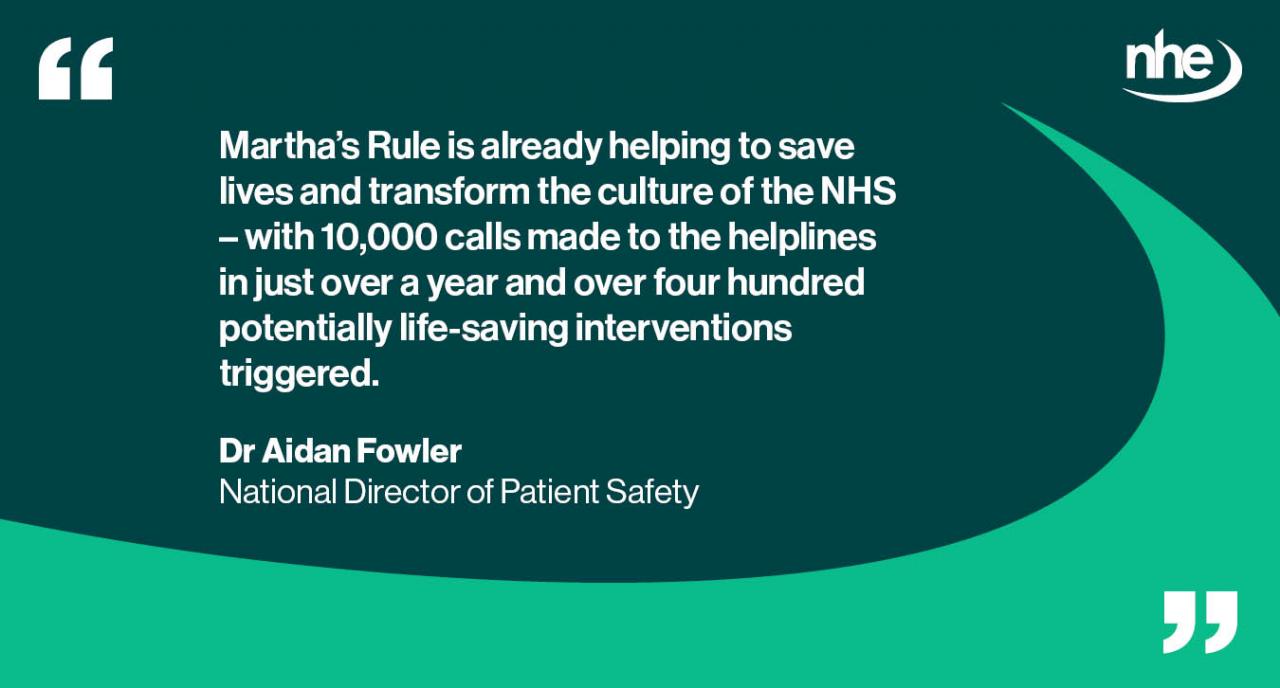
“Martha’s Rule is already helping to save lives and transform the culture of the NHS – with 10,000 calls made to the helplines in just over a year and over four hundred potentially life-saving interventions triggered.
“These figures show that Merope and Paul’s tireless campaigning and the hard work of staff are helping the NHS listen to families more effectively and shows that when concerns are raised, hospital teams are ready to respond.”
For NHS boards, clinical leaders and system partners, the early data demonstrates the powerful impact of giving families clearer, faster and safer routes to escalate concerns.
The success of the programme is expected to shape wider national patient safety policy, supporting cultural change, strengthening communication and ensuring earlier intervention during clinical deterioration.
Image credit: iStock