

A simple £30 mobile phone is helping some of Leeds’ most vulnerable people reconnect with healthcare, support services and personal safety – and could play a role in breaking the cycle of repeat emergency department attendances.
An initiative launched at Leeds Teaching Hospitals NHS Trust and funded by Leeds Hospitals Charity aims to ensure that every person who is homeless or at risk of homelessness presenting at the Trust’s emergency departments is offered a mobile phone.
The devices provide a vital point of contact for arranging follow‑up appointments, engaging with street outreach teams and improving personal safety. Each phone is also pre‑loaded with contact details for local services and charities offering support to people experiencing homelessness.
The project is led by Laura Finch, a Royal College of Emergency Medicine Advanced Clinical Practitioner working in the Trust’s emergency departments, who developed the idea after witnessing the limitations of traditional clinical interventions for homeless patients.
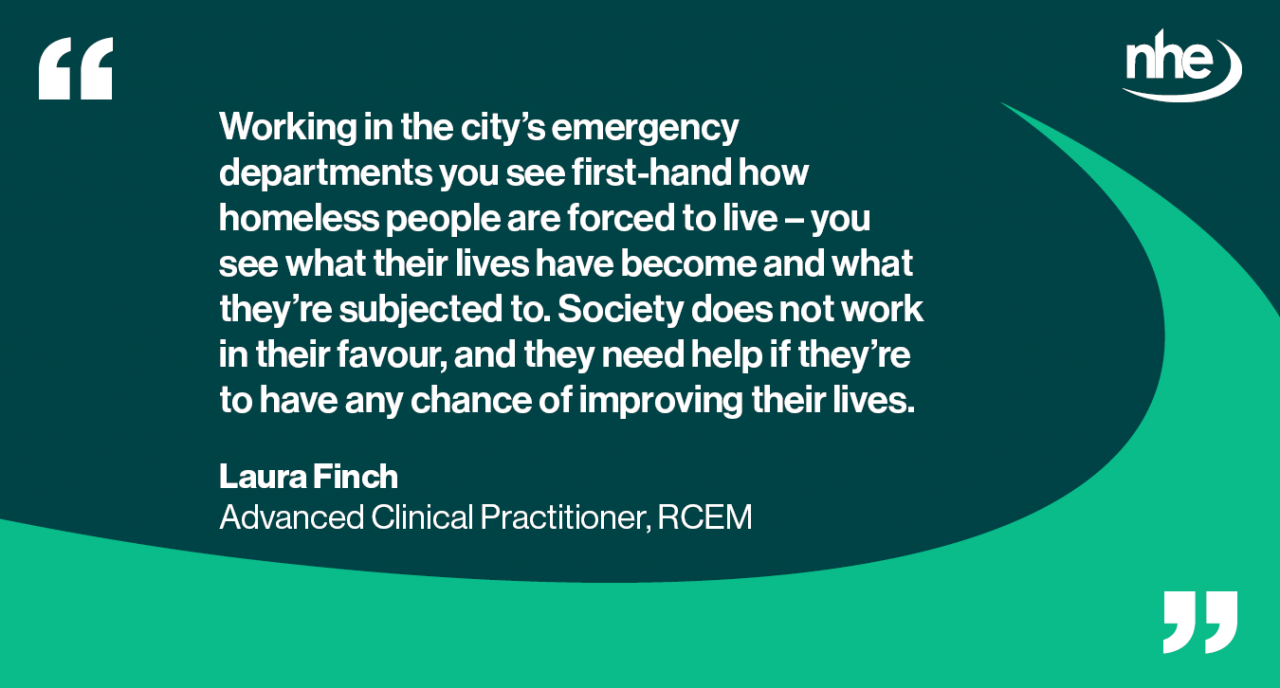
“Working in the city’s emergency departments you see first-hand how homeless people are forced to live – you see what their lives have become and what they’re subjected to. Society does not work in their favour, and they need help if they’re to have any chance of improving their lives,” she said.
Laura described how many of the patients she sees return repeatedly to A&E without the means to escape their circumstances.
“Many of the vulnerable people who we see in our emergency departments are regulars,” she said. “They simply don’t have the means to get out of their situation – the odds are stacked against them. Often, they end up being trapped in a vicious cycle of antisocial crime, short prison sentences, and homelessness. If you’re homeless, you’re also more likely to be assaulted. It’s a desperate situation.”
During the COVID‑19 pandemic, rough sleepers were provided with temporary accommodation through the Government’s Everyone In initiative. However, following the withdrawal of emergency measures, homelessness rose sharply in many parts of the country. In Yorkshire and the Humber, deaths among people experiencing homelessness nearly doubled between 2022 and 2023, with many linked to treatable health conditions.
Frustrated by the number of repeat attendances she was seeing and the limited tools available to effect change, Laura applied in 2023 for a small grant from Leeds Hospitals Charity to pilot the donation of low‑cost mobile phones to homeless patients over 2023–24.
“Many of us take mobile phones for granted, but it’s only when we don’t have one that we realise how much we depend upon a phone for daily life,” she said. “Phones give people choice and autonomy – they’re incredibly empowering.”
She added: “Homeless people are accustomed to having doors shut in their faces – they’re just not used to getting something for free. My hope is that these phones might do something that will change their lives.”
Each handset was a basic Nokia device costing £30 and supplied with a prepaid SIM. Alongside contact details for support services, Laura included a small handwritten note with each phone, explaining that she would follow up.
Crucially, every phone donated during the pilot remained in use. Laura called each device to gather feedback – and every call was answered.
One patient, who disclosed she was experiencing domestic abuse and homelessness, declined to discuss her situation in detail while in the emergency department. After receiving a phone and being referred for emergency housing, she was able to contact housing services herself immediately after discharge. As a referral had already been made, she was offered a place of safety that same night.
Encouraged by outcomes like this, Laura successfully secured further funding from Leeds Hospitals Charity, supported by a donation from corporate partner Maintel. The additional funding has expanded the initiative, which formally launched in November 2025 and will now run for the next three years.
The programme will enable around 220 phones per year to be distributed to vulnerable patients attending emergency departments.
Further support from Vodafone, which donated more than 400 SIM cards with unlimited credit, means charitable funding can be focused on purchasing additional devices and potentially extending the project further.
Over the winter period alone, 85 mobile phones were provided to vulnerable people attending Leeds emergency departments. A small number of pre‑loaded phones have also been shared with outreach and support organisations including Barca‑Leeds, the Health and Homeless Inclusion Team, and York Street GP, widening access beyond the hospital setting.
For NHS leaders grappling with rising demand, health inequalities and repeat emergency attendances, the initiative demonstrates how low‑cost, human‑centred interventions can deliver disproportionate impact – restoring dignity, autonomy and connection for those most often left behind.
Image credit: iStock