


A new Mental Health Act has received Royal Assent, marking a significant update to the legal framework governing how people with severe mental illness are detained and treated in England.
The legislation replaces key elements of the 1983 Mental Health Act, introducing reforms that experts have sought for nearly a decade.
The updated law aims to provide stronger rights and greater involvement for patients and families, address racial disparities, and ensure that detention is used only when appropriate. It also aligns with recommendations made in Sir Simon Wessely’s 2018 Independent Review.
For years, stakeholders have highlighted concerns that patients detained under the 1983 Act had insufficient say over their care. The new legislation introduces statutory Care and Treatment Plans, designed to give patients more control over decisions being made about them and increase transparency around treatment.
The Act will also support NHS workforce efforts to deliver more personalised, person‑centred care, with an emphasis on ensuring treatment is proportionate and respectful of patient preferences.
Official data shows that Black people are 3.5 times more likely to be detained than white people under previous frameworks, while autistic people and individuals with learning disabilities without a mental health condition have sometimes been detained inappropriately. The new Act includes clearer guidance for clinicians to help reduce these disparities and ensure decisions are based on clinical need rather than systemic factors.
Steve Gilbert OBE, who was sectioned in 2010 and later became Vice Chair of the Mental Health Act Review, has been a prominent contributor to the reform process, drawing on his lived experience and work on racial equity in mental health services.
The legislation expands protections for children and teenagers, ensuring their wishes, feelings and family relationships are central to decision‑making. It also reinforces the requirement that those close to them are consulted where appropriate.
Under the new law, courts will no longer be able to detain people in prison cells while they wait for a mental health bed. The previous practice has been widely criticised by clinicians, charities and inspection bodies.
The Act draws directly on the four principles outlined in Sir Simon Wessely’s review:
- Choice and autonomy
- Least restriction
- Therapeutic benefit
- People as individuals
Government officials will now begin developing detailed guidance before the Act is fully implemented.
Wes Streeting, Health and Social Care Secretary, said:
“For too long, thousands of vulnerable people in mental health crises have been failed by outdated laws that stripped away their dignity and voice.
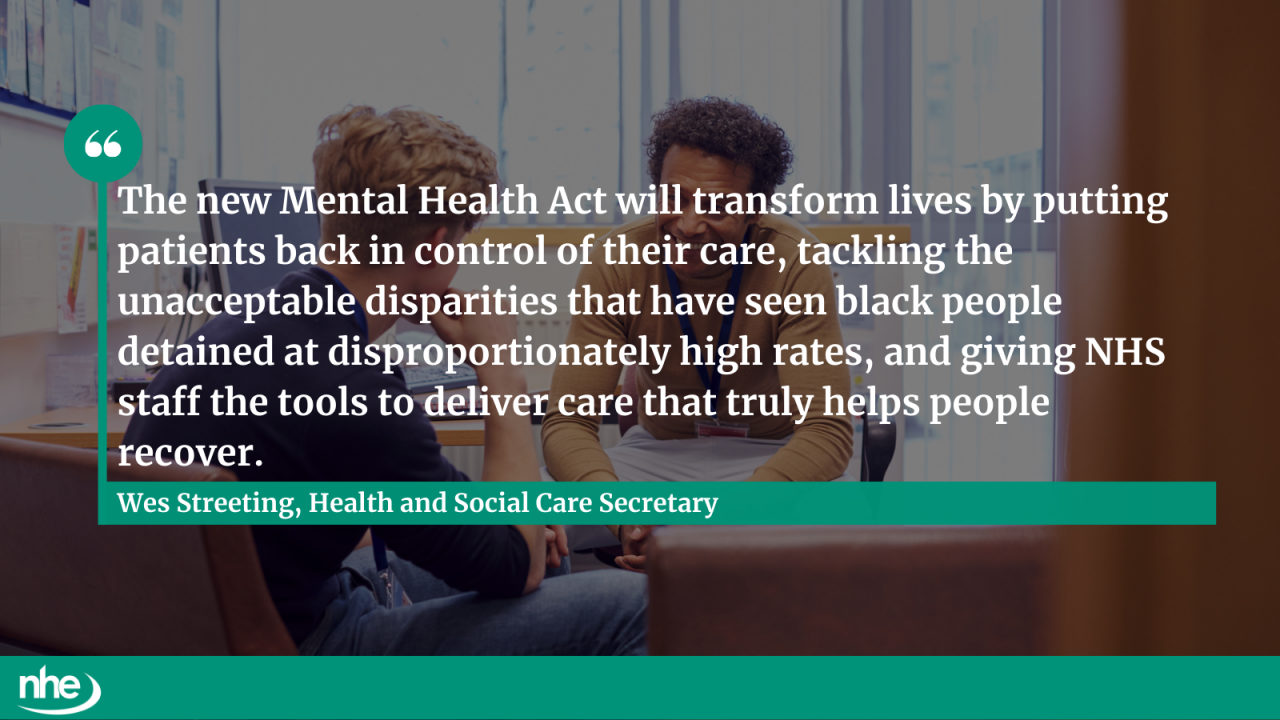
“The new Mental Health Act will transform lives by putting patients back in control of their care, tackling the unacceptable disparities that have seen black people detained at disproportionately high rates, and giving NHS staff the tools to deliver care that truly helps people recover.
“This delivers on our manifesto commitment to finally bring mental health care into the 21st century. After years of neglect, we are rebuilding a mental health system to treat people with the dignity and respect they deserve.”
The Mental Health Act changes sit within broader work to modernise mental health support, including:
- Recruitment of 8,500 additional mental health workers under the 10 Year Health Plan
- Expansion of talking therapies
- More mental health support teams in schools and colleges
- Improved access via the NHS App
- £473 million in capital investment by 2030 to modernise facilities, expand neighbourhood mental health services and increase crisis care capacity
These initiatives aim to shift focus from hospital‑based care to community support, reducing the likelihood that people reach crisis point or require detention.
The Government says the updated legislation represents a significant step in ensuring the mental health system is fit for the future, with an emphasis on safety, dignity and patient involvement.
Image credit: iStock