

The NHS has warned that millions of adults living with debilitating anxiety disorders are not seeking treatment that could help them recover, as it launches a major new mental health campaign encouraging people to self‑refer for support.
New NHS analysis shows that more than 670,000 people accessed NHS talking therapies last year – nearly 70,000 more than before the pandemic, representing a 12% rise on 2019. A record 83,000 people also received employment support through NHS talking therapies in 2025, a 20% increase from 2024.
Despite this progress, an estimated 9.4 million adults – around one in five people in England – are now affected by a common mental health condition. NHS leaders say millions are still missing out on available help, often because they underestimate the severity of their symptoms.
To address this gap, the NHS has launched a national campaign urging people to seek support for six common anxiety‑related conditions that can be effectively treated through NHS talking therapies. The conditions include:
- Obsessive–compulsive disorder (OCD)
- Social anxiety disorder
- Post‑traumatic stress disorder (PTSD)
- Panic disorder
- Phobias
- Body dysmorphic disorder (BDD)
A new NHS survey of over 2,000 adults found that 58% delayed seeking help because they believed their condition was “not serious enough”, while 21% did not seek help at all.
The campaign directs people to nhs.uk/talk, where anyone can self‑refer online without needing a GP appointment or a prior diagnosis.
The campaign is supported by several public figures sharing their own experiences to encourage others to come forward, including former professional footballer Clarke Carlisle, and EastEnders actress Shona McGarty. Their contributions are intended to reduce stigma and increase awareness of the support available.
Clarke Carlisle commented:
“For over a decade, my PTSD caused me to withdraw not just from the world, but more importantly, from my family. My symptoms would be at their worst over Christmas – I’d experience flashbacks, traumatic memories and racing thoughts, and feared the lead up to December for many years.
“Now, looking at the photo of myself and family celebrating my daughter’s 18th birthday during the festive period means the world to me. This was the first winter where I didn’t experience symptoms of PTSD – but it’s also a moment that simply wouldn’t exist if I hadn’t received treatment for my mental health, allowing me to talk through feelings and getting me to a place where I can spend precious moments with my family again”.
NHS talking therapies provide practical skills and evidence‑based techniques to help people manage and overcome mental health conditions. Depending on symptoms, treatment may include cognitive behavioural therapy, counselling, guided self‑help, and other structured psychological therapies.
These sessions are delivered by trained professionals in a safe, confidential environment.
The six‑week campaign will feature across TV‑on‑demand adverts, online video, and radio and digital audio, as well as other online sources such as podcasts and social media.
The aim is to reach adults most likely to experience common mental health conditions, particularly those of working age. NHS England data shows people aged 16 to 64 are more than twice as likely to have a common mental health condition compared with adults over 75.
The NHS is also highlighting that symptoms can be severe and should not be dismissed. These may include:
- Frequent intrusive thoughts and compulsions (OCD)
- Overwhelming fear of social situations (social anxiety disorder)
- Flashbacks or nightmares of traumatic events (PTSD)
- Sudden, unexplained panic attacks (panic disorder)
- Intense fear of objects, places or situations (phobia)
- Persistent distress about perceived defects in appearance (BDD)
NHS England’s National Medical Director for Mental Health and Neurodiversity, Dr Adrian James, said:
“While it’s encouraging that thousands more people facing mental health conditions are accessing NHS support than before the pandemic, we know that millions more could benefit from vital NHS talking therapies.
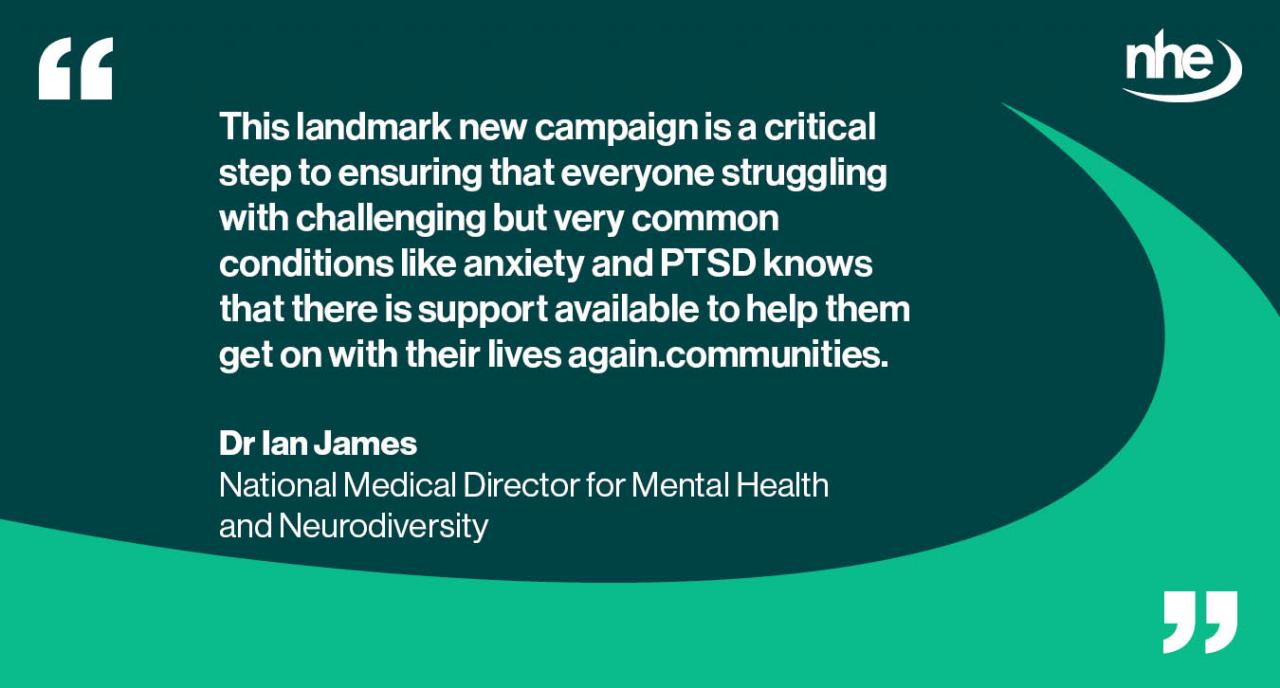
“This landmark new campaign is a critical step to ensuring that everyone struggling with challenging but very common conditions like anxiety and PTSD knows that there is support available to help them get on with their lives again.
“Through proven treatment and support available for free on the NHS, these conditions can be overcome to help people return to work, regain confidence or feel back to their old selves in social situations.
“Our message is clear, if you’re struggling with your mental health, NHS talking therapies are here for you, and you can either self-refer or speak with your local GP practice”.
The NHS emphasises that treatment is available and effective, and that early support can prevent conditions from worsening.
Image credit: iStock