
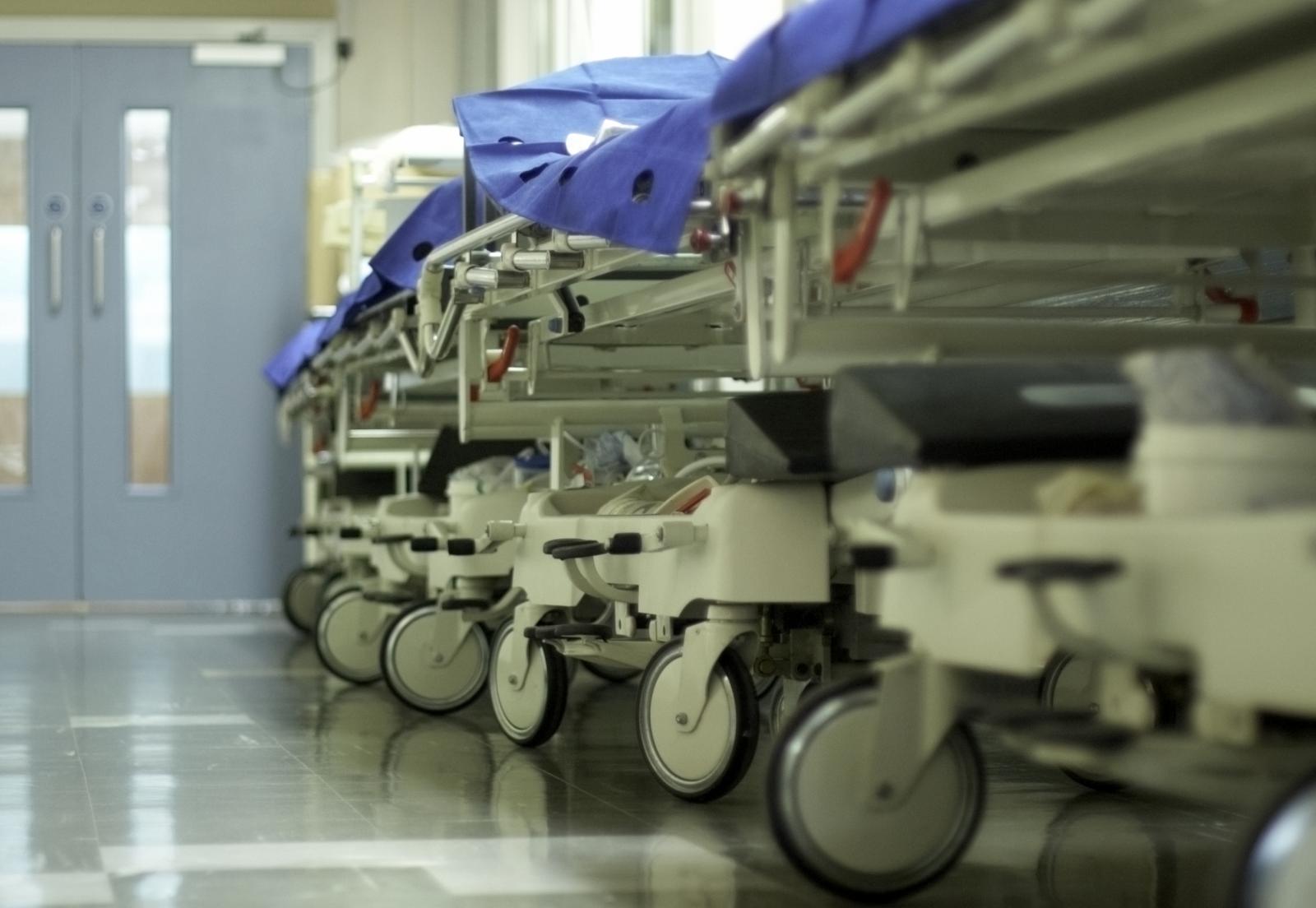

The Health Services Safety Investigation Board has published a new report calling on healthcare leaders and NHS trusts to better understand and manage the risks posed by temporary care environments – spaces not originally designed for patient care, such as waiting rooms, corridors, chairs on wards, and ambulances outside emergency departments.
These environments are often used when demand exceeds capacity, as hospitals attempt to balance risks across the patient care pathway. However, the report warns that such decisions can compromise care quality and patient dignity.
HSSIB’s investigation across 17 hospitals between August and December 2025 found that patient flow issues are now a year-round challenge, not just during winter pressures. Safety risks identified include:
- Difficulty monitoring patients and recognising deterioration.
- Insufficient staff for safe staff-to-patient ratios.
- Increased infection risk.
- Lack of piped oxygen and suction.
- Compromised response to medical and fire emergencies.
The report has called for a nationally agreed definition of temporary care environments, as well as improved data collection and understanding of how and when these spaces are used.
Without these measures, the NHS has limited insight into the scale of the problem and its impact on patient safety.
Patients interviewed expressed gratitude for being moved from waiting rooms to trolleys, despite privacy concerns, saying they “felt safe” and “well looked after.” Clinicians described temporary care environments as the “best worse” option compared to leaving patients at home or in ambulances.
Hospitals that adapted spaces reported calmer, more organised care. Adaptations included:
- Policies and risk assessments to select suitable patients and exclude high-risk groups.
- Physical improvements such as plug sockets, emergency call bells, and communication systems.
- Enhanced staffing through bank and agency nurses, specialist doctors, allied health professionals, and mental health support.
Saskia Fursland, Senior Safety Investigator at the HSSIB, said:
“Until there is a solution to the complex underlying issues related to patient flow, we must recognise that hospitals may have no choice but to use temporary care environments.
“By working together with a shared understanding, healthcare leaders and NHS trusts can better understand the use of temporary care environments and their impact on patient safety in a consistent way and systematically address the risks to patient safety.
“In contrast to the chaotic picture that’s often presented of ‘corridor care’, in the course of our investigation we saw first-hand how individual NHS trusts are adapting to ensure that the patient safety risks associated with using temporary care environments are being mitigated.”
The HSSIB has warned that until patient flow challenges are resolved, temporary care environments will remain necessary – but urges action to minimise risks and protect patient safety.
Image credit: iStock