


Adult social care in the UK remains in a deep and worsening crisis, with an exhausted and depleted nursing workforce struggling to provide safe care for vulnerable people, according to the Royal College of Nursing (RCN).
The RCN warns that excessive workloads and long‑standing workforce shortages are pushing staff to breaking point, with some of the most vulnerable people now missing vital medication as a result of unsafe staffing levels.
New findings from an RCN survey of nurses working in adult social care across the UK reveal a sector facing profound recruitment and retention challenges. One in three nursing staff (34%) said they are considering leaving their role or are already actively planning to leave, raising serious concerns about the sustainability of services at a time of growing demand.
The reasons behind this exodus are clear. Among those considering leaving, 66% said they felt undervalued, 59% cited pressure at work, and 54% reported feeling exhausted. The survey also found that nearly half (45%) of those actively planning to leave are considering roles outside of nursing altogether, representing a significant loss of expertise from the profession.
The RCN says the scale of the problem reflects long‑term failures in how adult social care is funded, commissioned, and valued. It is calling on UK governments to urgently reform commissioning and funding arrangements to ensure services are properly resourced to meet current and future needs. Central to this, the organisation argues, is addressing registered nurse shortages and improving pay, terms, and conditions to make social care a viable and attractive career.
Professor Nicola Ranger, RCN General Secretary and Chief Executive, said:
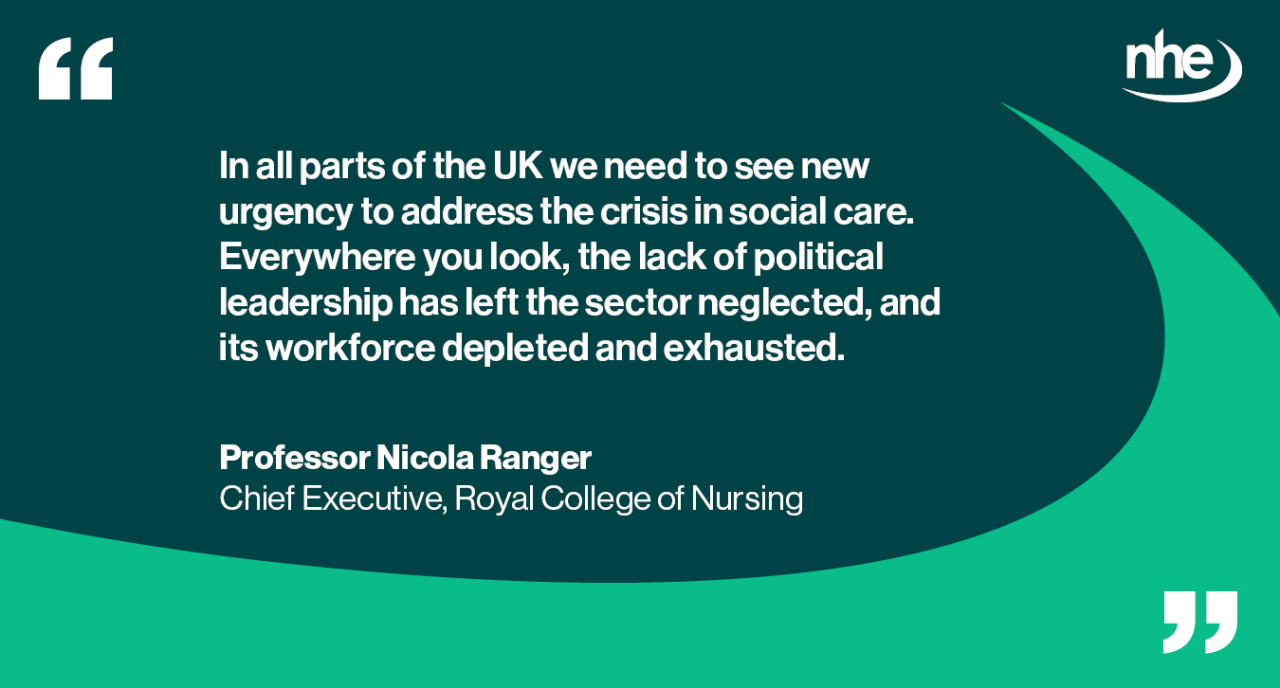
“In all parts of the UK we need to see new urgency to address the crisis in social care. Everywhere you look, the lack of political leadership has left the sector neglected, and its workforce depleted and exhausted.
"As a result, the needs of vulnerable people are going unmet, with staff caring for a totally unsafe number of people. That is dangerous and a tragedy.”
The impact of insufficient capacity in social care is being felt far beyond the sector itself. The RCN highlights that pressures in social care are contributing to increased avoidable attendances and admissions in hospitals, as well as patients remaining in hospital beds for longer due to delayed discharges. This not only affects patient experience and outcomes but adds further strain to NHS services already operating under intense pressure.
The RCN argues that without decisive political action, workforce shortages in social care will continue to worsen, placing vulnerable people at increasing risk and undermining efforts to improve patient flow and reduce pressure across the wider health and care system.
Image credit: iStock