


A new three-year delivery plan has been launched across Birmingham and Solihull, setting out a system-wide approach to improving outcomes for people with learning disabilities and autistic people.
Led by the Birmingham and Solihull Mental Health, Learning Disabilities and Autism Provider Collaborative, the plan brings together partners from the NHS, social care, and the voluntary, community, faith and social enterprise (VCFSE) sectors. The initiative is underpinned by a shared commitment to work more closely with people who have lived experience, ensuring their voices directly shape services.
Focus on prevention, independence and community care
The strategy outlines 10 key areas for action, all aimed at strengthening community-based care. A central ambition is to reduce avoidable hospital admissions while enhancing preventative services, enabling individuals to live longer, healthier and more independent lives.
Key priorities include:
- Improving access to high-quality community support
- Strengthening early intervention and prevention
- Reducing reliance on inpatient services
- Ensuring better coordination across health and social care systems
The collaborative approach is designed to break down traditional organisational silos, enabling more integrated and person-centred care delivery across the region.
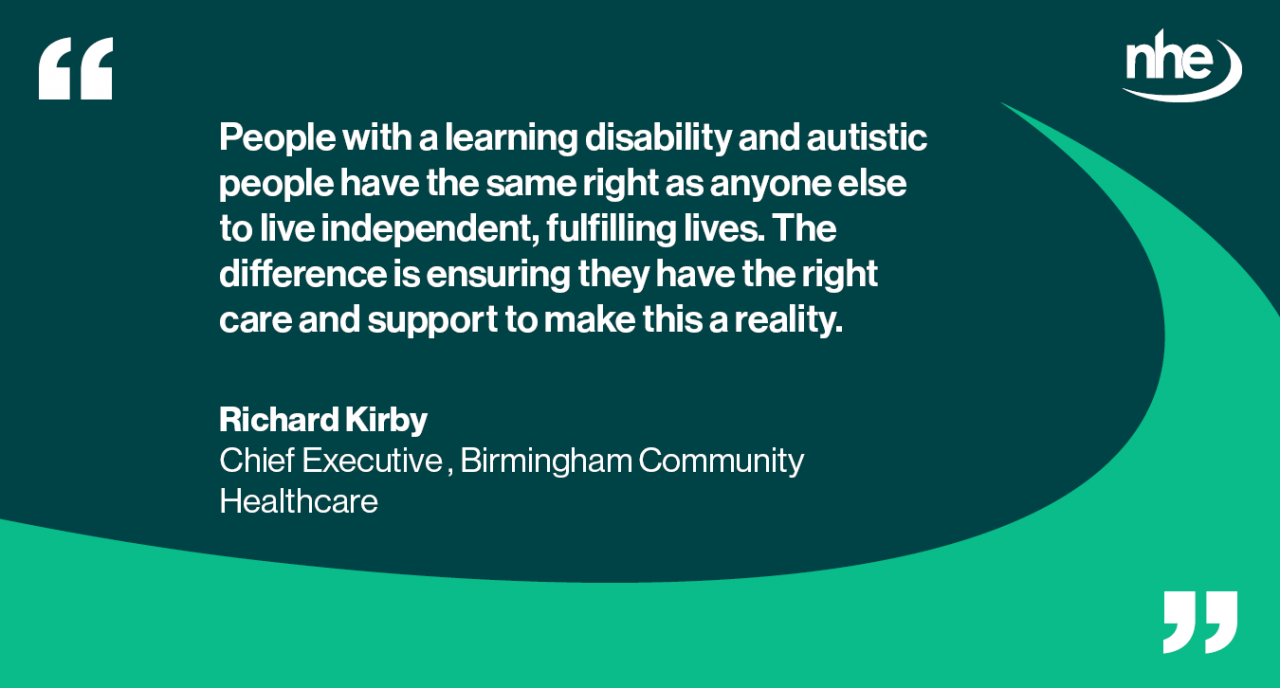
Richard Kirby, Chief Executive of Birmingham Community Healthcare and Senior Responsible Officer for Learning Disabilities and Autism across Birmingham and Solihull, emphasised the importance of equitable care and support:
“People with a learning disability and autistic people have the same right as anyone else to live independent, fulfilling lives. The difference is ensuring they have the right care and support to make this a reality.
“This plan sets out how we will work together across health and social care, the NHS and the voluntary sector to deliver that support.
“From maintaining accurate GP registers so people can access annual health checks, to reducing reliance on inpatient care, our commitment is clear. We will work with and for people with a learning disability and autistic people to ensure they receive a fair deal and are supported to live healthy, happy lives.”
Driving measurable improvement
A key element of the plan includes maintaining accurate GP registers, which play a crucial role in ensuring individuals can access annual health checks and preventative interventions. This aligns with wider NHS priorities to tackle health inequalities and improve early detection of physical and mental health conditions.
By focusing on proactive care and stronger community provision, the partnership aims to shift the balance away from crisis-driven interventions toward sustainable, long-term support models.
A collaborative system-wide commitment
The delivery plan represents a coordinated effort across multiple sectors, highlighting the growing importance of integrated care systems (ICSs) in addressing complex health and social needs. By embedding co-production and collaboration at every level, Birmingham and Solihull aim to deliver more responsive and inclusive services.
Professionals across the health and care landscape will be watching closely as the programme progresses, with the potential for learnings to inform similar initiatives nationwide.
Image credit: iStock