

Public Health Wales has published a new national report examining loneliness, social isolation and social connection, drawing on findings from the World Health Organisation’s 2025 flagship report from the Commission on Social Connection.
The WHO’s work positions social disconnection as a major global public health challenge with significant consequences for physical, mental and social wellbeing.
The new Welsh report brings this global evidence into a national context, offering a comprehensive overview of how loneliness affects people in Wales, who is most at risk, and where opportunities exist for action across communities.
Data from the National Survey for Wales shows that 13% of people aged 16 and over report feeling lonely. Additional findings from the Time to Talk Public Health panel show that 13% of people aged 16+ are socially isolated, and 71% feel fairly or very socially connected.
While most people report feeling connected, the report highlights that a substantial minority experience loneliness or isolation, both of which can have profound health effects.
The report notes that Wales is a global early mover, becoming one of the first nations to introduce a national strategy specifically targeting loneliness and social isolation.
A wide range of community‑based interventions already exists – from local support groups to creative arts programmes and befriending services – but the report stresses that robust evaluation is limited, and evidence needs strengthening to understand what works best and for whom.
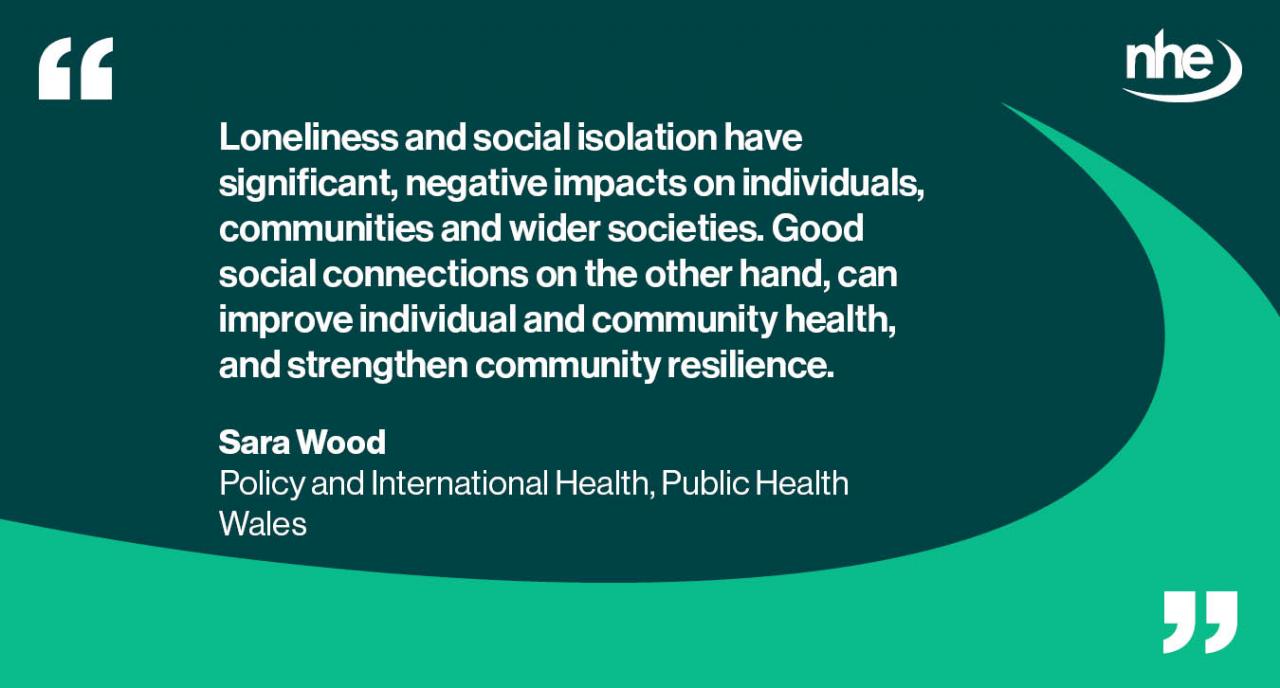
Sara Wood, Lead Author from Public Health Wales, said:
“Loneliness and social isolation have significant, negative impacts on individuals, communities and wider societies. Good social connections on the other hand, can improve individual and community health, and strengthen community resilience.”
The report highlights the substantial burden loneliness and social isolation place on individuals and society. Evidence shows increased risks of:
- Early death – loneliness is linked to a 14% increase in all‑cause mortality; social isolation to a 32% increase
- Physical, mental and cognitive conditions – including cardiovascular disease, diabetes, depression, anxiety and dementia
- Poor educational and employment outcomes – with links to reduced academic achievement, unemployment and lower income
The report concludes that strengthening social connection is essential for building a healthier and more resilient Wales.
Public Health Wales says the findings provide a foundation for:
- Local authorities
- Health boards
- Community organisations
- National policymakers
to work together on evidence‑informed approaches that increase social connection and reduce inequalities in who benefits from these interventions.
The report emphasises that meaningful progress will require collaboration, targeted investment, and learning from lived experience across Wales’ communities.
Image credit: iStock