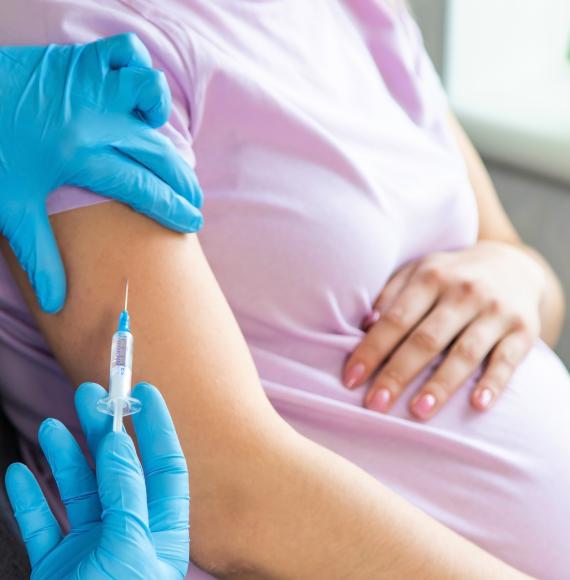

A pioneering UK clinical trial has demonstrated that a tetanus-diphtheria vaccine can remain safe, effective and potent without the need for refrigeration, offering a potential breakthrough for global vaccination programmes.
The Phase I trial evaluated SPVX02, a reformulated tetanus-diphtheria vaccine developed by UK biotechnology company Stablepharma using its proprietary StablevaX technology. The findings suggest the vaccine could help address one of the most significant challenges facing healthcare systems worldwide: maintaining the cold chain required to store and transport vaccines safely.
According to the World Health Organisation, around half of all vaccines are wasted globally each year, with temperature fluctuations during storage and transportation responsible for the loss of millions of doses. A thermostable vaccine could significantly reduce this waste while improving access to immunisation in remote and underserved communities.
The study, conducted at the NIHR Clinical Research Facility at University Hospital Southampton and delivered through the NIHR Biomedical Research Centre Southampton, found that SPVX02 was well tolerated by participants, with no vaccine-related serious adverse events reported.
Published in eClinicalMedicine, part of The Lancet group, the randomised trial enrolled 60 healthy adult volunteers. Researchers also collaborated with the Medicines Evaluation Unit (MEU) in Manchester.
Results showed that by 28 days after vaccination, every participant who received SPVX02 achieved protective antibody levels against both tetanus and diphtheria. The immune response was found to be comparable with currently licensed vaccines.
One of the most significant findings from the study was the vaccine's ability to maintain its effectiveness at higher temperatures.
Researchers demonstrated that SPVX02 can be stored at temperatures of up to 30°C for at least two years without any loss of potency. Further investigations are now underway to determine whether the vaccine can remain stable for as long as four years.
The vaccine also remained fully potent after undergoing three cycles of extreme temperature fluctuations ranging from -20°C to +40°C, highlighting its potential resilience in challenging transport and storage conditions.
For healthcare organisations operating in low-resource settings or regions with limited access to reliable refrigeration infrastructure, such developments could dramatically simplify vaccine delivery and reduce operational costs.
Reducing reliance on refrigeration could deliver both practical and environmental benefits. Vaccine cold chains require substantial energy consumption throughout manufacturing, transportation and storage processes.
By removing or significantly reducing this dependence, thermostable vaccines could help lower carbon emissions associated with immunisation programmes while ensuring more doses reach patients rather than being discarded due to temperature excursions.
The technology may prove particularly valuable during humanitarian responses, disease outbreaks and vaccination campaigns in rural locations where maintaining refrigeration remains a major logistical challenge.
Building on the encouraging Phase I results, Stablepharma has already launched a Phase 2b clinical trial involving a larger cohort of participants to further assess safety and efficacy.
The company's StablevaX platform has applications beyond vaccines and can also be used for small molecules, peptides and biologics. Stablepharma is currently working with partners to thermostabilise oncology treatments, anti-infective medicines and additional vaccine products.
Professor Saul Faust, Director of the NIHR Clinical Research Facility in Southampton and Professor of Paediatric Immunology and Infectious Diseases at the University of Southampton, who led the research, said:
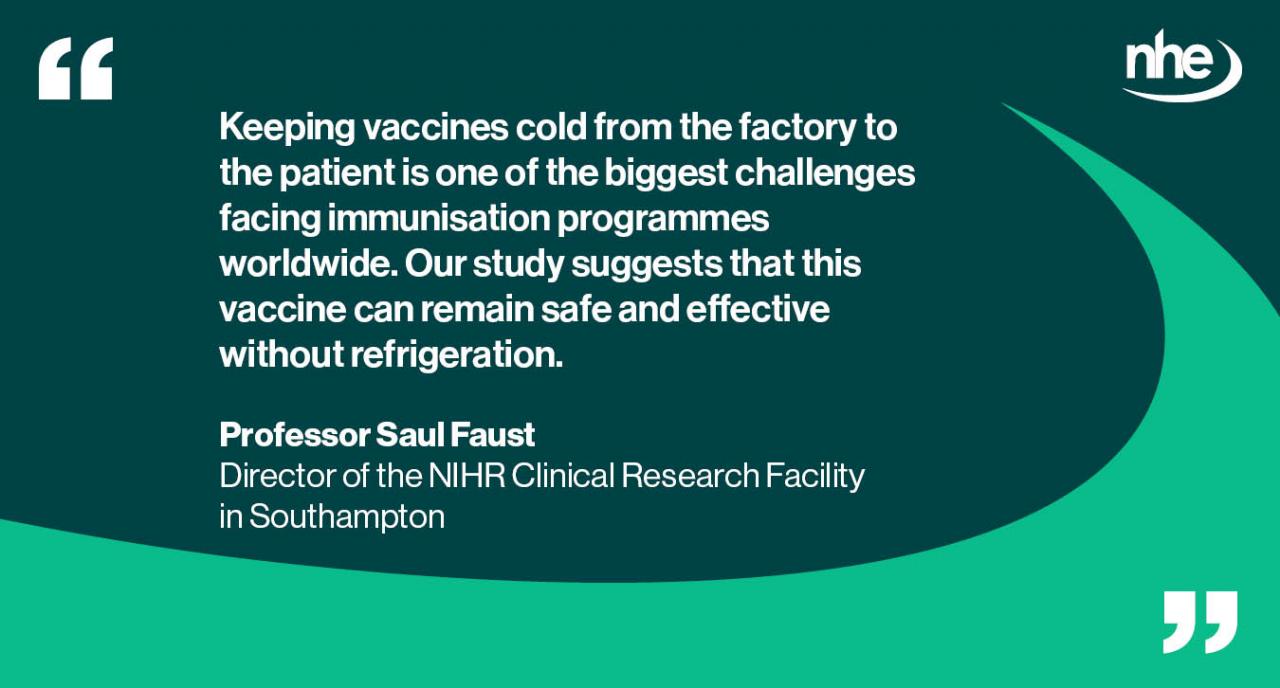
“Keeping vaccines cold from the factory to the patient is one of the biggest challenges facing immunisation programmes worldwide. Our study suggests that this vaccine can remain safe and effective without refrigeration.
“If larger studies confirm these findings, this technology could help transform the way vaccines are stored and delivered around the world.”
The first-in-human study was supported by NIHR-funded research infrastructure, helping Stablepharma generate the clinical evidence needed to progress the UK-developed technology.
SPVX02 has also received support from Innovate UK, part of UK Research and Innovation (UKRI). The vaccine is a reformulated version of the WHO-prequalified Tetadif tetanus-diphtheria vaccine, while specialist laboratory testing was provided by the UK Health Security Agency (UKHSA).
Stablepharma expects to complete the clinical development programme for SPVX02 by 2027, potentially paving the way for a new generation of vaccines that can be distributed without the constraints of refrigeration.
Image credit: iStock