

More than a quarter of children on NHS community health waiting lists in England have been waiting over a year for treatment, making them 38 times more likely than adults to experience such lengthy delays, according to new analysis from The King's Fund.
The findings accompany the think tank's latest report, What does the health and care system look like for children in England?, published on 6 October. The research maps the complex network of services supporting children's health and highlights the significant challenges facing government efforts to improve outcomes for young people.
The report forms part of a wider programme by The King's Fund examining how children's health services can be strengthened, as ministers seek to deliver on commitments to create the healthiest generation of children ever.
Analysis of NHS community health service data shows that 86,000 children had been waiting 52 weeks or longer for treatment as of July 2026, representing 27% of all children on community waiting lists.
In contrast, just 0.7% of adults were waiting more than a year for treatment, meaning children are 38 times more likely to face prolonged delays.
While adult waiting times have improved significantly since February 2024, with year-long waits halving over the period, children's services have moved in the opposite direction. The proportion of children waiting more than a year has risen sharply from 11% to 27%.
The government's interim target aims for 78% of patients to be seen within 18 weeks by the end of 2026/27. However, current performance reveals a stark divide between adults and children.
As of July 2026:
- 86% of adults were seen within 18 weeks
- Only 48% of children received care within the same timeframe
This gap has widened considerably since February 2024, when 82% of adults and 58% of children were treated within 18 weeks.
The most concerning figures relate to community paediatric services, which provide specialist assessment, diagnostic and treatment support for children with disabilities and developmental conditions.
Of the 86,000 children waiting longer than 52 weeks:
- 80,000 are waiting for community paediatric services
- 45% of all patients on these waiting lists have waited over a year
- The figure has risen dramatically from 19%, or 20,000 children, in February 2024
The King's Fund warns that lengthy delays can have lasting consequences for children's development, learning, communication, mobility and mental wellbeing. Delayed intervention can also increase pressure on families, schools and wider public services, often resulting in higher long-term costs.
The report argues that reducing waiting lists cannot be achieved through healthcare services alone. Instead, a coordinated cross-government approach is required, focusing on the wider determinants of health including poverty, housing, education, employment and family support.
The King's Fund says improving children's health outcomes will depend on moving away from siloed approaches and recognising that responsibility for children's wellbeing extends across multiple government departments.
Niamh Buckingham, Policy Adviser at The King's Fund and author of the report, said:
“No child left behind” has been a mantra for policy makers since the turn of the century, but our analysis shows that when it comes to this country's healthcare far too many children are experiencing the exact opposite.
“Delays in accessing community health services can have devastating and long-term consequences for the health of a child. Their communication, mobility and ability to learn can all be impacted by a lack of early enough intervention that degrades their quality of life and puts pressure onto public services budgets as people can live with these issues throughout their lives.
“It is not just the longer-term implications that must be considered. Waiting for treatment can affects anyone's quality of life, but the scale of treatment delays means that a five-year-old might spend a fifth of their life waiting for the care they need.
“We welcome the new Secretary of State's for Health and Social Care’s greater focus on children's health, but there must be a recognition from ministers across government that this cannot be treated as an issue to be dealt with by a singular department. Some of the biggest opportunities to sustainably tackle these long waits and improve outcomes sit within policies related to poverty, housing, education, employment and family support, not solely within health and care.
“That means breaking out of the approach that only the Department for Health and Social Care is responsible for children's health and working across government departments to align policies that will improve outcomes and sustainably cut waiting lists through reducing demand.”
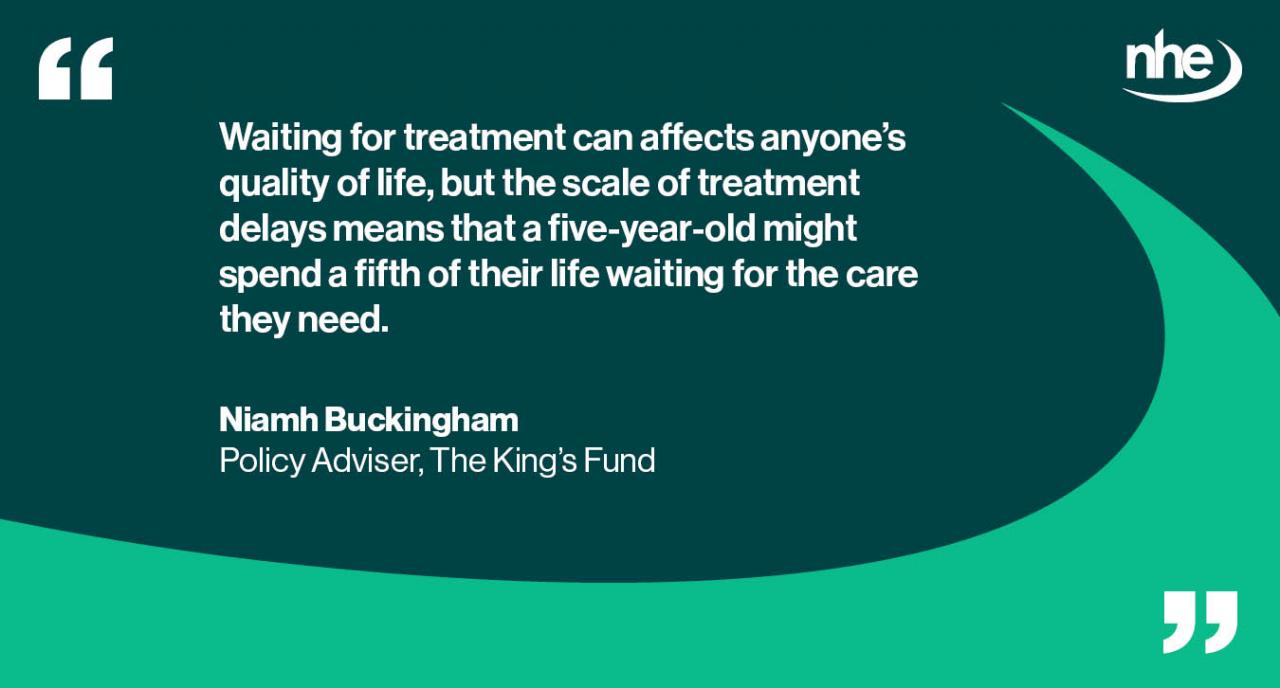
Image credit: iStock