

People living in rural and coastal communities will find it easier to see a cancer specialist under new government plans aimed at ending the longstanding postcode lottery in cancer care.
The measures, to be set out in the forthcoming National Cancer Plan, will target workforce shortages, expand specialist training, and accelerate the use of cutting‑edge technology and artificial intelligence to detect cancer earlier – helping patients get diagnosed and treated faster.
The most deprived parts of England often have fewer cancer consultants, leaving patients waiting longer for vital care. These same areas face higher levels of economic inactivity, with long waits for diagnosis and treatment keeping people out of work and limiting local economic growth.
To address this, the government will introduce new training places targeted at NHS trusts with the biggest workforce gaps, with a clear focus on rural and coastal areas where access to cancer specialists is currently most limited.
Working alongside the Royal Colleges, the government will also encourage more doctors to specialise in clinical and medical oncology, building a stronger cancer workforce in underserved communities.
The forthcoming National Cancer Plan will set out actions to help make England a world leader in cancer survival, while building an NHS fit for the future. Central to this ambition is earlier diagnosis, which is proven to improve outcomes and reduce health inequalities. As part of this effort, the government will introduce new national standards for cancer care, covering the full patient journey – from diagnosis through to treatment, recovery and rehabilitation.
The plan will also transform how the NHS adopts new technology. From April 2027, new tests, devices and digital tools designed to detect cancer earlier will be assessed through the same rigorous approval process as medicines.
Once approved, the NHS will be required to fund the technology, ensuring patients across England benefit — not only those living near major specialist centres. This shift aims to spread innovation more evenly and end the concentration of cutting‑edge diagnostics in large cities.
The first technologies set to be assessed under the new model include:
- A “sponge on a string” test that detects early signs of oesophageal cancer within minutes
- Smart software analysing tissue samples for prostate and breast cancer, speeding up diagnosis and freeing specialists for complex cases
- AI‑powered chest X‑ray analysis to help GPs identify suspected lung cancer sooner
- New techniques to help women with unexplained vaginal bleeding receive faster diagnosis of endometrial cancer
Wes Streeting, Secretary of State for Health and Social Care, said:
“For too long, your chances of seeing a doctor and catching cancer early have depended on where you live. That’s not fair and has to stop.
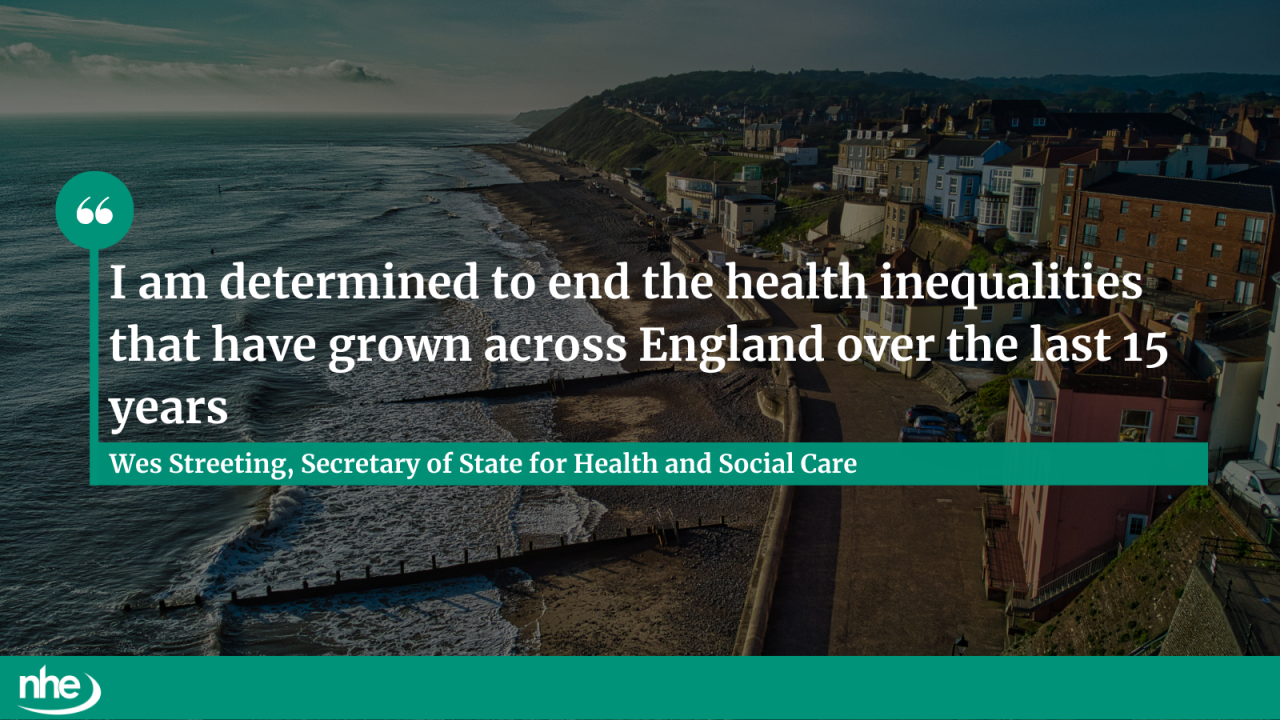
“I am determined to end the health inequalities that have grown across England over the last 15 years. We’re training more doctors in the communities that need them most and making sure the latest cancer detection technology reaches every corner of the country.
“Faster diagnosis doesn’t just save lives - it gets people back to work and back to their families sooner.
“Whether you live in a coastal town or a rural village, you deserve the same shot at survival and quality of life as everyone else. This government will turn that promise into a reality.”
The National Institute for Health and Care Excellence (NICE) will begin assessing the first two technologies this year, with the remaining technologies following as further evidence becomes available.
To tackle patchy cancer care across the country, new cancer manuals will clearly define what good care looks like at every stage. Regional partnerships of health leaders and clinicians will use sharpened data and streamlined metrics to identify underperformance earlier and act more quickly.
The approach is intended to ensure consistently high standards, wherever a patient lives.
Progress is already being made. Since July last year, the NHS has diagnosed or ruled out cancer on time for 213,000 additional cases. There are now 170 community diagnostic centres across England, with more than 100 open during evenings and weekends, bringing tests and scans closer to home.
In addition, £70 million has been invested in state‑of‑the‑art radiotherapy machines, allowing patients to access the most advanced treatments when they need them.
While more people survive cancer than ever before, progress has slowed over the past decade and England remains behind comparable countries, with working‑class communities affected most.
Developed in close partnership with cancer charities, patient groups and clinicians, including Macmillan Cancer Support, the National Cancer Plan aims to reverse those trends, reduce inequalities and ensure high‑quality cancer care is available to everyone.
Image credit: iStock