

Pioneering Higher Technical Qualifications are being launched to help plug critical skills gaps in the UK’s fast-growing medical technology (MedTech) sector – supporting NHS productivity and cutting waiting lists.
The new HTQs, which can be taught by colleges, private training providers, and universities, will prepare people for in-demand roles such as technicians working on AI-enabled health devices, wearable tech, imaging and diagnostic tools, and regulatory advisors.
Developed through an innovative partnership between Skills England, lifelong learning company Pearson, the West Midlands Combined Authority (WMCA), and employers across the region, the qualifications respond to urgent workforce needs. The Association of British HealthTech Industries estimates that 70,000 new jobs will be needed by 2035, alongside 75,000 replacements for those leaving the workforce.
The West Midlands, home to the UK’s largest medical devices cluster, employs 14,000 people and generates £6 billion in turnover. It boasts world-class innovation hubs including Birmingham Health Innovation Campus, Birmingham Knowledge Quarter, Arden Cross, and the West Midlands Health-Tech Accelerator.
To ensure the qualifications meet employer needs, WMCA, Pearson and Skills England engaged stakeholders from business, academia, and the NHS. The HTQs will cover levels 4 and 5, sitting between A levels and T Levels (level 3) and degrees (levels 6 and 7), equipping learners with expertise in digital systems, regulation, and testing.
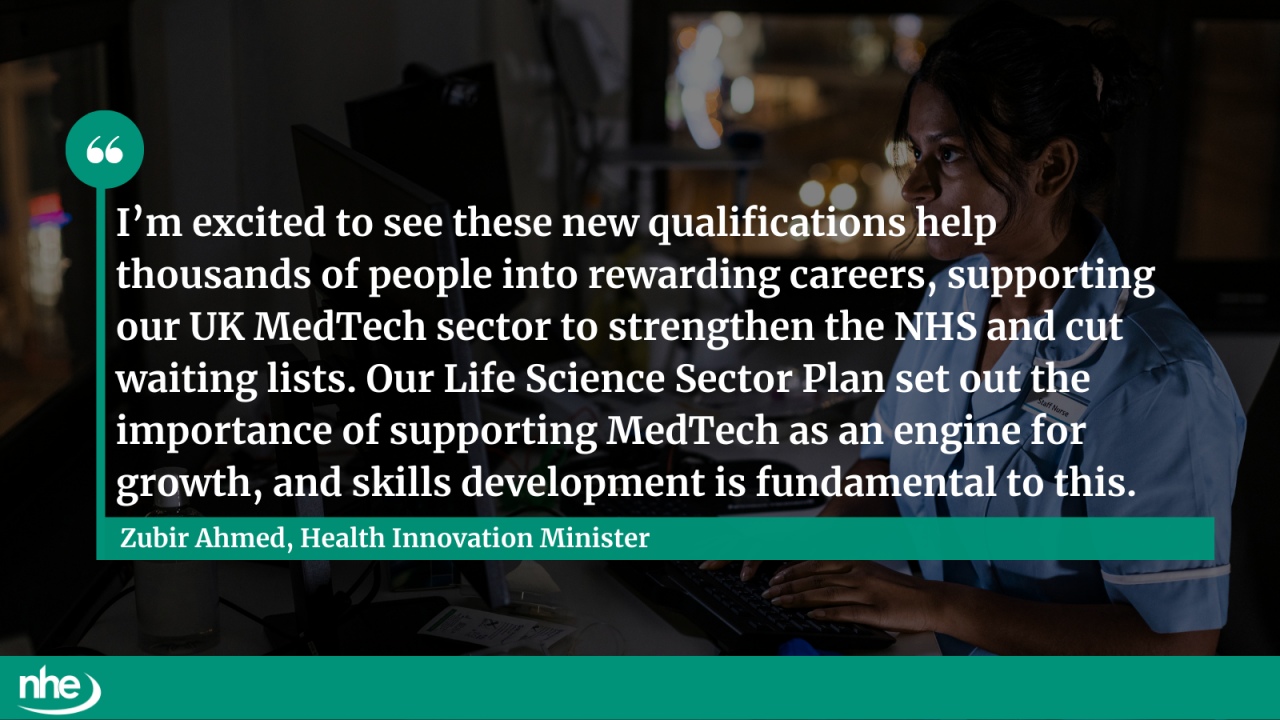
Health Innovation Minister Zubir Ahmed said:
“I’m excited to see these new qualifications help thousands of people into rewarding careers, supporting our UK MedTech sector to strengthen the NHS and cut waiting lists. Our Life Science Sector Plan set out the importance of supporting MedTech as an engine for growth, and skills development is fundamental to this. These qualifications demonstrate exactly the kind of innovative thinking we need to equip people with cutting-edge skills – addressing critical workforce shortages and supporting the future of NHS care and productivity.”
The qualifications support the government’s Industrial Strategy, which identifies life sciences as a cornerstone for long-term investment and innovation, and align with the West Midlands Growth Plan. They are being piloted with funding from the West Midlands Investment Zone.
Skills England analysis shows that two-thirds of projected additional employment demand in priority occupations by 2030 will require workers with a qualification at level 4 or above, underlining the importance of these new HTQs.
Image credit: iStock