

The NHS is set to dramatically step up efforts to reduce deaths from sepsis, with a new long-term strategy focused on earlier detection, remote monitoring, and rapid intervention.
Sepsis – a life-threatening response to infection that can lead to organ failure – remains a major patient safety challenge across England. It is currently estimated to contribute to around 4,000 deaths annually in England, alongside significant long-term disability for survivors.
Under the new blueprint, NHS leaders aim to prevent thousands of deaths by 2035 by transforming how the condition is identified and managed, both in hospitals and increasingly within patients’ homes.
Wearable technology at the heart of early detection
A cornerstone of the strategy is the expansion of wearable health technology for patients at elevated risk of sepsis. These devices, which may be worn as watches, bracelets, or linked to mobile phones, will continuously monitor vital signs such as heart rate and blood pressure.
If a patient’s condition deteriorates, the system will automatically trigger alerts, enabling clinicians to intervene more quickly. This approach aligns with the broader NHS shift towards remote care, digital health, and prevention-focused models, including virtual wards and continuous monitoring.
Groups expected to benefit most include:
- Cancer patients receiving immunosuppressive treatments
- Older people
- Individuals with catheters
- People living with serious mental illness
The ambition is clear: move from reactive emergency care to proactive identification of clinical deterioration before sepsis fully develops.
Rising demand highlights urgency
The need for change is underscored by rising demand across the system. NHS data shows more than 118,000 emergency admissions for sepsis in England during 2024/25.
Early recognition remains critical. Evidence shows that for every hour of delayed treatment, the risk of death increases by up to 8%, reinforcing the importance of faster diagnosis and intervention pathways.
More broadly, sepsis continues to place a substantial burden on NHS services, with high mortality rates and prolonged hospital stays contributing to system pressures.
Innovation already underway in clinical settings
Pilot programmes are already demonstrating the potential of wearable monitoring in high-risk cohorts.
At University College London Hospitals, cancer patients undergoing CAR T cell therapy are participating in clinical trials using chest-worn devices that track heart rate, respiratory rate and temperature, key indicators associated with both sepsis and cytokine release syndrome.
When these devices detect concerning trends, alerts are sent directly to clinicians, triggering rapid review and enabling earlier delivery of life-saving treatments such as antibiotics.
This model of continuous monitoring and automated escalation is expected to underpin future NHS pathways for sepsis care.
Ramani Moonesinghe, NHS England’s Deputy Medical Director, emphasised the scale of the challenge and the importance of innovation:
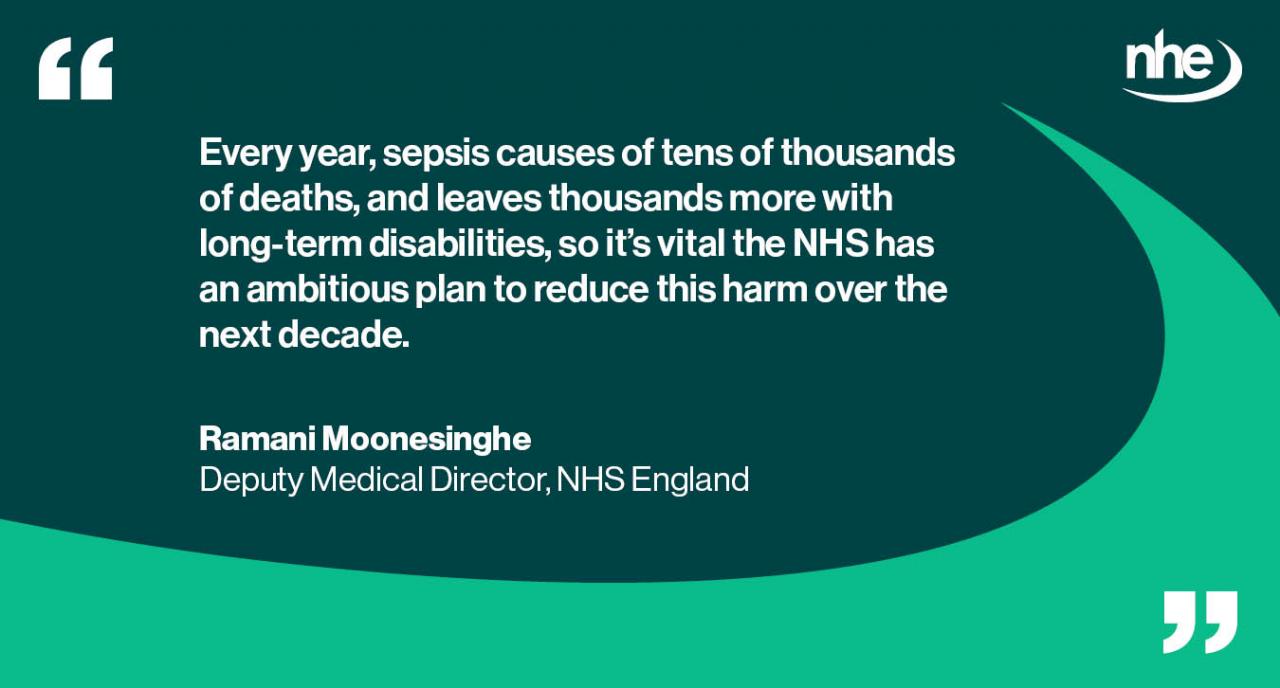
“Every year, sepsis causes of tens of thousands of deaths, and leaves thousands more with long-term disabilities, so it’s vital the NHS has an ambitious plan to reduce this harm over the next decade.
“Key to tackling sepsis is catching it early – the longer sepsis goes undetected the less chance a person has to survive or make a full recovery.
“That’s why the NHS will be trialling new wearable devices that will allow people’s vital signs to be monitored at home – so that if they deteriorate, they can get tested and treated faster.
“It is vital that everyone is aware of the signs of sepsis which can include difficulty breathing, a dramatic change in temperature, or not peeing for a time – so please do not hesitate calling 999 immediately if you or someone you know has these symptoms, and you can also find out more at nhs.uk/sepsis.”
A system-wide framework for improvement
The sepsis blueprint forms part of a wider NHS programme of reform, including new Modern Service Frameworks designed to deliver consistent, high-quality care across England.
Sepsis has been identified as a priority area for system-wide transformation, with plans focusing on prevention, earlier diagnosis, and improved recovery pathways.
Alongside this, the NHS is also introducing a new national Quality Strategy aimed at strengthening safety, effectiveness, and patient experience across all care settings, placing technology and data at the centre of future service delivery.
What this means for NHS leaders
For healthcare managers and system leaders, the implications are significant:
- Digital integration: Wearable data will need to be embedded into clinical workflows and electronic patient records
- Workforce readiness: Staff must be trained to respond to real-time alerts and manage remote monitoring pathways
- Equity and access: Ensuring high-risk populations can access and effectively use wearable technology
- Operational redesign: Pathways must adapt to support earlier intervention outside traditional hospital settings
The success of the strategy will depend not only on technology adoption, but also on scaling pilots into consistent, system-wide practice.
Image credit: iStock