


Patients face a “devastating” winter, nursing leaders have warned, as new analysis reveals a 90-fold increase in 12-hour waits for hospital admission since 2019.
The Royal College of Nursing says ministers have acted with “insufficient urgency”, failing to expand hospital and community capacity or boost staffing levels despite repeated warnings.
Between July and September 2025, 116,141 patients waited more than 12 hours in A&E after a decision to admit, compared to just 1,281 in 2019 – an increase of almost 9,000%. Over the same period, overnight bed capacity grew by only 2%, adding just 2,192 beds. That means 52 patients competing for each additional bed.
The crisis is worsened by limited community and social care capacity, leaving thousands stuck in hospital despite being ready for discharge. NHS data from October 2025 shows an average of 13,117 patients remained in hospital each day despite being fit to leave – up 6% on last year.
The findings are detailed in the RCN briefing paper Bracing for Winter: A Close Look at NHS Emergency and Elective Care in England and Its Implications for Corridor Care.
Despite government promises in its Urgent and Emergency Care Plan for 2025/26 to publish data on corridor care, almost six months later this has not materialised. The RCN is calling for urgent action to:
- Fund more hospital beds
- Improve nurse staffing levels
- Accelerate investment in community services
Meanwhile, more patients are leaving A&E without treatment, rising from 100,000 in 2019 to over 320,000 in 2025, reflecting growing frustration with overstretched services.
Corridor care – where patients are treated on trolleys, chairs, or even in cupboards – often means no access to lifesaving equipment like oxygen. Nursing staff report patients undergoing intimate examinations in public areas, while temporary escalation spaces are counted as “beds” in official figures, masking the true scale of the crisis.
Earlier this year, thousands of nurses shared harrowing accounts of patients enduring corridor care, with some dying unnoticed for hours. In May 2024, the RCN declared a “national emergency” over the issue.
The RCN warns that without immediate action, this winter could see the NHS pushed beyond breaking point.
Professor Nicola Ranger, RCN General Secretary and Chief Executive, said:
“Nursing staff and patients alike endured a horrendous winter last year, with corridor care rife across every service. Worryingly, after no respite in the summer, the signs point to the coming colder months being devastating and more dangerous for patients.
“Nursing staff have repeatedly warned about a corridor care national emergency, but the lack of urgency in tackling the crisis is unacceptable. Bed capacity has remained static, nurse numbers in hospitals haven’t increased to the level required and community services are not being invested in anywhere near fast enough. Yet again this winter, nursing staff have been set up to fail and patients set up to suffer.”
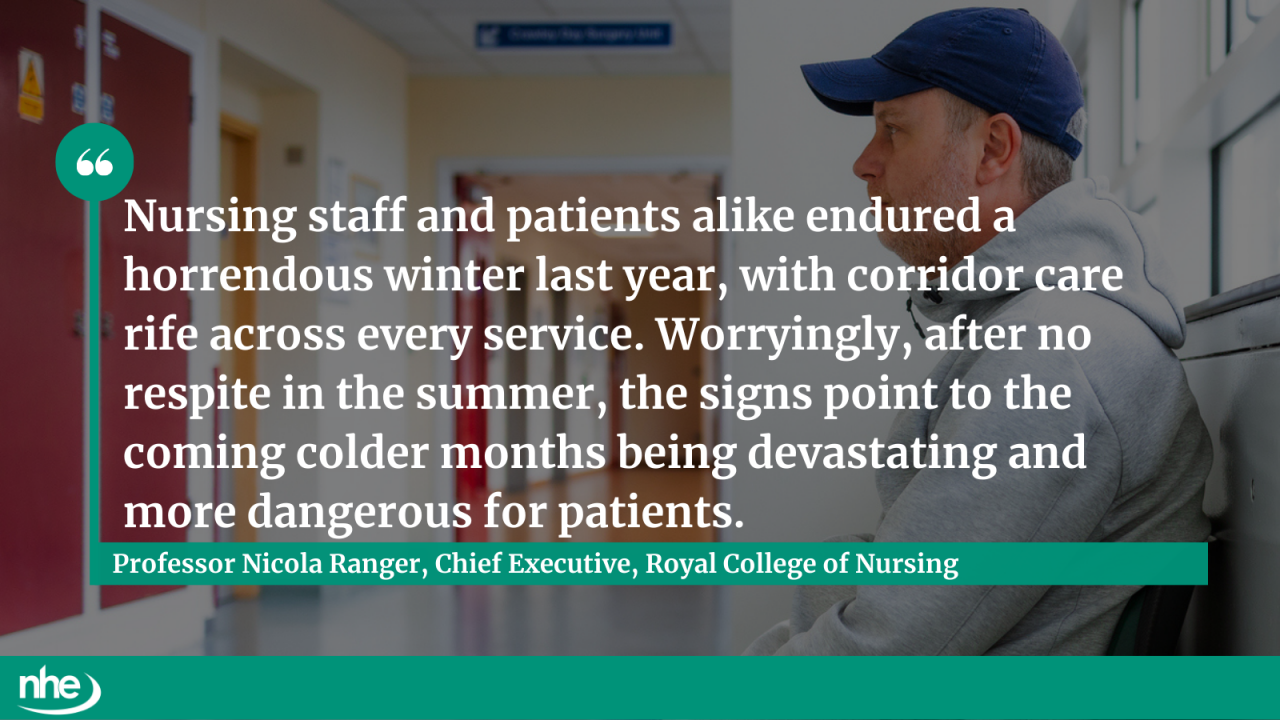
Image credit: iStock