


The Welsh Government has announced a significant escalation in its approach to improving services at Betsi Cadwaladr University Health Board, launching a directed intervention aimed at stabilising care delivery, strengthening leadership and embedding long-term accountability across north Wales.
The move follows more than a decade of sustained concerns. The health board has remained under heightened escalation measures for 11 years and has been at the most severe level (level 5) since February 2023. Despite previous recovery efforts led by the organisation itself, progress has been deemed insufficient to meet expected standards.
Under the new approach, the Welsh Government will take a more hands-on role, stepping beyond earlier frameworks that relied on internal recovery supported by external guidance. Officials say this intervention is designed to accelerate improvement where prior measures have not delivered the pace or scale required.
A comprehensive stocktake will now be undertaken to assess the organisation’s current position. This will include:
- Operational performance
- Quality and safety of care
- Strategic direction and delivery capability
Crucially, the review will also examine leadership, governance arrangements, organisational culture, and the effectiveness of the board itself.
An independent expert panel will carry out the assessment, providing detailed, evidence-based recommendations directly to ministers. A final report is expected by the end of October 2026.
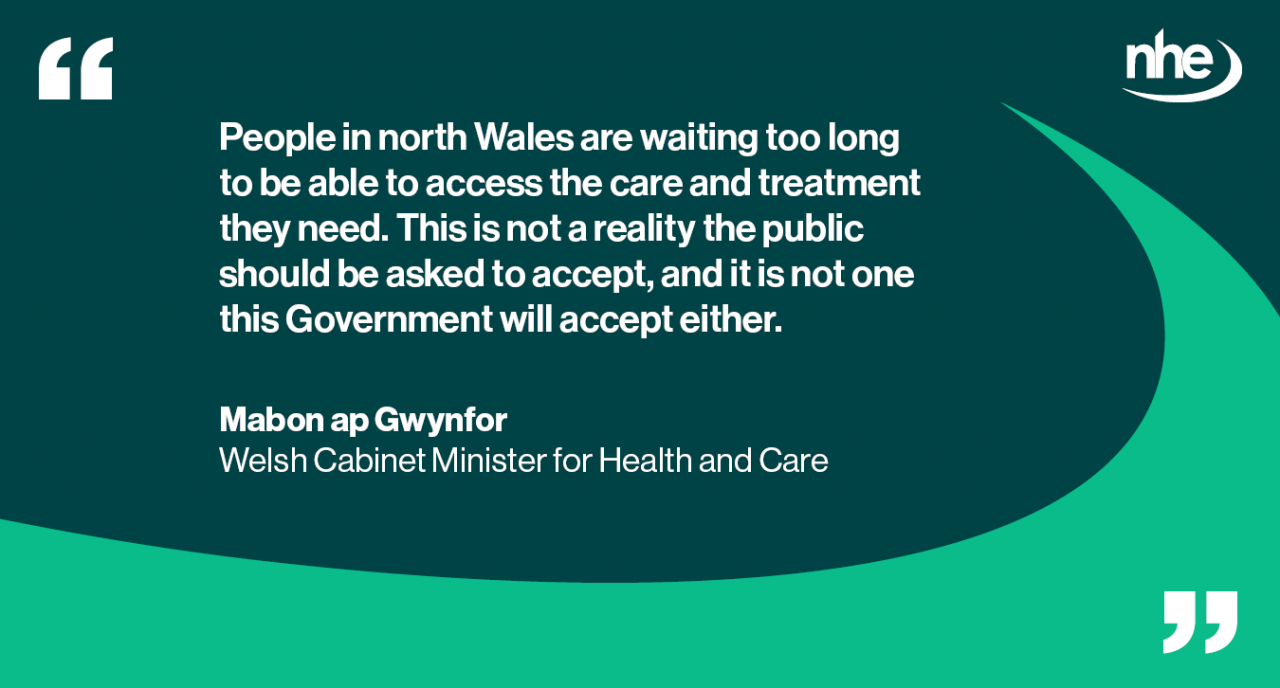
Cabinet Minister for Health and Care, Mabon ap Gwynfor, issued a stark warning about the urgency of improvement:
"People in north Wales are waiting too long to be able to access the care and treatment they need. This is not a reality the public should be asked to accept, and it is not one this Government will accept either."
"This is the Board’s final chance to demonstrate they can deliver the consistent high standards of care that the people of north Wales deserve.”
The language underscores the seriousness of the intervention and the limited tolerance for continued underperformance.
Alongside the governance review, NHS Wales Performance and Improvement has been tasked with delivering immediate support in key pressure areas, including:
- Planned care pathways
- Diagnostic services
- Cancer treatment performance
The aim is to strengthen operational planning while ensuring greater consistency in delivery.
Additional resources will be deployed in the coming months to support implementation, reflecting concerns that previous support mechanisms did not provide sufficient impact.
The intervention comes amid ongoing concerns about urgent and emergency care services. The emergency department at Ysbyty Glan Clwyd was recently classified by Healthcare Inspectorate Wales as a “service requiring significant improvement,” its highest level of concern.
This designation comes less than two years after the service was removed from the same category, highlighting ongoing instability and raising questions about the sustainability of past improvements.
To address this, NHSWPI will help establish a dedicated Urgent and Emergency Care Improvement Team, led by a senior expert tasked with delivering a focused improvement plan.
For NHS leaders and policymakers, the intervention at Betsi Cadwaladr represents a pivotal test case in system oversight and accountability. It highlights broader challenges facing health systems across the UK, particularly in recovering performance while rebuilding organisational culture and leadership capability.
The coming months will be closely watched, not only within Wales but also across the wider NHS, as the effectiveness of more directive government involvement is assessed.
Image credit: iStock