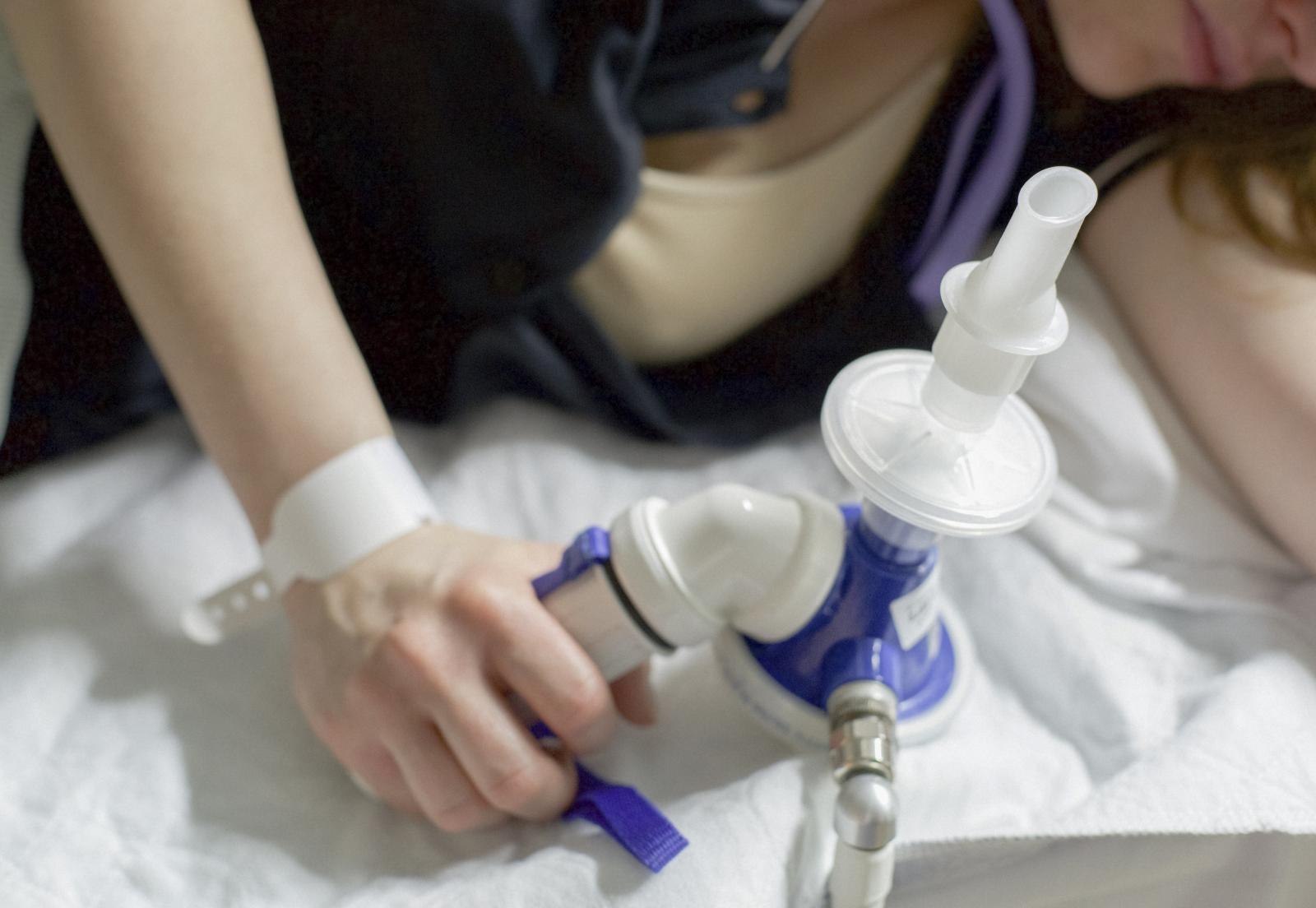

Researchers at Manchester University NHS Foundation Trust are partnering with Lancaster University on a major new study aimed at reducing waste from “gas and air” in NHS maternity services, following a £1 million funding award from the National Institute for Health and Care Research.
Gas and air, widely used to provide pain relief during labour, is one of the NHS's largest contributors to greenhouse gas emissions because it contains nitrous oxide, a powerful greenhouse gas that retains heat in the atmosphere and plays a significant role in climate change.
The three-year research programme, titled Childbirth, Choice and Climate Change, will run from 2026 to 2028 and brings together experts from MFT, Worcestershire Acute Hospitals NHS Trust, University College London Hospitals NHS Foundation Trust, The University of Manchester and Lancaster University.
The project will investigate how hospitals can reduce carbon emissions associated with gas and air use in maternity services while maintaining access to effective pain relief and safeguarding women's choices during childbirth.
Professor Cliff Shelton, Co-Principal Investigator for the study and Consultant Anaesthetist at Wythenshawe Hospital, part of MFT, said:
"Previous work has demonstrated that there is often a large amount of waste in medical gas supply and delivery systems. This study will build on that work and find ways to reduce waste, without preventing people from getting the healthcare that they need."
Researchers have stressed that the study is not designed to reduce the options available to pregnant women. Instead, the focus is on identifying avoidable waste and improving sustainability across maternity services.
As one of six participating NHS trusts, MFT will help deliver a broad programme of research involving interviews, observations and engagement with pregnant women, new parents, midwives, doctors and engineers. The study team will also use innovative methods to measure gas and air usage and waste across clinical settings.
By combining technical data with frontline insights, researchers hope to build a clearer picture of how much gas and air is wasted, where those losses occur and the factors driving them.
The findings will be used to develop and test practical interventions in hospitals, working closely with maternity teams, professional bodies and national stakeholders. Researchers believe the project could help shape future NHS guidance and support wider efforts to reduce healthcare-related greenhouse gas emissions.
Subject to approvals, one or more MFT hospitals are expected to be included as case study sites as the project progresses.
Image credit: iStock