


The Health Research Authority has published the findings from its pilot programme exploring how researchers and sponsors can develop and submit Inclusion and Diversity Plans as part of clinical trial and clinical investigation applications.
The pilot involved seven studies from both commercial and non-commercial sponsors. Five were Phase III Clinical Trials of Investigational Medicinal Products (CTIMPs), while two focused on medical devices.
The initiative was designed to assess how Inclusion and Diversity Plans could help improve representation in clinical research and ensure studies better reflect the populations they aim to serve.
According to the HRA, organisations participating in the pilot saw clear advantages in developing Inclusion and Diversity Plans during the study design stage. Early consideration of inclusion helped research teams think more strategically about participant recruitment and representation.
However, the pilot also identified areas requiring further development. The HRA found that the information Research Ethics Committees (RECs) need to review within these plans, and the way it is presented, requires additional consideration. Feedback also suggested that the accompanying guidance could be improved to help sponsors and researchers more easily identify the information required to complete the plans.
Building on the pilot's findings, the HRA has confirmed that from early 2027 it will invite a larger number of researchers and sponsors to voluntarily submit Inclusion and Diversity Plans alongside their research applications.
Feedback will be gathered over a 12-month evaluation period to provide further evidence of the benefits and practical impact of producing these plans. During this phase, participating researchers and sponsors will have the opportunity to submit plans for review by a small number of selected Research Ethics Committees.
The HRA has stressed that while submission of an Inclusion and Diversity Plan is encouraged, it is not a legal requirement and is not mandated under the new clinical trials regulations introduced in April.
The move forms part of a wider effort across the UK health research sector to improve participation from underrepresented groups and strengthen the quality and relevance of clinical evidence.
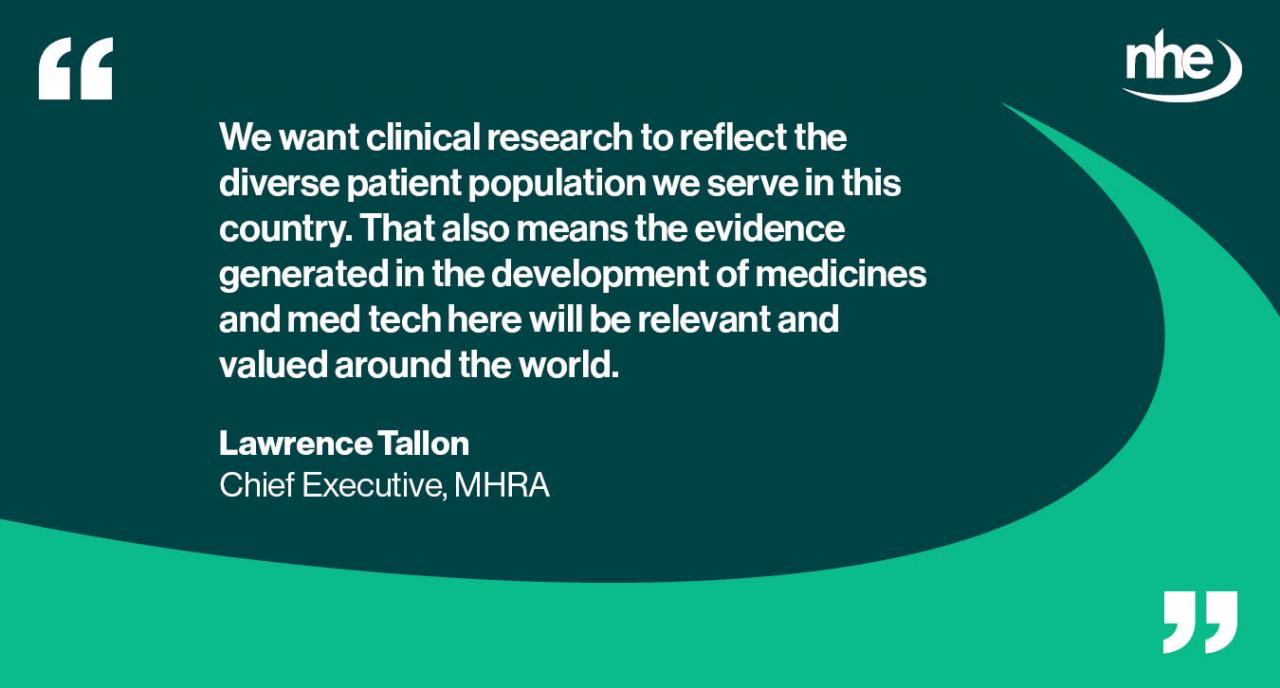
Lawrence Tallon, Chief Executive of the Medicines and Healthcare products Regulatory Agency said:
"We want clinical research to reflect the diverse patient population we serve in this country. That also means the evidence generated in the development of medicines and med tech here will be relevant and valued around the world.
"We welcome this valuable work and, in collaboration with the HRA and other partners, will use its insights to improve the diversity of participants in clinical research."
As the NHS and wider life sciences sector continue to focus on reducing health inequalities, the expansion of Inclusion and Diversity Plans could play an important role in ensuring future clinical trials better represent the communities they are intended to benefit.
Image credit: iStock