

A pioneering £10 million programme backed by UK Research and Innovation is set to accelerate the journey of new treatments, medical devices and digital health technologies from laboratory development to real-world use across the NHS, private healthcare and international markets.
The Frontier Innovation for Cardiometabolic Disease Programme has been launched in London to tackle some of the UK's biggest health challenges, including heart disease, diabetes and obesity. Funded through UKRI's Local Innovation Partnerships Fund and supported by the Mayor of London, the initiative brings together healthcare, academic and industry partners to speed up the development, testing and adoption of cutting-edge innovations.
The programme is designed to address a long-standing challenge in healthcare innovation, where promising technologies often fail to progress beyond development because companies struggle to generate the clinical evidence required for NHS adoption.
By creating a clear pathway from innovation to implementation, the initiative aims to help patients gain access to new treatments and technologies more quickly while strengthening London's position as a global life sciences hub.
The £10 million investment is split equally between two complementary programmes: Venture Builder and Validate and Scale.
The Venture Builder programme will support entrepreneurs and innovators developing new therapeutics and medical technologies targeting cardiometabolic disease.
The initiative will be delivered through the BioInnovation Institute, one of Europe's leading life sciences innovation centres backed by the Novo Nordisk Foundation, alongside King's College London's London Institute for Healthcare Engineering. King's Health Partners will also contribute expertise across the wider programme.
The programme aims to support more than 30 ventures, launch between four and six clinical trials and attract around £200 million in private investment.
The Validate and Scale programme will focus on testing promising health technologies in real-world clinical environments.
Led by UCLPartners, the programme brings together NHS organisations, private healthcare providers, Harley Street Health District, Imperial College Health Partners and Health Innovation Network South London.
Companies will gain access to clinical settings where innovations can be evaluated against priority cardiometabolic challenges including high blood pressure, atrial fibrillation and high cholesterol.
The evidence generated will help accelerate adoption across NHS services, ensuring successful innovations can reach patients more quickly.
The programme is expected to engage more than 100 companies, provide tailored support to at least 20 and help at least five high-growth businesses validate and scale their technologies within London. Organisers estimate the programme could leverage between £50 million and £100 million in private investment.
A key objective of the initiative is improving outcomes in communities disproportionately affected by cardiovascular disease and related conditions.
Partners will focus on innovations that improve prevention, earlier diagnosis, risk reduction and long-term condition management, while generating evidence across London's diverse population groups.
Across both programmes, organisers believe the initiative could unlock as much as £300 million in private investment and create up to 1,000 high-value jobs in the capital.
Professor Kevin Fenton CBE, Regional Director of Public Health, NHS England London, said:
“Cardiovascular disease (CVD) causes one in four deaths in London, with the greatest burden falling on our most deprived communities and those experiencing health inequalities. Yet much of this burden is preventable. Hundreds of thousands of Londoners are living with undiagnosed high blood pressure, putting them at unnecessary risk of heart attacks and strokes.
“We know that earlier detection and effective treatment save lives, but we must find new ways to reach people who are too often missed by traditional services. Through our London Million Hearts and Minds CVD Prevention programme, we are bringing together the NHS, local government, communities and industry to accelerate prevention at scale.
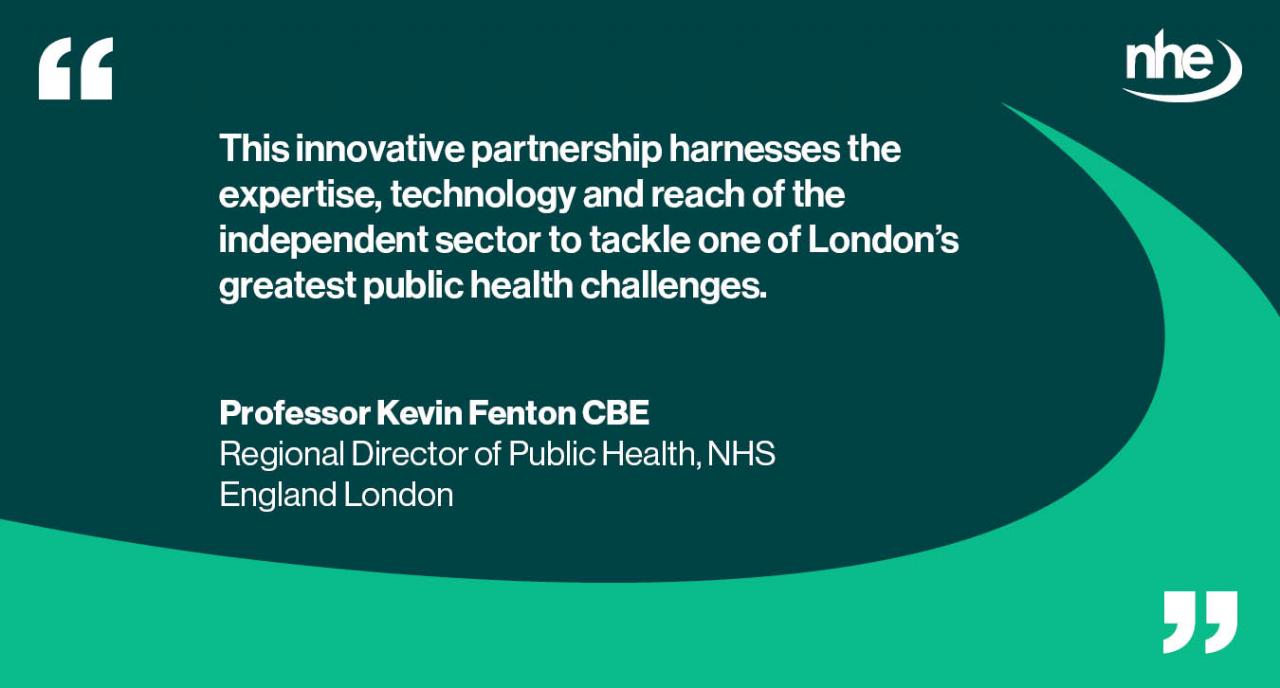
“This innovative partnership harnesses the expertise, technology and reach of the independent sector to tackle one of London's greatest public health challenges. It is a powerful example of how working differently, across traditional boundaries, can help us detect risk earlier, prevent avoidable illness and build a healthier, more equitable London.”
The programme is expected to become a flagship example of how collaboration between academia, healthcare providers and private industry can accelerate health innovation while addressing some of the most pressing public health challenges facing the UK.
Image credit: iStock