

A major NHS patient safety initiative will see a pioneering early warning system introduced in emergency departments across England this winter, helping clinicians identify and respond to seriously ill children more quickly.
The National Paediatric Early Warning System is being expanded into emergency departments nationwide, providing doctors and nurses with a standardised method for monitoring children who may be deteriorating and ensuring timely intervention when it matters most.
The system works by recording and assessing key clinical observations, including blood pressure, heart rate, respiratory rate and oxygen saturation levels. Based on these measurements, patients receive an overall score that helps healthcare teams determine the urgency of care required.
The national rollout is expected to make England home to the world's largest standardised paediatric early warning system.
Importantly, PEWS goes beyond clinical observations. Parents, carers and young patients themselves will be encouraged to raise concerns about changes in a child's condition. Any concerns identified by families or healthcare professionals can trigger an immediate escalation of care, regardless of the calculated score.
More than 90 hospitals across England are already using the National PEWS system within paediatric inpatient wards. NHS data indicates that these trusts have consistently reported lower rates of cardiac arrest among paediatric patients.
The initiative forms part of wider NHS preparations for winter pressures. Alongside PEWS, the health service has introduced a series of readiness measures, including opening flu vaccination bookings earlier than ever before. NHS trusts completed winter planning by the end of August, with all plans undergoing stress testing by the end of September.
The PEWS expansion also follows the recent nationwide rollout of Martha's Rule across accident and emergency departments and waiting areas. The programme enables patients, relatives and staff to request an urgent independent review when concerns about a patient's deterioration are not being adequately addressed.
At the same time, NHS England is developing new urgent care standards for children attending A&E departments, including plans to prioritise the elimination of corridor care for young patients.
Duncan Burton, Chief Nursing Officer for England, said:
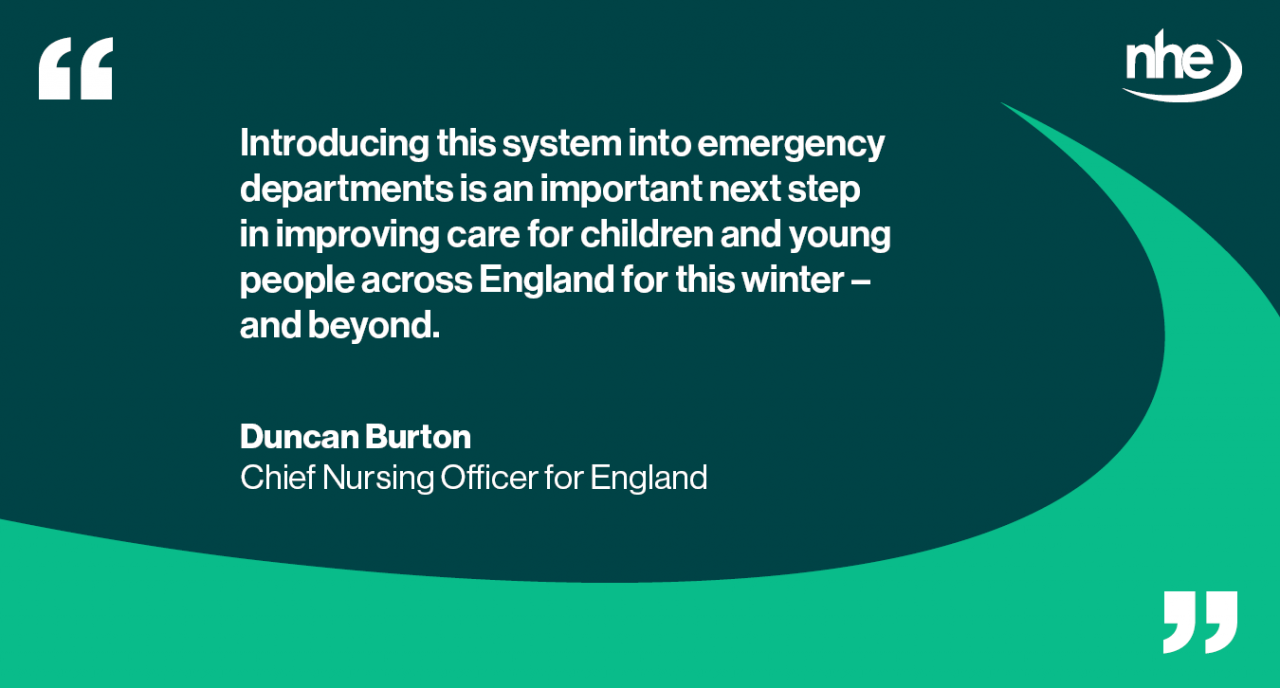
"Introducing this system into emergency departments is an important next step in improving care for children and young people across England for this winter – and beyond.
"In fast paced emergency departments, staff need to spot quickly when a child’s condition is deteriorating. This standardised approach will help them recognise the warning signs, communicate concerns, and make timely decisions when every moment matters.
"Just as importantly, it makes sure the concerns of children, parents and carers are heard and can prompt action."
More than six million children attend emergency departments in England each year, the majority with mild or self-limiting illnesses. However, NHS leaders believe the expansion of PEWS will significantly strengthen the ability of clinical teams to identify those with serious conditions at the earliest possible stage.
The National PEWS programme was developed by NHS England in partnership with the Royal College of Paediatrics and Child Health and the Royal College of Nursing, with significant input from frontline clinicians.
Unlike adult early warning systems, paediatric PEWS uses age-specific observation charts designed to reflect the differing physiological norms of babies, children and adolescents. The emergency department version has been tailored specifically to support rapid clinical decision-making within busy acute care environments.
Hospitals with paediatric inpatient services are already transitioning to the National PEWS framework, with rapid adoption seen since its launch in November 2023.
While similar standardised systems exist in parts of Australia and across Denmark, the scale of implementation in England is expected to make it the largest programme of its kind globally.
The NHS will also provide extensive guidance, training and educational resources to support emergency department teams as they implement and embed the new system ahead of winter.
Image credit: iStock