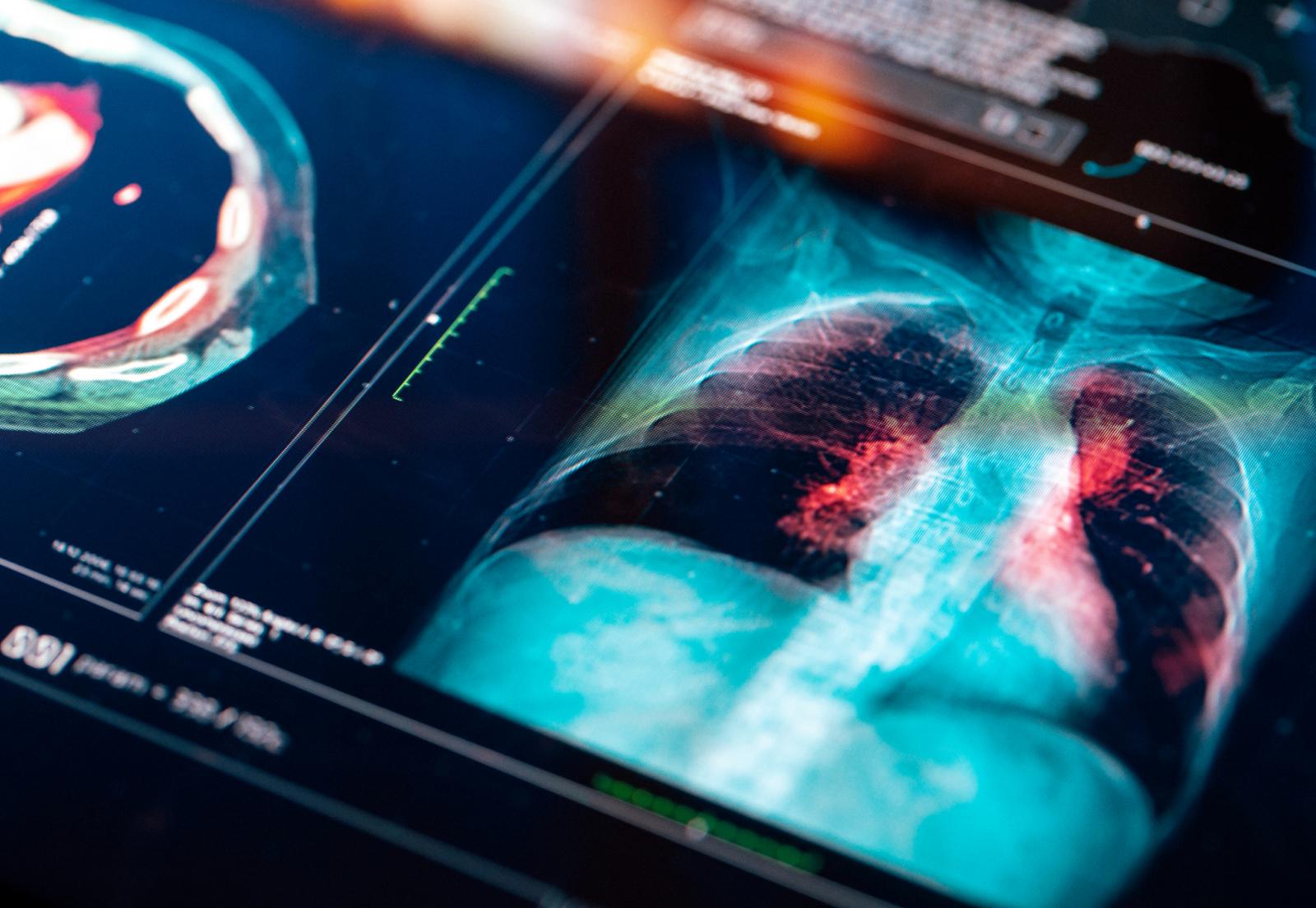

Patients with suspected lung cancer are set to receive faster, more accurate diagnoses thanks to a pioneering NHS pilot combining artificial intelligence with robotic technology.
The initiative, currently being led by Guy’s and St Thomas’ NHS Foundation Trust, uses AI to rapidly analyse lung scans and identify high-risk nodules. Surgeons then deploy a robotic camera to navigate deep into the lungs with pinpoint precision, reaching nodules as small as 6mm – roughly the size of a grain of rice.
This "glimpse of the future" allows doctors to access areas previously considered too risky or difficult to reach, potentially replacing weeks of "watchful waiting" and repeat scans with a single, 30-hour biopsy.
Lung cancer remains a primary driver of the life expectancy gap in England, accounting for a full year of the nine-year divide between the nation's wealthiest and poorest areas.
As part of the National Cancer Plan, the government is using this technology to ensure fairer access to care. The pilot coincides with a massive expansion of the NHS lung cancer screening programme:
- Universal Access: Every eligible person will be invited for a check within five years.
- Massive Scale: 1.4 million people will be invited for lung health checks next year alone.
- Saving Lives: The programme is projected to diagnose 50,000 cancers by 2035, with at least 23,000 caught at an early, more treatable stage.
The process combines digital intelligence with mechanical precision:
- AI Analysis: Software flags small lumps most likely to be cancerous.
- Robotic Bronchoscopy: A robot-guided camera travels through the airways to the exact site.
- Precise Biopsy: Doctors take a tissue sample with minimal invasiveness, often sparing patients from complex surgery.
Guy’s and St Thomas’ NHS FT’s Medical Director for Cancer and Surgery, Dr Anne Rigg, commented:
“This pilot brings together artificial intelligence and robotic technology as genuinely disruptive tools to simplify and shorten the lung cancer diagnostic pathway. By combining AI-enabled risk stratification with highly precise robotic biopsy, we are reducing delays and unnecessary steps to diagnosis.
“Crucially, this work is being co-designed with patients and frontline clinical teams, ensuring that the pathway is not only faster, but safer, more equitable, and centred on the patient experience. By improving access to advanced diagnostics we can help reduce variation in care for all patients, regardless of where they are referred from.
“Together, these changes have the potential to support earlier diagnosis and treatment for more patients, which is fundamental to improving long-term outcomes in lung cancer.”
Following 300 successful procedures at Guy’s and St Thomas’, the pilot will now expand to King’s College Hospital and Lewisham and Greenwich NHS Trust.
If successful, the evidence gathered from this pilot will inform a new national commissioning policy, potentially making robotic bronchoscopy a standard tool across the entire NHS.
Image credit: iStock