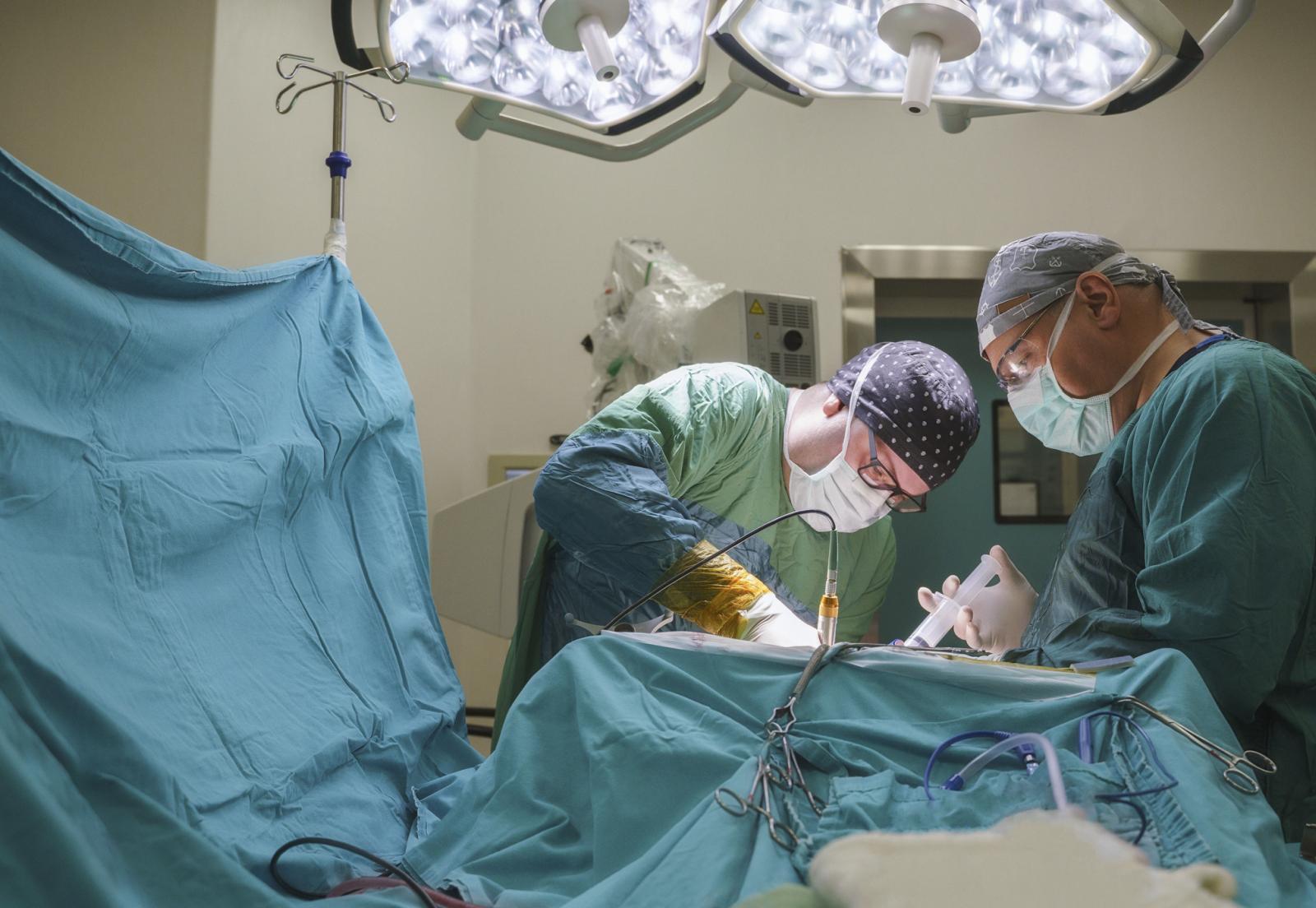

A pioneering brain tumour operation at the National Hospital for Neurology and Neurosurgery has marked a significant milestone in the use of artificial intelligence within the NHS, with AI supporting a neurosurgeon in real time during live surgery for the first time.
The innovative procedure was carried out at University College London Hospitals NHS Foundation Trust as part of a clinical trial involving AI technology developed by researchers at University College London and funded by the National Institute for Health and Care Research.
During the surgery, the AI system analysed a live video feed from the operating theatre, providing real-time guidance to the surgical team. Unlike conventional surgical planning tools that rely on pre-operative scans, the technology assessed conditions as they unfolded, helping surgeons identify critical structures and make more informed decisions throughout the procedure.
The operation involved the removal of a pituitary tumour located at the base of the brain, one of the most complex and delicate regions for neurosurgical intervention. Within a space no larger than a marble, the pituitary gland sits alongside major blood vessels and optic nerves responsible for vision. Even the slightest surgical error can result in life-changing consequences, including blindness, stroke or death.
The AI platform highlighted high-risk anatomical structures during the operation, helping surgeons avoid critical areas while maximising tumour removal. Researchers believe the technology could also be used in the future to track surgical instruments and monitor instrument-to-tissue interactions, providing additional support during highly complex procedures and offering performance feedback.
Speaking about the breakthrough, Health Innovation Minister James Frith said:
“This is an example of AI at its best: patients getting care previously deemed unimaginable thanks to the latest groundbreaking technology.
“I am so pleased for Rhys that he had this life-changing surgery as part of government-funded research that will pave the way for the treatments of tomorrow.
“AI needs proper safeguards and we will always ensure that safety is taken seriously. But we will also ensure we benefit from the opportunities it brings to deliver faster and more effective care. That is what we mean by building an NHS that is fit for the future.”
The AI system was created by researchers at the UCL Hawkes Institute, a multidisciplinary research centre dedicated to advancing healthcare technologies through engineering, medical science and artificial intelligence.
The platform operates on NVIDIA's Clara IGX infrastructure, which has been specifically designed to support real-time AI applications in clinical and medical device environments.
To develop the technology, researchers trained and validated the system using a substantial library of annotated videos captured from previous endoscopic pituitary surgeries. Before its use in live surgery, the AI had already demonstrated value as a training and education tool for surgeons carrying out similar procedures.
Healthcare leaders and digital transformation specialists will view this latest development as a powerful example of how AI is moving beyond administrative functions to provide direct clinical support in high-risk surgical settings. As NHS organisations continue to explore the safe adoption of artificial intelligence, technologies such as this could play a major role in improving outcomes, reducing surgical risk and supporting the next generation of precision medicine.
Image credit: iStock