


Ambulance handover times in England improved last month despite the NHS facing its busiest January since before COVID‑19, according to new provisional data published today.
Figures show that 420,324 ambulance handovers with known times took place in January 2026, the highest January total since 2020 and a 5.2% increase on January last year. Yet, even with this surge in demand, patients were handed over to hospitals more than two minutes faster on average than a year ago.
The average ambulance handover time in January stood at 37 minutes and 16 seconds, compared with 39 minutes and 27 seconds in January 2025.
Performance improved further in the most recent week, with average handover times almost five minutes faster than the same week last year.
Health leaders say the improved performance reflects the positive impact of NHS winter planning, which focused on keeping ambulances on the road for longer and improving patient flow through hospitals.
Despite the progress, winter illness continues to place significant strain on the health service.
Data shows that last week:
- An average of 1,093 adult hospital beds were closed or occupied each day due to norovirus
- Around 904 patients were hospitalised daily with norovirus
- NHS 111 services received 381,479 calls, nearly 4,000 more than the same week last year
Flu rates have fallen since peaking last month, but hospitals still cared for an average of:
- 1,491 patients with flu per day
- 630 patients with COVID‑19 per day
Vaccination continues to play a key role in protecting patients and easing pressure on hospitals.
Since the autumn and winter vaccination campaign began, 18.8 million flu vaccines have been delivered – around 500,000 more than at the same point last year. Health officials say this has helped keep more people out of hospital and reduce severe illness.
Professor Meghana Pandit, NHS National Medical Director, said:
“Early NHS preparation and planning for winter is paying off for patients.
“Patients are being handed over from ambulances quicker, even amid high demand on services – with more handovers last month than any January since before the pandemic.
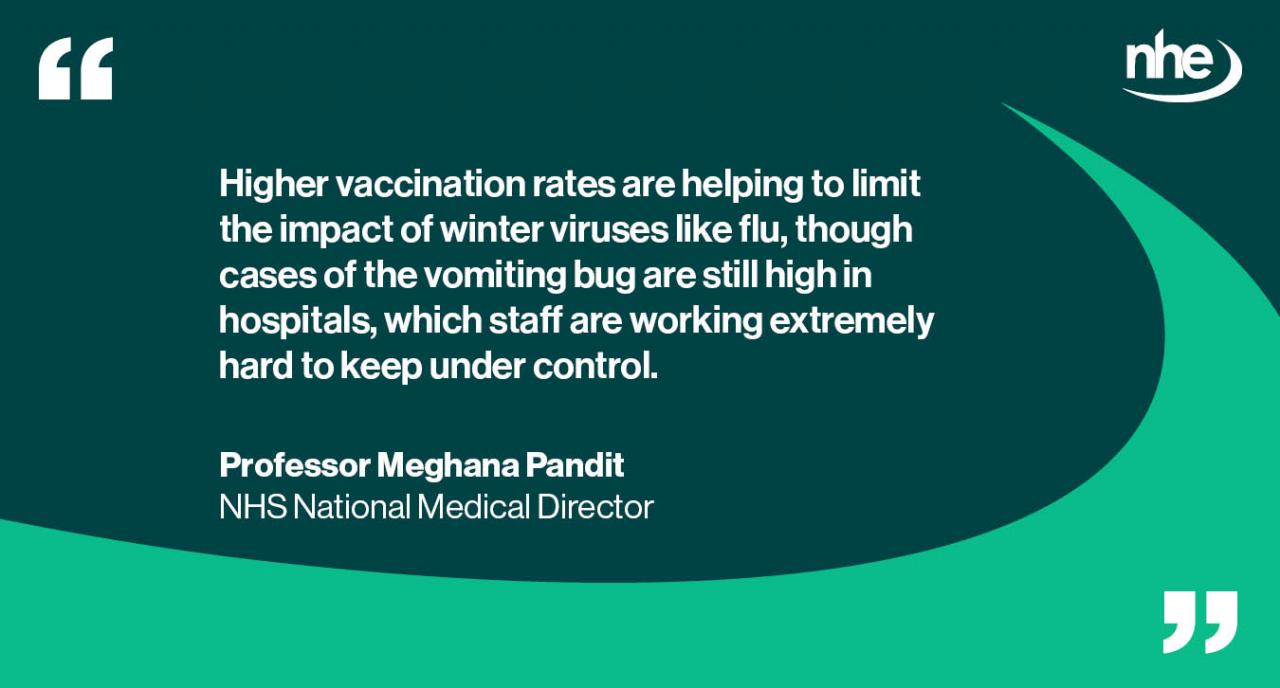
“Higher vaccination rates are helping to limit the impact of winter viruses like flu, though cases of the vomiting bug are still high in hospitals, which staff are working extremely hard to keep under control.
“Vaccinations remain the best protection available from seasonal viruses, so if you are eligible for your flu, COVID-19 or RSV jab please come forward.”
Earlier this week, the government announced that from April 2026, the RSV (respiratory syncytial virus) vaccine will be offered to additional high‑risk groups.
The expanded programme will include adults aged 80 and over, and all residents in care homes for older adults Meanwhile, people turning 75, those aged 75 to 79, and pregnant women are already eligible and are being encouraged to come forward for vaccination.
The improved ambulance handover times, achieved during a period of exceptional demand, are seen as an important step in maintaining emergency response capacity.
By reducing delays at hospital doors, more ambulances are able to return to the road quickly, improving response times for patients in urgent need.
Image credit: iStock