

Thousands more children across England could be protected from deadly and highly infectious diseases under significant changes to the 2026/27 GP contract, which strengthens vaccination delivery and increases support for practices serving communities with lower uptake.
The updated contract introduces new incentives designed to help GPs improve vaccination rates among children and families who have historically missed out on routine immunisations. The changes come amid growing concern about falling vaccination uptake, measles outbreaks and England’s loss of World Health Organization measles elimination status.
Under the current system, GP practices only receive additional payments if they hit high vaccination rate thresholds. This has meant that practices serving communities with historically low uptake – often the ones making the biggest improvements – miss out on vital resources.
The new GP contract addresses this by introducing improvement‑based incentives, ensuring that practices making progress receive additional support, funding can be reinvested into outreach, follow‑ups and targeted engagement, as well as health inequalities are reduced, particularly for families living in areas with low vaccination rates.
These changes aim to protect more children from dangerous but preventable illnesses such as measles, which has recently caused a significant outbreak in Enfield, resulting in unvaccinated children being hospitalised.
England recorded over 2,900 measles cases in 2024, the highest in decades, and childhood vaccination uptake remains well below the WHO’s 95% target needed to prevent outbreaks.
By embedding vaccination delivery at the centre of the GP contract, the NHS expects to:
- Increase uptake in high‑risk areas
- Prevent outbreaks before they start
- Reduce pressure on hospitals
- Provide more equitable access to essential immunisations
The contract will also align GP incentives with the latest national childhood vaccine schedule, following the expansion of the NHS vaccination programme on 1 January to include chickenpox (varicella) for the first time. Children are now offered the combined MMRV vaccine at 12 months and 18 months.
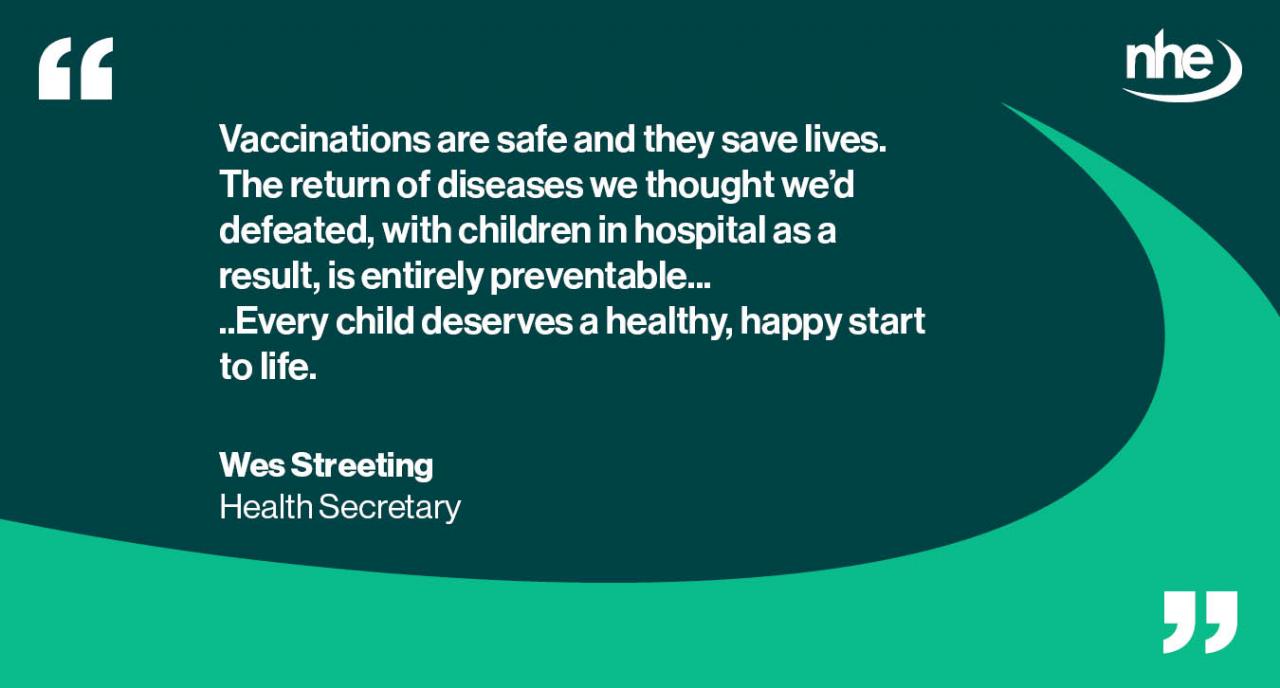
Health Secretary Wes Streeting said:
“Vaccinations are safe and they save lives. The return of diseases we thought we’d defeated, with children in hospital as a result, is entirely preventable.
“With our investment and modernisation in general practice, GPs will be backed to protect children and prevent the risk of further outbreaks like we’ve seen Enfield.
“Every child deserves a healthy, happy start to life.”
This single vaccine protects against measles, mumps, rubella and chickenpox, removing the need for separate varicella doses and simplifying the immunisation pathway.
GP quality indicators will be updated to include MMRV delivery, ensuring practices are fairly rewarded as the programme rolls out.
The updated contract will also include:
- Requirements for Primary Care Networks to identify care home residents who are overdue routine vaccinations
- Greater flexibility for GP practices when collaborating on flu and COVID‑19 vaccine delivery
- The expansion of the RSV vaccination programme from April, covering:
GP practices must offer RSV vaccination to eligible patients as an essential service.
A new £2 million pilot will deploy health visitors to support families facing barriers to accessing vaccines – offering personalised support to ensure more children receive timely protection.
Taken together, the changes aim to:
- Boost childhood vaccination uptake
- Reduce infection outbreaks
- Support practices in high‑need areas
- Ensure fairer funding
- Narrow health inequalities
- Keep more children out of hospital
The NHS expects the new contract to help deliver a more efficient, equitable and proactive vaccination system that protects families and communities across the country.
Image credit: iStock