


A clear majority of GPs support the principle of giving patients a choice over where they receive NHS treatment, yet systemic and administrative hurdles are preventing this from happening consistently in practice, according to new findings from the Independent Healthcare Providers Network (IHPN).
The report, based on polling of more than 800 GPs, highlights a disconnect between policy intent and real-world delivery. While most family doctors agree that offering provider choice is central to high-quality care, just 36% say they “always” or “often” discuss or offer patients a choice when making referrals.
Under NHS rules, most patients have a legal right to choose where they receive their treatment. However, the research suggests that this right is not always realised in day-to-day clinical settings.
Earlier IHPN analysis indicates that patients who exercise choice could reduce their waiting times by more than two and a half months, while travelling an average of less than 13 miles – underscoring the potential impact on elective recovery and patient outcomes.
The survey reveals a consistent set of operational challenges that limit GPs’ ability to offer informed choice:
- Single Points of Access (SPOAs) and referral systems were cited by 68% as a major barrier
- 67% pointed to limited consultation time as a constraint
- 66% highlighted the complexity of referral pathways
- 64% reported a lack of accessible data on providers and waiting times
- 68% said expectations around patient choice are unclear
Only 3% of respondents said they face no meaningful barriers, while just 10% believe the current system works effectively in practice.
The findings raise important questions for NHS leaders and policymakers, particularly as patient choice remains a central plank of Government strategy to cut waiting lists and improve service access.
The IHPN argues that without practical support for GPs, ambitions around choice risk remaining aspirational rather than operational. For patients, this could mean missed opportunities to access faster treatment or services better aligned with their needs.
To address these challenges and embed patient choice more effectively, the report calls for a coordinated set of reforms:
- Publication of the long-promised Patient Choice Charter from the NHS 10 Year Plan
- Integration of choice into SPOAs, referral management systems and digital NHS pathways
- Safeguards to ensure choice is maintained as services shift into community settings
- New metrics in the GP Patient Survey to track whether patients recall being offered a choice
- Improved guidance, data transparency and simplified referral processes for GPs
Danielle Henry, Director of Policy at IHPN, said:
"Patient choice is one of the NHS's most established rights and can make a real difference to patients by helping them access treatment more quickly and in a setting that best meets their needs.
"Our research shows that GPs support the principle of patient choice, but too often face practical barriers that make it difficult to deliver consistently. The challenge is not whether GPs believe in choice, but whether the system makes it easy for them to offer it.
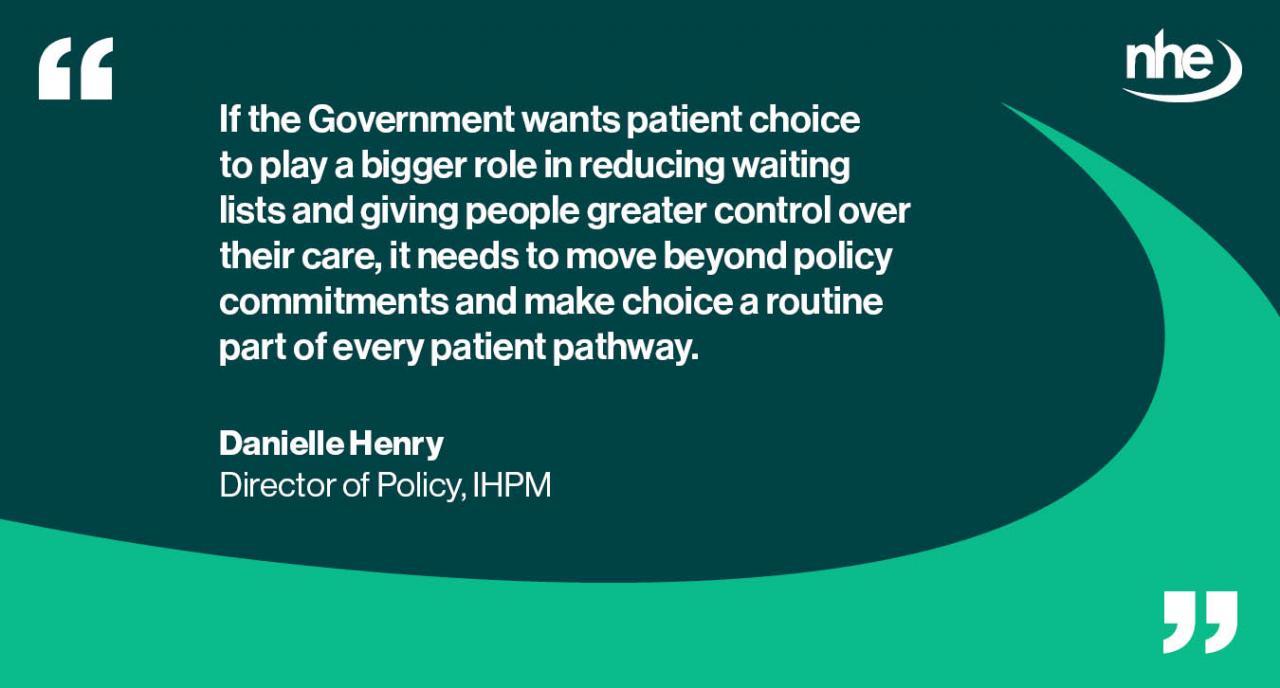
"If the Government wants patient choice to play a bigger role in reducing waiting lists and giving people greater control over their care, it needs to move beyond policy commitments and make choice a routine part of every patient pathway."
For ICS leaders, commissioners and primary care networks, the report serves as a timely reminder that delivering patient choice is as much about operational design as it is about policy.
Without streamlined referral pathways, accessible data on waiting times, and clarity on expectations, GPs will continue to struggle to translate patient choice into everyday practice.
Image credit: iStock