

Specialist NHS teams have helped reduce waiting lists three times faster than the national average, according to a new report on the Further Faster 20 programme.
Thousands of patients across England have benefited from the initiative, which is designed to cut delays, improve productivity and support people back into work.
As part of the programme, expert “crack teams” were deployed to 20 hospital trusts located in areas with the highest levels of economic inactivity. Working alongside local clinicians and operational staff, these teams rapidly transformed how planned care is delivered, helping to slash waiting times and boost activity.
The findings come as the government marks one year since the Elective Reform Plan was launched, directing record NHS funding towards reducing waiting lists and restoring timely access for patients. Since July 2024, the waiting list has fallen by more than 225,000, despite the NHS handling over 28.4 million referrals, demonstrating substantial progress across the service.
The FF20 programme introduced a range of innovations, including High Flow Theatre Lists, in which surgical teams operate continuously in a “Formula 1‑style” model to complete more procedures in less time. A major overhaul of outpatient pathways also helped cut waste and eliminate unnecessary appointments. Many trusts adopted a ‘straight‑to‑test’ approach so patients could access diagnostics immediately rather than attending multiple clinic visits.
South Tees created 4,000 additional outpatient slots simply by optimising clinic operations. Bolton reduced wasted slots by 20% through improved capacity management, while East Lancashire increased nurse productivity by 14% using AI‑powered dictation for pre‑operative assessments.
Published by NHS England, the evaluation shows that between October 2024 and October 2025, waiting lists in FF20 areas fell by 4.2%, compared with 1.4% nationally. For working‑age adults, reductions were even more dramatic, with waiting lists falling more than five times faster, enabling more people to receive treatment and return to employment.
Wes Streeting, Health Secretary, said:
“We said our Elective Reform Plan would get waiting lists down, and one year on that’s exactly what it’s delivering. Along with record investment, we’re doing things differently to get patients seen quicker, back to work and living their lives.
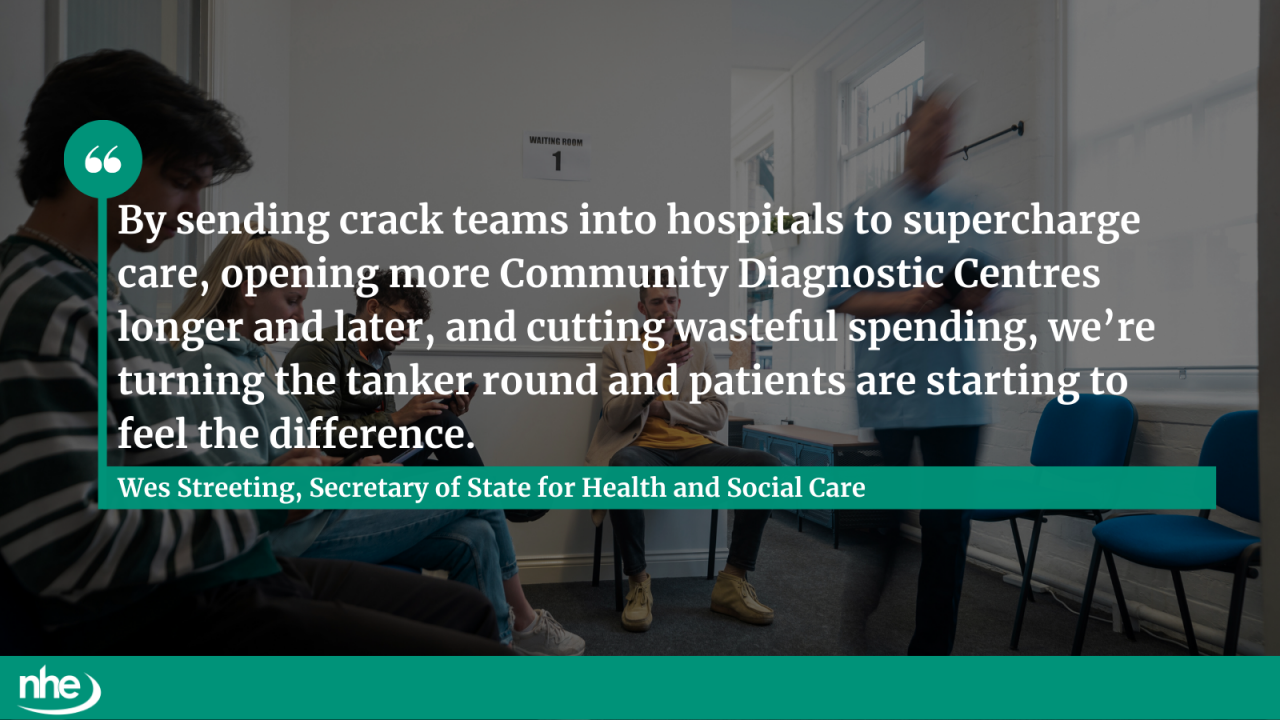
“By sending crack teams into hospitals to supercharge care, opening more Community Diagnostic Centres longer and later, and cutting wasteful spending, we’re turning the tanker round and patients are starting to feel the difference.
“It will be a long road, but together with NHS staff, we are fixing our health service and make it fit for the future and beyond.”
This progress reflects the NHS’s wider transformation under the Elective Reform Plan, launched in January 2025, which commits to restoring the 18‑week referral‑to‑treatment standard for 92% of patients by the end of the Parliament.
Alongside FF20, the NHS and government have expanded evening and weekend clinics, increased diagnostic capacity through new and enlarged Community Diagnostic Centres, invested in surgical hubs, delivered millions more GP appointments, hired additional frontline staff and equipped hospitals with smarter digital tools.
As a result, NHS productivity continues to exceed expectations, with 2.7% growth between April 2024 and March 2025, followed by 2.5% growth in the first five months of the current financial year. This means the health service is not only increasing capacity but also delivering greater value for taxpayers.
NHS Providers Chief Executive Daniel Elkeles added:
“It’s great to see NHS trusts’ innovation and hard work to see patients quickly, cut waiting lists and boost productivity making such a huge contribution to the economy and growth. This is all the more impressive given the impact of record demand, resident doctor strikes and a relentless focus on delivering a financial ‘break even’ position for the NHS as a whole.”
The FF20 programme will now be used as a blueprint to spread successful approaches nationwide – taking “the best of the NHS to the rest of the NHS”.
Image credit: iStock