

Clinicians at University College London Hospitals (UCLH) are playing a key role in a major UK clinical trial that could make advanced blood cancer treatments safer, more accessible and less disruptive for thousands of patients living with multiple myeloma.
The study, known as TOPICAL, is investigating whether an experimental anti-inflammatory drug called POLB 001 can prevent Cytokine Release Syndrome (CRS), a potentially serious immune reaction associated with some of the latest cancer immunotherapies.
The trial is being co-led by Professor Rakesh Popat, Consultant Haematologist at UCLH, alongside colleagues from across the UK. Researchers hope the treatment could significantly reduce the need for hospital monitoring and intervention following immunotherapy.
New immunotherapy approaches, including bispecific antibodies, are transforming outcomes for patients with blood cancers such as multiple myeloma, lymphoma and leukaemia. However, while highly effective, these treatments can trigger CRS, causing symptoms ranging from fever and flu-like illness to dangerously low blood pressure and breathing difficulties. In severe cases, the condition can become life-threatening.
Professor Popat said:
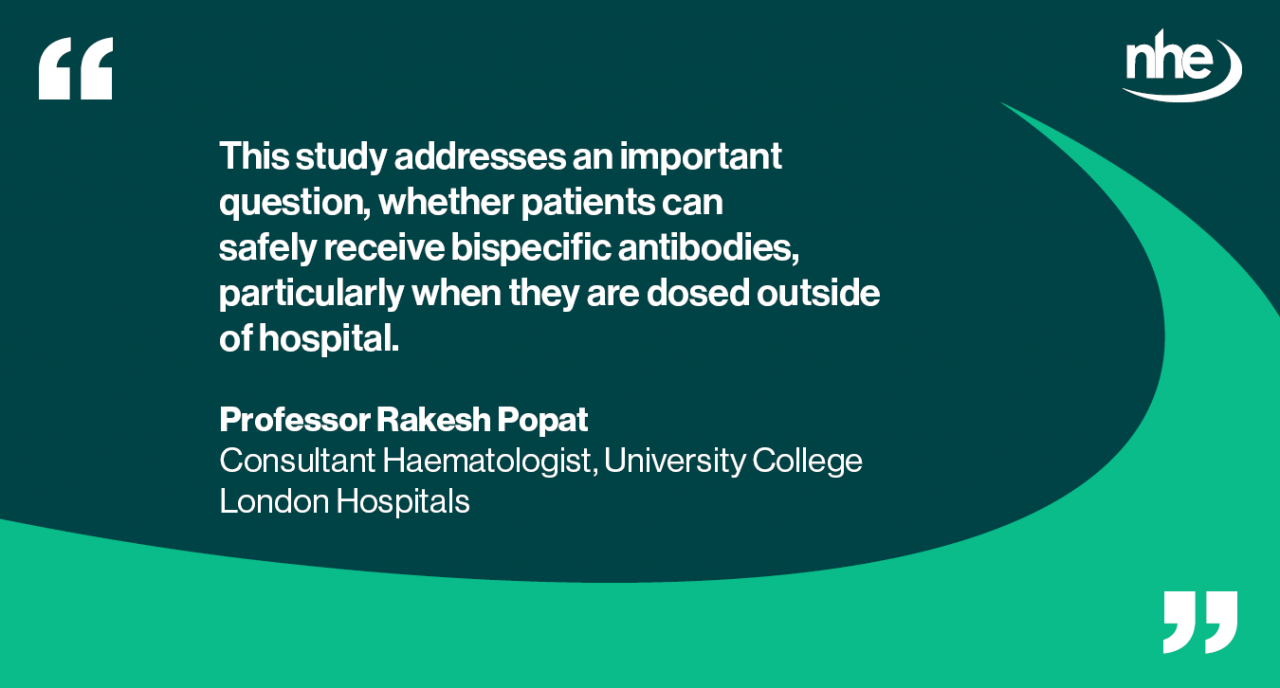
“This study addresses an important question, whether patients can safely receive bispecific antibodies, particularly when they are dosed outside of hospital. While CRS in the most part is manageable, it leads to increased use of hospital resources and a higher burden of treatment on patients by the need for close monitoring and administration of treatment once it occurs. Having an oral preventative treatment can help reduce this and make the treatment easier for patients.”
The need for preventative solutions is significant. Research suggests that more than 70% of patients receiving some cancer immunotherapies experience CRS, while almost one in four patients who develop severe CRS require intensive care support.
By reducing the likelihood and severity of CRS, POLB 001 has the potential to improve patient experience, increase treatment flexibility and help NHS organisations manage growing demand for specialist cancer services.
The TOPICAL trial is led by The Christie NHS Foundation Trust and is being delivered at five NHS hospitals across the UK, including the National Institute for Health and Care Research (NIHR) Clinical Research Facility at UCLH. The study is also supported by the NIHR Biomedical Research Centre at UCLH.
Researchers plan to enrol approximately 30 patients with relapsed or treatment-resistant multiple myeloma. Participants will receive POLB 001 alongside an approved bispecific antibody therapy to assess whether the combination can safely reduce CRS while maintaining treatment effectiveness.
If successful, the study could pave the way for wider use of immunotherapy treatments outside traditional hospital settings, helping more patients access life-changing therapies with fewer complications and less time spent in hospital.
Image credit: iStock