

Patients in areas with high levels of economic inactivity will benefit from improved support to remain in work or return after illness, following £25 million government investment in the Health and Growth Accelerator pilot programme.
The initiative brings together health and employment support to prevent common long‑term conditions from pushing people out of the workforce. The pilots, running in South Yorkshire, West Yorkshire, the North East and North Cumbria, focus on the health issues most often linked to worklessness:
- Musculoskeletal conditions
- Metabolic disorders such as diabetes and hypertension
- Mental illness
A record 2.8 million people in the UK are currently out of work due to health conditions, while a further 10.2 million are in work but living with health problems that may put them at risk of leaving employment without early support.
Using the funding, the NHS is developing new approaches to help patients manage health problems early, reducing the risk of long‑term sickness absence. Interventions may include:
- NHS‑funded employment coaching
- Gym memberships or structured physical activity
- Counselling
- Physiotherapy
- Support from occupational therapists, employment advisers, and other allied health professionals
The aim is to stop health problems becoming work problems – and to reduce pressure on GPs by expanding access to specialist staff better equipped to deliver work‑focused support.
The new investment builds on an earlier £45 million provided last year. Together, the pilots are helping the NHS explore how early intervention and preventive care can support the government’s 10‑Year Health Plan for England, which aims to shift focus from sickness to prevention.
The West Yorkshire Integrated Care Board has already used its funding to support people with complex conditions.
Examples include:
Stroke rehabilitation enabling return to full hours
An accountant recovering from a stroke experienced fatigue and brain fog. Through the pilot:
- She received a personalised return‑to‑work plan
- Worked with her employer to obtain an occupational health review
- Returned to her original working hours within months
Support for severe burnout and mental health crisis
A Halifax patient was referred to the programme after prolonged sickness absence. Tailored support included:
- A key worker providing wellbeing coaching
- Practical employment advice
- Referral to a local counselling charity
The support helped him regain confidence, explore new roles, and stay connected to work during recovery.
GP referrals into Active Leeds offer tailored physical activity sessions, health coaching, and peer support.
These interventions help patients regain fitness and maintain work readiness.
Wes Streeting, Health and Social Care Secretary, said:
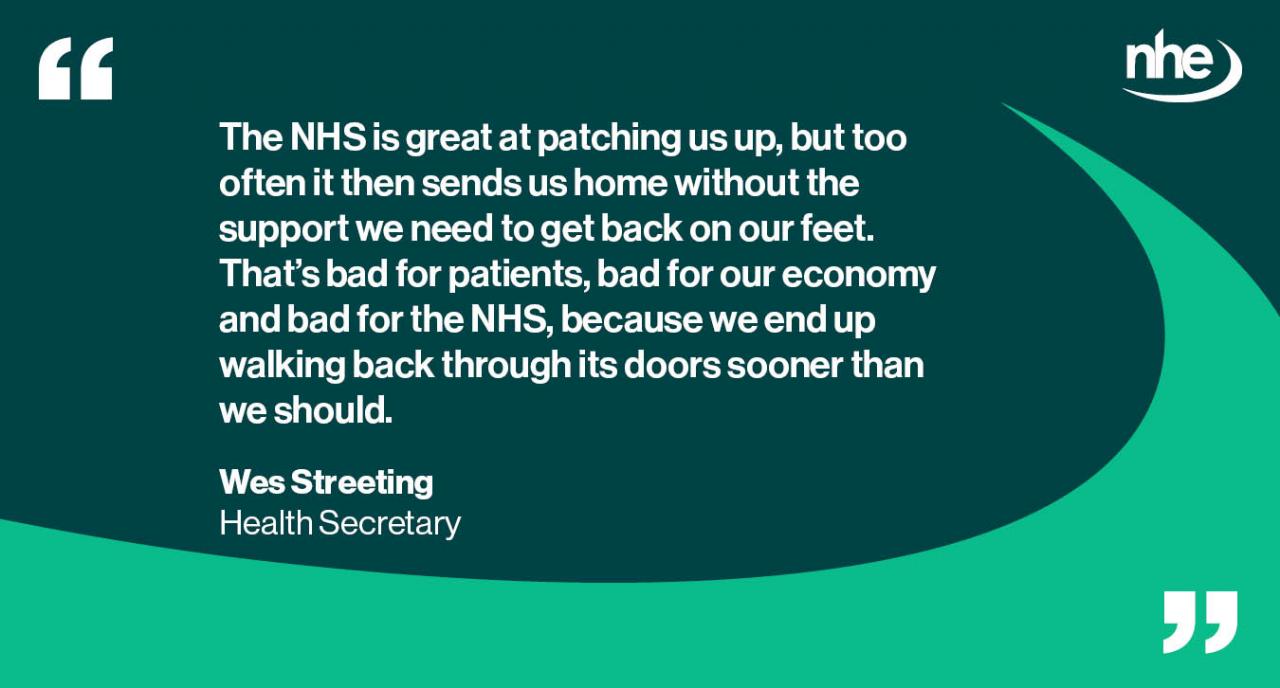
“The NHS is great at patching us up, but too often it then sends us home without the support we need to get back on our feet. That’s bad for patients, bad for our economy and bad for the NHS, because we end up walking back through its doors sooner than we should.
“For the first time, we are making the NHS accountable for patients’ employment outcomes, to drive better rehab and long-term health.
“This is what our 10 Year Health Plan is all about - an NHS that doesn’t just treat illness, but helps people live fuller, healthier lives. Thanks to our changes, the NHS will play its part in getting Britain back to work.”
The pilot aligns with national efforts to reform the fit note system, highlighted in Sir Charlie Mayfield’s Keep Britain Working Review, which found that fit notes are often not working as intended and fail to provide adequate support for workers or employers.
It follows wider commitments, including the National Cancer Plan for England, which recognises the impact of cancer on work, and a £3.5 billion employment support package aimed at helping more people with sickness or disability enter and remain in work.
These interventions reflect a growing recognition that improving health support is essential to boosting employment, living standards and economic growth.
Image credit: iStock