

New analysis from the Health Foundation suggests the NHS is on course to miss the government's flagship waiting times pledge, despite significant progress in reducing patient backlogs.
When Prime Minister Keir Starmer made cutting elective care waiting times his top NHS priority in 2024, he pledged to restore the constitutional standard that 92% of patients should begin treatment within 18 weeks by the end of the current parliament.
However, fresh modelling by the Health Foundation indicates that, if current trends persist, the NHS will fall well short of that ambition. The analysis forecasts that by the end of the parliament, 92% of patients will be treated within 34.9 weeks, almost double the target timeframe.
Despite concerns about future performance, the NHS has achieved notable improvements since Labour entered government.
Between July 2024 and July 2026:
- The elective waiting list reduced from 7.62 million to 7.33 million patients
- The proportion of patients treated within 18 weeks increased from 58.8% to 65.4%
- The number of patients waiting longer than a year more than halved, falling from over 290,000 to approximately 111,400
The Health Foundation notes that this progress reflects the sustained efforts of NHS staff across England. However, rising demand is increasingly undermining gains in productivity and activity.
In September 2025, the Health Foundation projected that 92% of patients would be treated within 20.3 weeks by the end of the parliament, narrowly missing the government's goal.
The latest analysis paints a more challenging picture.
Annual referrals have climbed to 21.7 million, with referral growth accelerating from 1.5% in Labour's first year in office to 3.0% in its second year. Although removals from the waiting list have also risen to 21.8 million annually, they are now exceeding referrals by a much smaller margin than previously.
Researchers suggest the increase is being driven largely by GP referrals rather than consultant-led referrals or those from other healthcare professionals. This may be linked to improved access to GP appointments, allowing more patients to enter elective treatment pathways.
At the same time, industrial action involving resident doctors during 2025 and April 2026 is likely to have constrained elective activity, slowing efforts to reduce the backlog.
According to the analysis, achieving the government's 18-week pledge would require NHS activity levels to grow substantially faster than they currently are.
While new initiatives aimed at improving referral triage, diagnostic services and operating theatre productivity could help boost performance, the scale of the challenge remains significant.
If referrals continue to increase at the current rate of 3% per year, removals from the waiting list would need to increase at more than 4.5% annually, more than double the current growth rate of 2.2%.
With Andy Burnham's government yet to clarify whether the 18-week standard remains its central NHS performance target, the Health Foundation argues that a revised timetable may be necessary.
The think tank suggests a more realistic approach could allow continued improvements in elective care while enabling greater focus on other priorities that matter to patients, including access to GP services and reducing pressures in emergency care.
Francesca Cavallaro, Senior Analytical Manager at the Health Foundation, said:
“Thanks to the hard work of staff, the NHS has made progress in bringing down waiting times, but a rise in referrals means that the service is having to run faster just to stand still and the prospects of meeting the government’s pledge are receding.
“Andy Burnham’s government have yet to set out whether they will give the 18-week target the same priority as it had under Keir Starmer, but our analysis shows the pledge is becoming increasingly hard to deliver. While the government should not give up on bringing down waiting times when millions of people are still waiting too long for treatment, setting a more realistic target would enable the NHS to continue to make progress on elective care and to focus more on improving other key aspects of care that are also important to the public.”
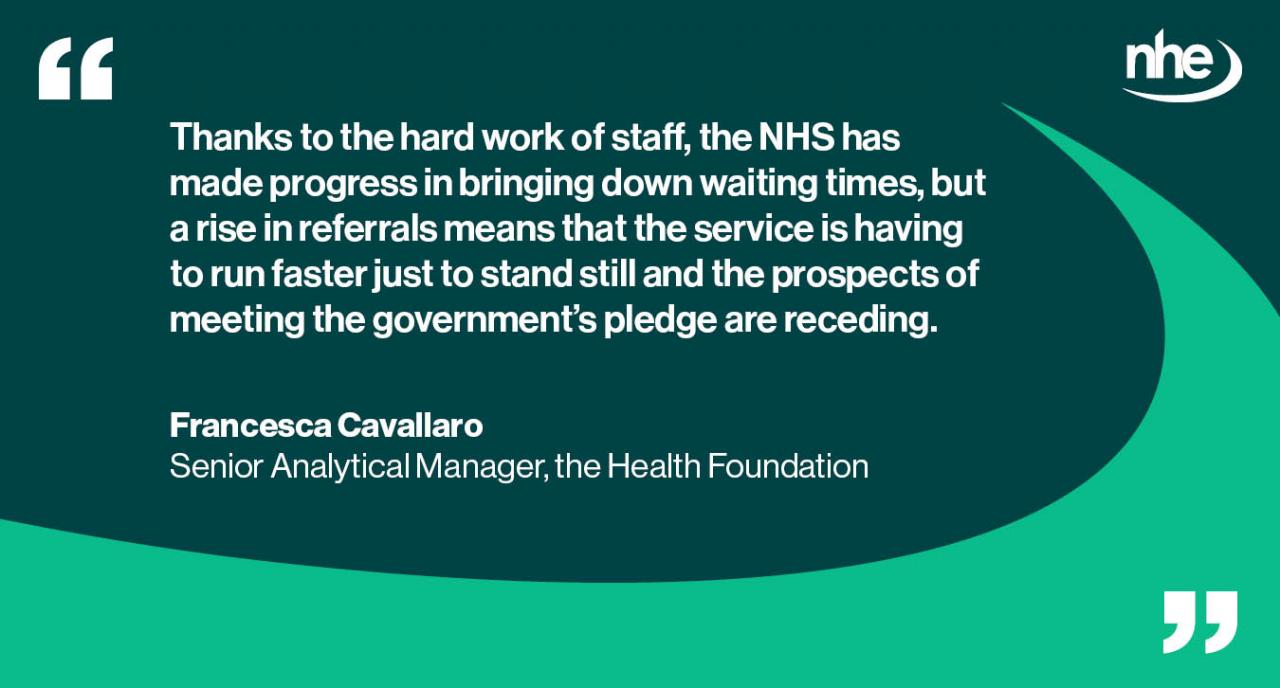
Image credit: iStock