

A £343 million investment in mental health services will see 159 new NHS facilities open across England, marking what ministers describe as the biggest redesign of mental health care in a generation.
The expansion aims to make support more accessible, reduce pressure on emergency services and ensure people receive help before reaching crisis point.
Under the plans, the NHS will establish 100 new community mental health centres and 59 dedicated mental health emergency departments, bringing services closer to local communities and improving access to specialist care.
With demand for mental health support continuing to rise, particularly among children and young people, the government hopes the new facilities will help tackle long waiting times and provide earlier intervention for those experiencing mental health challenges.
Around one in five people experience a common mental health condition each year, yet many still struggle to access timely support. The new model is designed to address this by making services easier to reach and better connected to wider community support networks.
The 100 new community mental health centres will provide walk-in support without the need for a GP referral and without the lengthy waits that many patients currently face.
The centres will bring together mental health specialists, NHS services, local authorities and voluntary sector organisations under one roof. Patients will also benefit from direct links to housing, employment and community support services, creating a more joined-up approach to care.
Some centres will be newly built, while others will operate from existing high street and community locations, including libraries, former banks and other local venues. The aim is to make support available in welcoming, non-clinical environments that are embedded within the communities they serve.
The first sites are expected to open from autumn this year, with further facilities becoming operational from March 2027.
During a visit to one of the six community mental health centres already operating in England, Health and Social Care Secretary Yvette Cooper said:
“Too many people are only getting mental health support when they reach crisis point, after struggling for far too long to get the help they need.
“These new community mental health centres will help people get support earlier and closer to home, making it easier to get the right care before problems escalate. And when someone does need urgent help, new mental health emergency departments will be able to make sure they are seen quickly by specialist teams in the right setting.
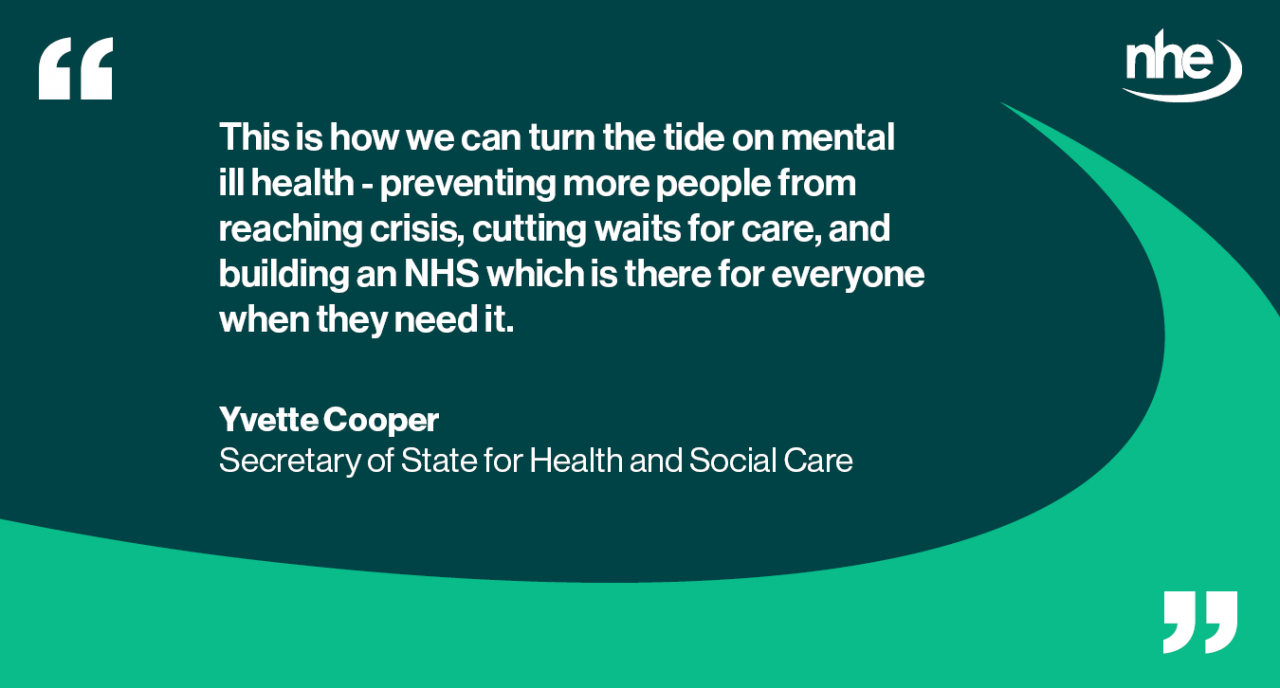
“This is how we can turn the tide on mental ill health - preventing more people from reaching crisis, cutting waits for care, and building an NHS which is there for everyone when they need it.”
Alongside the community hubs, the NHS will introduce 59 new mental health emergency departments for people experiencing a mental health crisis who do not require treatment in a traditional A&E setting.
Located alongside emergency departments and working closely with ambulance services and police forces, the facilities will offer same-day specialist assessments in therapeutic environments designed specifically for mental health care.
The expansion will more than double the number of dedicated mental health emergency departments in England, increasing the national total to 82.
Patients attending these units will be rapidly assessed and directed to the most appropriate support, whether inpatient treatment, intensive home support or community-based services.
The announcement represents the first phase of a broader mental health transformation outlined in the government's 10 Year Health Plan.
The programme supports a national shift from crisis-driven healthcare to prevention-focused services, with ministers aiming to improve outcomes by intervening earlier and helping people remain in education, employment and their communities.
The investment will also feed into the forthcoming Mental Health Strategy, which is expected to consider the role of schools, employers, local government and voluntary organisations in supporting mental wellbeing alongside NHS services.
The strategy will be informed by recommendations from Professor Peter Fonagy's independent review examining mental health conditions, ADHD and autism, as well as the support available to those affected.
By expanding access to preventative care and crisis services, the government hopes to reduce the number of people reaching emergency situations, ease pressure on NHS services and support a healthier, more resilient population.
Image credit: iStock