

Patients across Manchester could soon benefit from earlier diagnoses, more personalised treatment and quicker access to innovative healthcare technologies following the launch of a major new partnership between the Medicines and Healthcare products Regulatory Agency and Manchester University NHS Foundation Trust.
Announced on 2 September, the collaboration will establish a new "Manchester Sandbox" programme, designed to test promising healthcare innovations in real NHS environments. The initiative aims to safely evaluate emerging technologies while generating practical evidence of their impact on patient outcomes, clinical practice and NHS services.
The partnership builds on the MHRA's broader regulatory sandbox approach, which supports the development and deployment of innovative healthcare solutions while maintaining rigorous safety standards.
The Manchester Sandbox will allow innovators, clinicians and regulators to work together earlier in the development process, enabling new technologies to be tested in day-to-day healthcare settings.
Among the first innovations expected to enter the programme are AI-enabled medical devices capable of identifying patients at greater risk of complications from long-term conditions. By detecting risks earlier, these tools could help clinicians intervene sooner and improve patient outcomes.
The programme will focus on evaluating technologies that can:
- Improve patient care and safety
- Support earlier diagnosis and intervention
- Reduce pressure on NHS services
- Generate evidence for wider NHS adoption
- Accelerate access to effective innovations
The collaboration will also explore more proportionate, lifecycle-based regulatory approaches that reflect the evolving needs of the modern healthcare system.
A key objective of the Manchester Sandbox is to bridge the gap between promising innovation and widespread NHS adoption.
While many healthcare technologies demonstrate significant potential during development, proving their effectiveness in real clinical environments remains a challenge. By creating a controlled framework for testing technologies with appropriate oversight and safeguards, the programme seeks to provide the evidence needed to support wider implementation.
Insights generated through the initiative will be shared across the NHS, helping organisations make more informed decisions about which technologies deliver measurable benefits for patients and frontline services.
The programme is also expected to help technology developers better understand the evidence requirements necessary for broader NHS deployment.
Manchester continues to establish itself as one of the UK's leading centres for healthcare innovation, combining one of the country's largest NHS trusts with internationally recognised research expertise, advanced digital infrastructure and a rapidly growing artificial intelligence sector.
The initiative builds on long-standing partnerships between NHS organisations, universities, researchers, regulators and technology developers across Greater Manchester.
Local leaders joined representatives from the MHRA and MFT at the partnership launch event held at MFT's Oxford Road Campus, one of Europe's largest academic health campuses. Attendees were given demonstrations of emerging technologies, including wearable health devices and AI-powered Ambient Voice Technology solutions already helping to improve patient care and support earlier intervention.
Later this year, MFT and the MHRA will host a roundtable bringing together healthcare providers, researchers, innovators, patient representatives and regulators to help shape future projects within the programme.
The MHRA will also invite expressions of interest from medical device developers wishing to participate in the next phase of the Manchester Sandbox.
Health Innovation Minister, James Frith, said:
“Manchester is leading the way in getting the best new technologies into the hands of local patients faster – from AI models that can identify people at risk sooner to innovative treatments that could transform NHS care.
“But innovation must never come at the expense of safety. That is why this partnership will test out new technologies in real NHS settings but with strict oversight and guardrails, helping us to identify what works, in a carefully controlled way, and making a real difference to patients across Greater Manchester.”
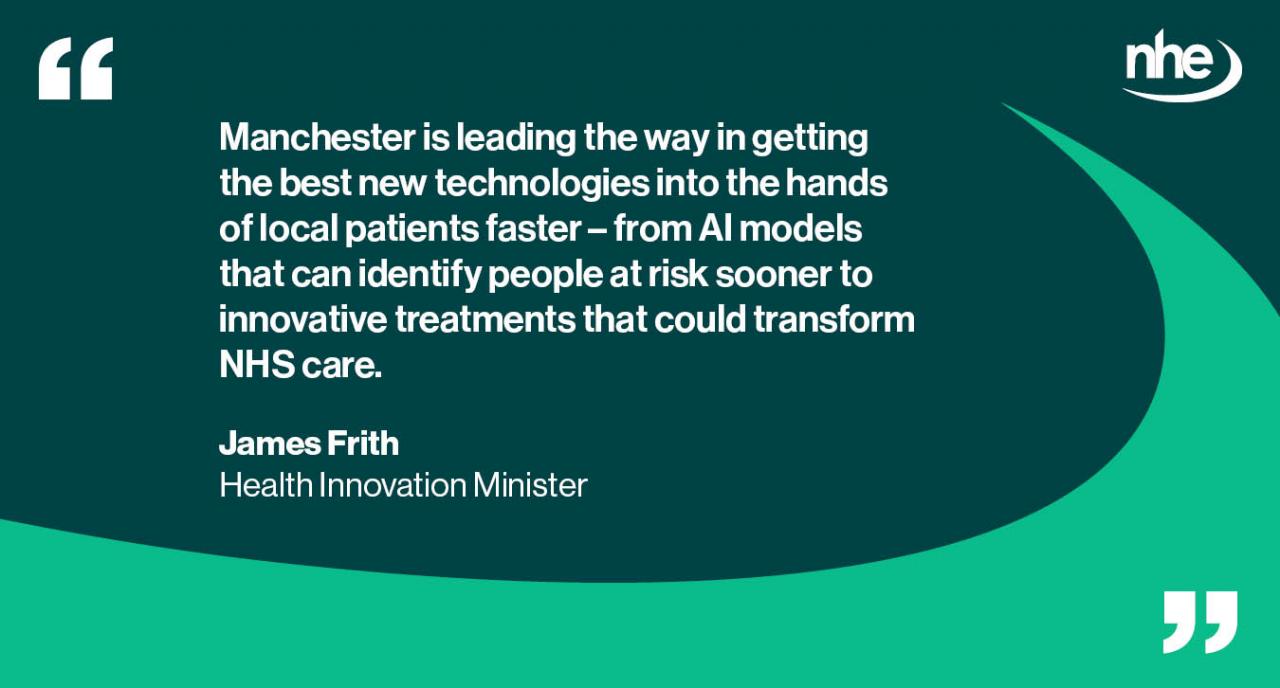
Image credit: iStock