


The Medicines and Healthcare products Regulatory Agency has approved lenacapavir (Yeytuo) for the prevention of sexually transmitted HIV‑1 infection in adults and adolescents. The medicine offers a new long‑acting option for reducing the risk of HIV‑1 transmission.
Lenacapavir works by interfering with the virus’s ability to multiply and spread within the body if exposure occurs. It does this by binding to the outer layer of the HIV‑1 virus, preventing the virus from completing essential stages of its replication cycle. The treatment is recommended for use alongside safer sex practices, such as condom use.
Lenacapavir is administered using a combination of tablets and injections. Patients receive:
- One injection every six months, and
- For the first dose only, two days of oral tablets.
This twice‑yearly injection schedule offers an alternative to existing HIV prevention methods, some of which require daily tablets or more frequent dosing.
A full list of potential side effects will be available in the Patient Information Leaflet (PIL) and the Summary of Product Characteristics (SmPC) on the MHRA website within seven days of approval.
Patients who think they may be experiencing side effects are advised to contact a doctor, pharmacist or nurse.
The MHRA’s Interim Executive Director of Healthcare Quality and Access, Julian Beach, said:
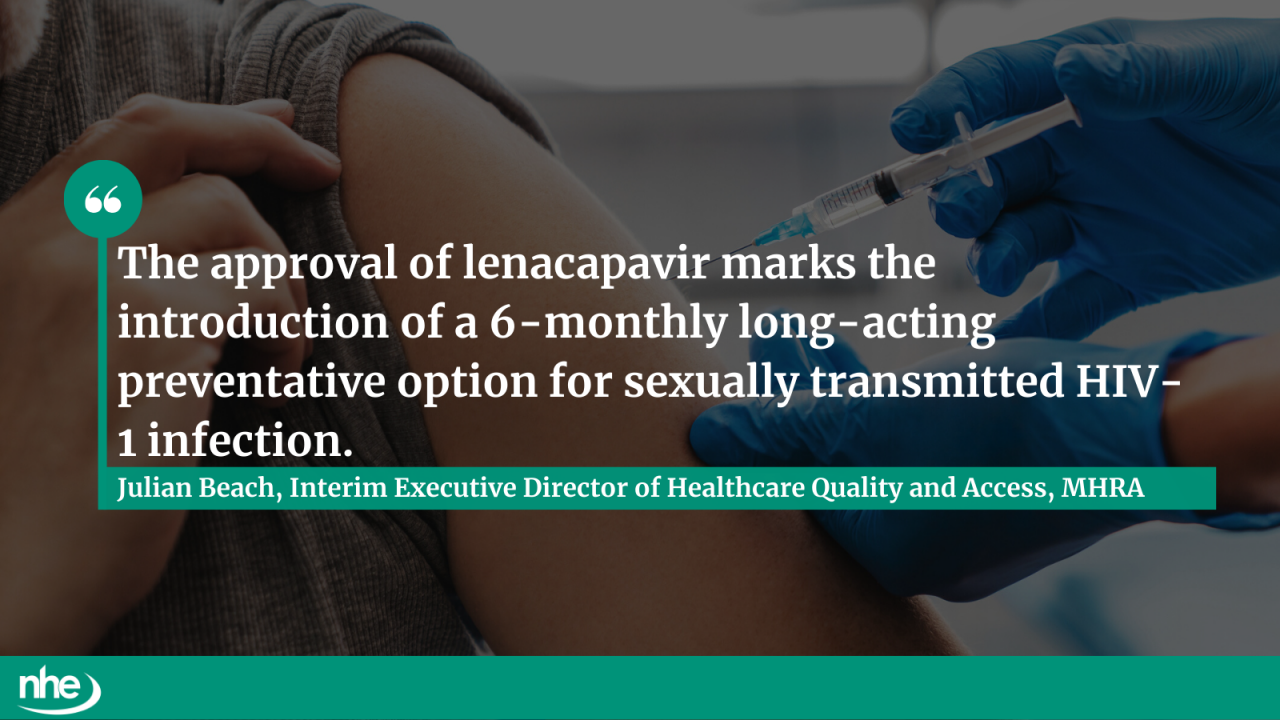
“The approval of lenacapavir marks the introduction of a 6-monthly long-acting preventative option for sexually transmitted HIV-1 infection.
“Blocking the virus from multiplying if exposure occurs, lenacapavir offers an additional choice alongside existing safer sex practices.
“As with all licensed medicines, we will continue to monitor its safety and effectiveness closely as it becomes more widely used.”
Lenacapavir has been placed under additional safety monitoring, allowing new information about potential adverse reactions to be identified quickly. The MHRA is encouraging healthcare professionals and the public to report any suspected side effects to support ongoing assessment of the medicine’s benefit–risk balance.
The approval marks an important step in expanding HIV prevention options across the UK, with long‑acting formulations expected to play a growing role in supporting public health.
Image credit: iStock