

A new one‑year pilot in West Kent is improving access to mental health support for people affected by domestic abuse by embedding mental health professionals directly within frontline domestic abuse services.
The initiative is being delivered by Kent and Medway Mental Health NHS Trust, in partnership with Maidstone Borough Council, and is funded by the West Kent Health and Care Partnership.
The pilot was developed after partners identified that many survivors of domestic abuse face significant barriers when trying to access mainstream mental health services.
Factors such as fear, stigma, cultural differences and previous negative experiences can make it difficult for people to seek help, often leaving mental health needs unmet until crisis point. The project aims to reduce these inequalities by bringing support into environments where survivors already feel safer accessing help.
As part of the pilot, members of the Mental Health Together workforce from Kent and Medway Mental Health NHS Trust are embedded within the established domestic abuse drop‑in hub at Trinity House in Maidstone town centre.
The drop‑in operates every Tuesday from 9.30am to 11.30am and brings together a range of statutory and voluntary sector organisations, allowing people to access multiple forms of support in one place.
Community Mental Health Practitioners attend the hub on alternate Tuesdays, offering confidential information, advice and immediate mental health support.
A key feature of the pilot is its flexible approach, designed specifically to improve access.
People attending the drop‑in can self‑refer to mental health support, removing the need for formal referral routes that can delay or deter access. This ensures help is available at the point it’s needed, in a way that feels accessible and non‑judgemental.
To reach those unable to attend the drop‑in, mental health staff also visit domestic abuse safe houses in Maidstone, ensuring residents can access support regardless of their circumstances.
Through this embedded approach, mental health professionals can provide immediate signposting, complete e‑referrals, and carry out full mental health assessments where appropriate.
Assessments can form the starting point for an ongoing care plan, with support including individual sessions, group interventions and referrals to other services within the Mental Health Together programme.
The emphasis is on early identification and swift connection to appropriate support, helping prevent issues from escalating.
Partners involved in the pilot also hope the approach will help reduce mental health crises, including avoidable attendances at emergency departments, by offering support earlier and in a more trusted setting.
By intervening sooner, the project aims to improve wellbeing while reducing pressure on urgent and emergency services.
Early feedback from the pilot indicates that the approach is proving effective, with more people coming forward for mental health support than previously seen through traditional routes.
Partners say embedding mental health professionals within domestic abuse services has helped reduce fear and stigma, enabling more open conversations and earlier help‑seeking.
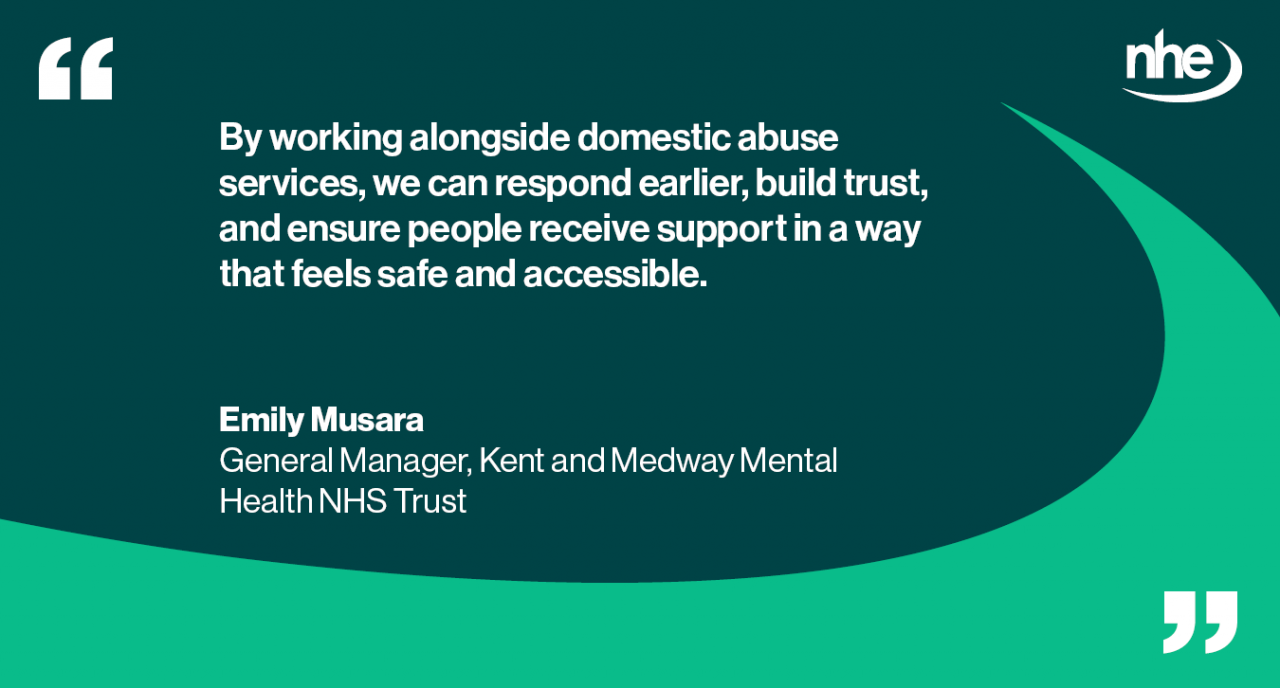
Emily Musara, General Manager at Kent and Medway Mental Health NHS Trust, said:
“This pilot allows us to take mental health support out of traditional clinical settings and into trusted community spaces. By working alongside domestic abuse services, we can respond earlier, build trust, and ensure people receive support in a way that feels safe and accessible.”
The pilot reflects a shared commitment across health, local government and voluntary sector partners to deliver coordinated, compassionate and trauma‑informed care for people experiencing domestic abuse.
By meeting individuals where they are and integrating services more closely, partners hope the project will demonstrate a model that could be sustained or expanded in the future.
Image credit: iStock