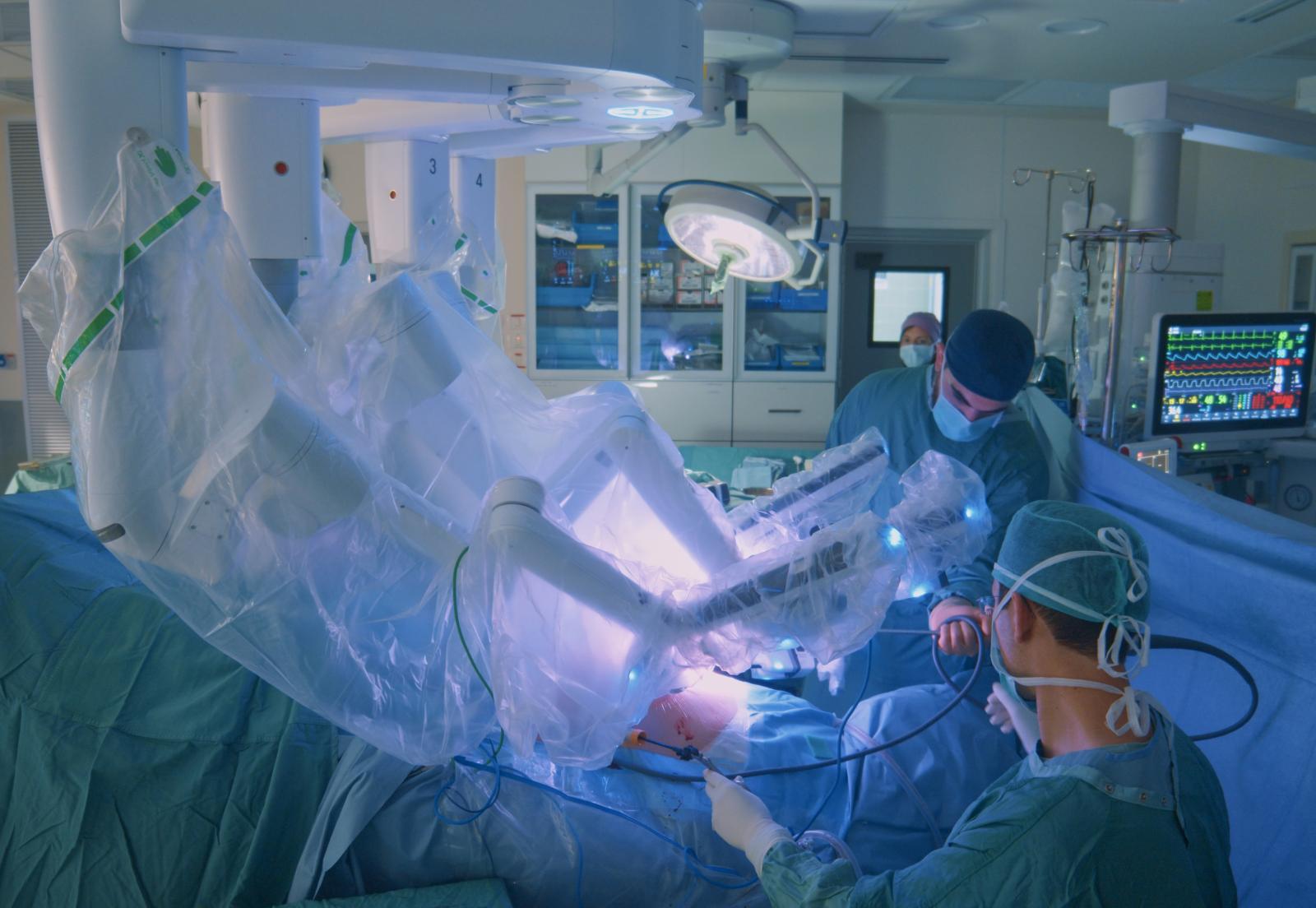

Patients in Hertfordshire are set to benefit from one of the most advanced robotic surgery systems ever introduced in the NHS, with the new technology expected to reduce recovery times, improve outcomes, and increase the number of operations available.
The cutting‑edge Intuitive DV5 robotic platform has been introduced at West Hertfordshire Teaching Hospitals NHS Trust, marking a significant step forward in surgical innovation and patient care.
The new robotic system allows surgeons to operate with greater precision and control, reducing the amount of force applied during procedures and minimising damage to surrounding tissues.
This improved accuracy is expected to:
- Reduce surgical complications
- Lower levels of post‑operative pain and trauma
- Enable patients to recover more quickly
For some procedures, including complex operations such as bowel cancer surgery, patients may be able to return home in as little as 24 hours.
Following surgery, patients can be monitored remotely through the Trust’s Virtual Hospital, using wearable technology to track key health indicators.
This approach helps reduce hospital stays while ensuring patients continue to receive safe, continuous care at home, addressing one of the major concerns for patients — recovery time.
The new system is also expected to improve operational efficiency across the Trust.
With faster and more streamlined procedures, the technology could enable the Trust to carry out around 200 additional operations each year, helping reduce waiting lists and improve access to treatment.
The Intuitive DV5 robot offers a range of advanced capabilities, including:
- 10,000 times more computing power than previous models, enabling more efficient procedures
- A high‑definition 3D imaging system, providing a detailed and magnified view of the surgical site
- Enhanced depth perception and precision, supporting complex surgical tasks such as dissection and suturing
These features help surgeons perform procedures with greater confidence and accuracy, ultimately improving patient outcomes.
The system also enables real‑time collaboration, allowing surgeons anywhere in the world to observe procedures and provide specialist input in particularly complex cases.
In addition, the platform supports training and education, with a dual‑console system that allows trainees to work alongside experienced surgeons, improving learning and skill development.
The introduction of the new system at Watford General Hospital will also allow an existing robotic unit to be relocated to St Albans City Hospital.
This will support high‑volume day‑case procedures, such as:
- Hernia repairs
- Gall bladder removals
This redistribution of equipment will help expand access to minimally invasive surgery across the Trust’s sites.
In a further development, the Trust is believed to be the first in the UK to invest in robotic surgery technology specifically for use within its Emergency Department (ED).
This means patients requiring urgent procedures – such as those presenting with bowel cancer – can benefit from robotic surgery, rather than waiting for scheduled treatment.
The investment supports the government’s 10 Year Health Plan, with a focus on modernising services, improving outcomes and increasing efficiency through innovation.
West Hertfordshire Teaching Hospitals NHS Trust serves a population of more than 600,000 people, and leaders say the expanded robotic surgery programme will play a key role in delivering high‑quality care at scale. Colorectal Surgeon and Leader of the Trust’s robotic programme, Dr Vanash Patel, said:
“What patients care most about is when they’ll be able to get back to normal after surgery.
“The fatigue and tiredness from an operation for can last up to two months in some cases, and that creates uncertainty and stress for many patients who worry about when they can get back to work and effectively restart their lives again.
“This new system will support faster patient recovery, increase the number of operations we carry out and lead to fewer complications. That’s fantastic news for patients and the surgeons caring for them.”
The introduction of the DV5 system represents a significant advancement in how surgery is delivered within the NHS.
By combining precision technology, digital monitoring and improved training capabilities, the system is expected to:
- Enhance patient recovery and experience
- Improve clinical outcomes
- Increase surgical capacity across the Trust
For patients, the benefits are clear: less invasive procedures, shorter hospital stays and a faster return to normal life.
With the technology now in place and already being used, Hertfordshire patients are among the first in the UK to experience the next generation of robot‑assisted surgery, marking a major step forward in modern healthcare.
Image credit: iStock