

A landmark decision by the National Institute for Health and Care Excellence (NICE) has cleared the way for the NHS to offer the first disease-modifying treatment for type 1 diabetes – marking a pivotal moment for patients and clinicians alike.
Teplizumab, also known as Tzield and developed by Sanofi, has been recommended in final draft guidance issued on Tuesday 23 June 2026. The therapy has been shown to delay the onset of symptomatic type 1 diabetes by an average of nearly three years, offering a crucial window before lifelong disease management begins.
England becomes the first country in Europe to back teplizumab via a health technology appraisal, underlining the NHS’s commitment to early intervention and innovation.
The treatment is intended for children aged eight and over, as well as adults diagnosed with stage 2 (pre-symptomatic) type 1 diabetes. By delaying progression to stage 3, individuals can gain valuable time before insulin dependency and the demands of daily disease management begin.
This is particularly significant for younger patients, giving them additional years to reach important developmental milestones.
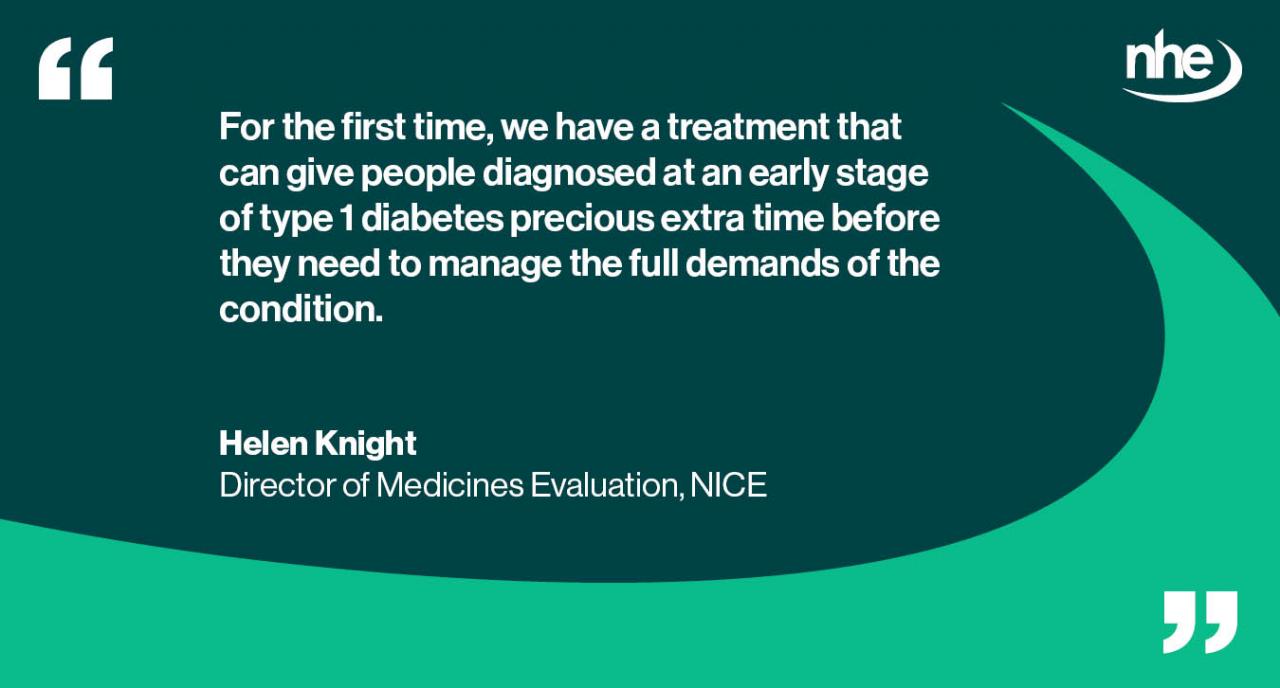
Helen Knight, Director of Medicines Evaluation at NICE, said:
“This is a genuinely exciting recommendation. For the first time, we have a treatment that can give people diagnosed at an early stage of type 1 diabetes precious extra time before they need to manage the full demands of the condition.
"The evidence shows teplizumab can delay the onset of symptomatic diabetes by an average of nearly three years. As always, our decision is rigorous, transparent and based on the best available evidence, striking a balance between clinical benefit and value for the taxpayer.
"We're pleased to be able to recommend it for NHS use, and we will continue to scan the horizon for further innovations so we can continue to get the best care to patients as quickly as possible."
The recommendation is based on findings from the TN-10 clinical trial, involving 76 participants with stage 2 type 1 diabetes and a family history of the condition. The study demonstrated that teplizumab delayed the onset of symptoms by approximately 32 months.
The therapy is administered intravenously over a 14-day course, requiring daily hospital visits of at least 30 minutes per session. While NICE acknowledged potential logistical challenges, particularly travel and accessibility, this remains a one-off treatment rather than an ongoing therapy.
NICE estimates that:
- Around 1,100 patients will be eligible in the first year, with approximately 555 expected to take up treatment
- From year three, eligibility will stabilise at around 820 patients annually, with 490 likely uptake
Access will depend on early detection through screening for type 1 diabetes autoantibodies. Current UK initiatives include the ELSA study (ages 2–17), funded by Diabetes UK and Breakthrough T1D, and the T1DRA study (ages 18–70).
Patients in England are expected to access teplizumab within 90 days of NICE’s final guidance publication, while patients in Wales should gain access within 60 days.
A confidential commercial agreement between Sanofi and NHS England will ensure cost-effectiveness, aligning with NICE’s value-for-money framework.
For healthcare managers and system leaders, the introduction of teplizumab signals a shift towards preventative endocrinology, with implications for:
- Service planning (infusion capacity, outpatient logistics)
- Screening programme expansion
- Budget impact and long-term cost avoidance
- Workforce coordination across paediatrics and adult services
It also reinforces the growing importance of early-stage disease identification and stratified treatment pathways within NHS strategy.
Image credit: iStock