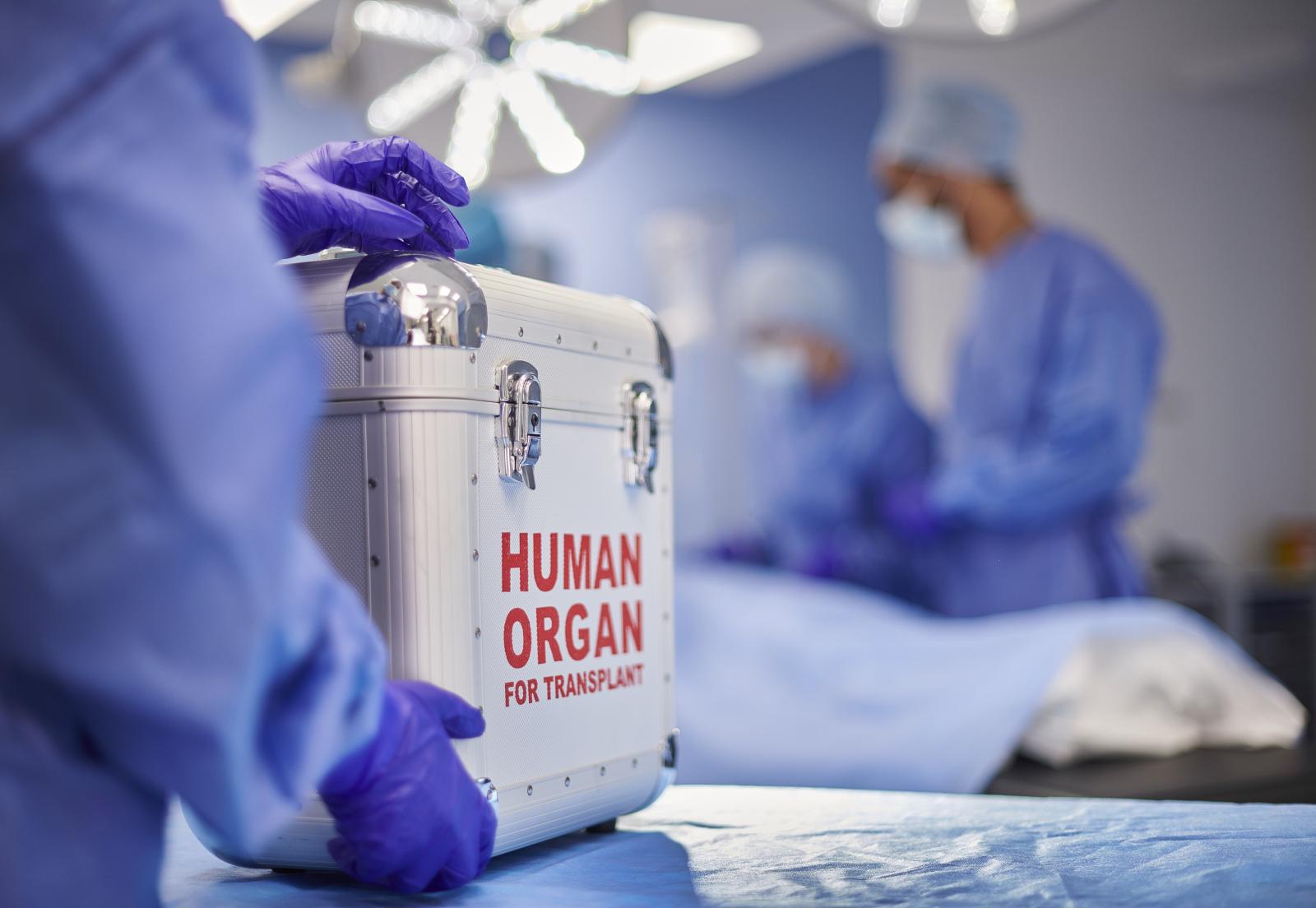

A pioneering machine that keeps donated lungs functioning outside the body has been conditionally recommended by NICE, in a move that could significantly increase the number of organs available for transplantation and save more lives across the NHS.
The XVIVO Perfusion System (XPS) has received draft backing from the National Institute for Health and Care Excellence (NICE) for a four-year managed access period, allowing the technology to be used while further clinical and economic evidence is gathered.
The recommendation comes as demand for donor lungs continues to outstrip supply. According to NHS Blood and Transplant, only 23% of lungs currently offered for transplantation meet suitability criteria and are ultimately used, leaving many potentially life-saving organs discarded.
There are currently 170 people, including six children, waiting for a lung transplant in the UK. For many patients, the wait can exceed a year, with some waiting closer to two years or longer before a suitable organ becomes available.
The XVIVO Perfusion System is designed to assess and restore donor lungs that might otherwise be considered unsuitable for transplant.
The technology warms donated lungs to normal body temperature and circulates a specialist fluid that mimics blood plasma through the organs while ventilating them to replicate natural breathing. This enables transplant specialists to evaluate lung function, treat infections, remove excess fluid and reopen collapsed areas of tissue.
By giving lungs time to recover and be reassessed, the system could substantially increase the number of organs available for transplant and improve outcomes for patients facing lengthy waits.
Evidence submitted to NICE highlighted the severe impact that prolonged waiting times can have on patients and their families.
Many people on transplant waiting lists described being unable to leave home because of infection risks, while others reported having to give up work or education entirely. Family members and carers often face significant restrictions on their daily lives, remaining constantly available and within close proximity to transplant centres in case an organ becomes available.
The consequences can be devastating. NHS Blood and Transplant data shows that among patients listed between April 2020 and March 2022, 21% of adults registered as urgent and 14% of adults registered as non-urgent died within one year of joining the waiting list before a suitable donor lung became available.
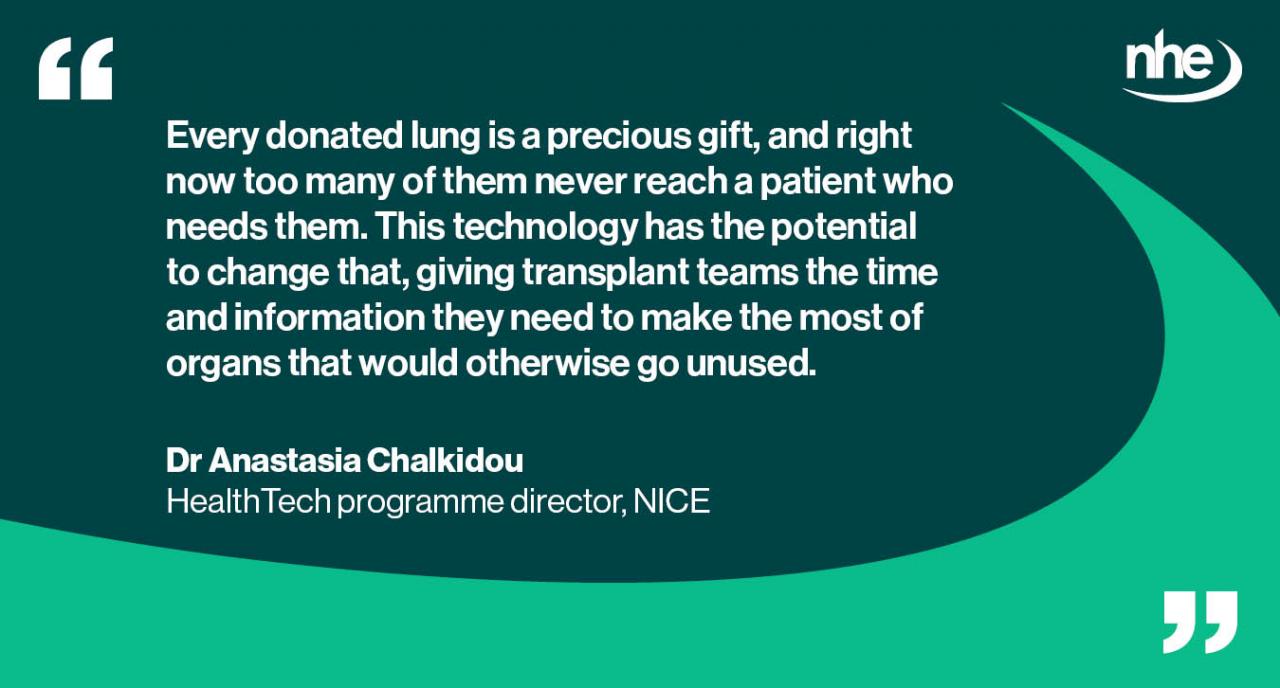
Dr Anastasia Chalkidou, HealthTech programme director at NICE, said:
“Every donated lung is a precious gift, and right now too many of them never reach a patient who needs them. This technology has the potential to change that, giving transplant teams the time and information they need to make the most of organs that would otherwise go unused.
"We know that people waiting for a lung transplant face an incredibly difficult and uncertain time. That is why we believe it is right to make this technology available to NHS patients now, while we work to build the stronger evidence base that will help us fully understand its long-term benefits and value for money.
"Our recommendation supports the NHS's wider ambition to standardise access to this technology across the country, so that where a patient is treated no longer determines whether they can benefit from a transplant.”
NICE's draft recommendation aligns with wider efforts to improve organ utilisation rates across the UK.
An independent review commissioned by the Organ Utilisation Group (ISOU) found that the UK has one of the lowest lung transplant rates among comparable nations. The review identified a range of challenges, including organ quality concerns, workforce pressures and limited theatre capacity, which can result in potentially transplantable lungs being declined.
The guidance also supports NHS Blood and Transplant's Assessment and Recovery Centre (ARC) pilot programme. Under the model, donor lungs are transported to specialist regional hubs where they can be assessed and reconditioned using machine perfusion technology before being transferred to the recipient's transplant centre.
This approach aims to provide more equitable access to advanced organ preservation technology, regardless of where patients are treated.
Currently, the XVIVO Perfusion System is available at only three of England's five specialist adult lung transplant centres. NICE believes a wider rollout could help standardise access, improve efficiency and maximise the use of every suitable donor organ.
The draft guidance is open for public consultation until 17 August 2026, with NICE encouraging healthcare professionals, patients, charities and other stakeholders to submit their views through the NICE website.
Final guidance is expected to be published in October 2026.
Image credit: iStock