


NICE Chairman Sharmila Nebhrajani has announced that Professor Jonathan Benger CBE will become the organisation’s next chief executive, taking up the role on the 19th December 2025.
He succeeds Dr Samantha Roberts, who has led NICE during a period of significant transformation.
Professor Benger joined NICE in January 2023 as chief medical officer and has since held senior leadership positions, including interim director of the Centre for Guidelines and deputy chief executive. His appointment brings extensive experience in national health policy and digital transformation, with previous roles including interim chief clinical information officer at NHS England and chief medical officer at NHS Digital.
Alongside his executive responsibilities, Professor Benger continues to practise as a consultant in emergency medicine at the Bristol Royal Infirmary and undertakes shifts with the Great Western Air Ambulance, the charity he helped to establish.
He steps into the role at a pivotal moment, as NICE prepares for major new responsibilities under the government’s 10 Year Health Plan for the NHS. From April 2026, NICE will begin delivering a series of significant reforms that will shape the future of access to medicines, health tech and clinical care pathways.
Under the new approach, NICE will begin evaluating high‑impact health technologies that meet the NHS’s most urgent needs. Technologies deemed effective and good value will be reimbursed and made available across the NHS, mirroring the process used for medicines. This change is designed to ensure patients have fairer, faster access to diagnostics, digital tools and medical devices, while offering developers a clearer and more coordinated route into the health system.
NICE will work more closely with the Medicines and Healthcare products Regulatory Agency (MHRA) to accelerate patient access to new treatments. By coordinating regulatory and value‑for‑money assessments, decisions will be made simultaneously – enabling medicines to reach patients three to six months sooner.
From April 2026, NICE will also continually re-evaluate clinical pathways to ensure the NHS gets the best value from existing treatments and technologies. This includes identifying older interventions that no longer represent good value, freeing up budgets for innovative therapies, and giving clinicians clearer guidance on which treatments to use first.
Professor Benger’s appointment ensures continuity and strategic leadership as NICE prepares to take on these expanded responsibilities. His blend of national policy expertise, digital innovation leadership and frontline clinical experience positions him to guide NICE through one of the most significant modernisations in its history.
Commenting on his appointment, Professor Benger said:
“I'm honoured to be appointed as NICE's new chief executive at such an important time for the NHS and for healthcare innovation. NICE plays a vital role in helping practitioners and commissioners get the best care to people fast, while ensuring value for the taxpayer. As we face growing healthcare demand and the rapid development of new medical technologies, our work has never been more important.
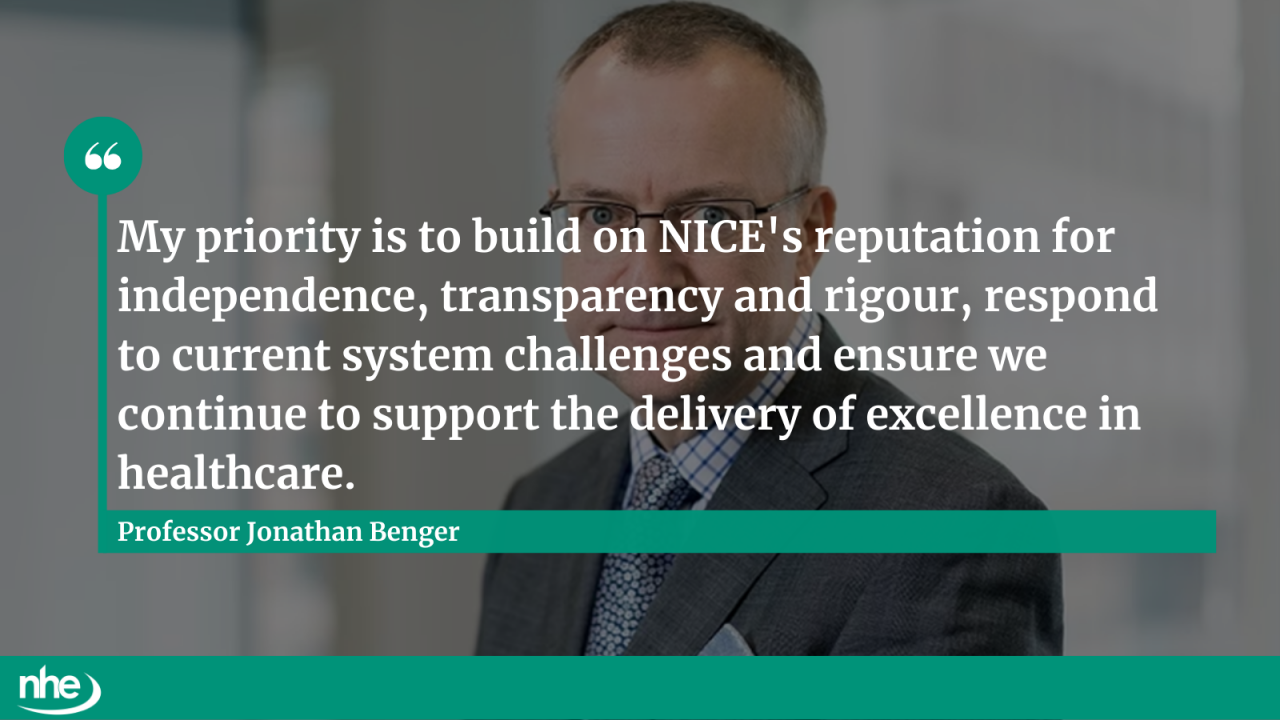
“I'm excited about the significant expansion of NICE's role outlined in the government's 10 Year Health Plan. I've seen first hand, both as a doctor in emergency medicine and in my work across the wider NHS, how the right guidance at the right time can transform patient care. My priority is to build on NICE's reputation for independence, transparency and rigour, respond to current system challenges and ensure we continue to support the delivery of excellence in healthcare."
Image credit: National Institute for Health and Care Excellence