
Hundreds of people living with blood cancer could gain access to new treatment options after NICE recommended the use of acalabrutinib for both newly diagnosed mantle cell lymphoma and chronic lymphocytic leukaemia.
The recommendations, announced today, are expected to benefit around 790 patients across England, providing new first-line treatment options that could extend the time before disease progression and offer greater flexibility for patients managing treatment alongside daily life.
In final draft guidance, NICE has recommended acalabrutinib in combination with bendamustine and rituximab as a treatment option for around 350 adults with previously untreated mantle cell lymphoma who are not eligible for a stem cell transplant.
Mantle cell lymphoma is a rare and aggressive form of non-Hodgkin lymphoma. While current treatments can control the disease, it remains incurable and is characterised by frequent relapse. Many patients are diagnosed at an advanced stage when intensive treatments such as stem cell transplantation are no longer suitable.
Clinical evidence reviewed by NICE showed that adding acalabrutinib to bendamustine and rituximab increased progression-free survival to 72.5 months, compared with 47.8 months for standard treatment alone, representing a significant improvement for patients with limited treatment options.
During the appraisal process, a patient expert highlighted the emotional impact of a diagnosis of incurable cancer and the importance of accessing the most effective treatment from the outset.
The committee heard that increasing the range of available first-line treatments could help patients feel more confident about managing their condition and potentially delay disease relapse.
NICE has also recommended acalabrutinib in combination with venetoclax, without obinutuzumab, for adults with untreated chronic lymphocytic leukaemia, with around 440 patients expected to benefit.
CLL is the most common form of adult leukaemia in England. Although it typically progresses slowly, it can have a considerable impact on patients' physical health, emotional wellbeing and quality of life.
Evidence from the AMPLIFY trial demonstrated that the acalabrutinib and venetoclax combination improved both progression-free survival and overall survival when compared with standard chemoimmunotherapy.
Unlike some existing treatments, the combination is taken orally, avoiding the need for intravenous infusions. This may reduce the number of hospital appointments required and allow patients to integrate treatment more easily into work, family and everyday activities.
Clinical experts advising the committee said the treatment was generally well tolerated and could be suitable for a broad patient population, including older and fitter individuals.
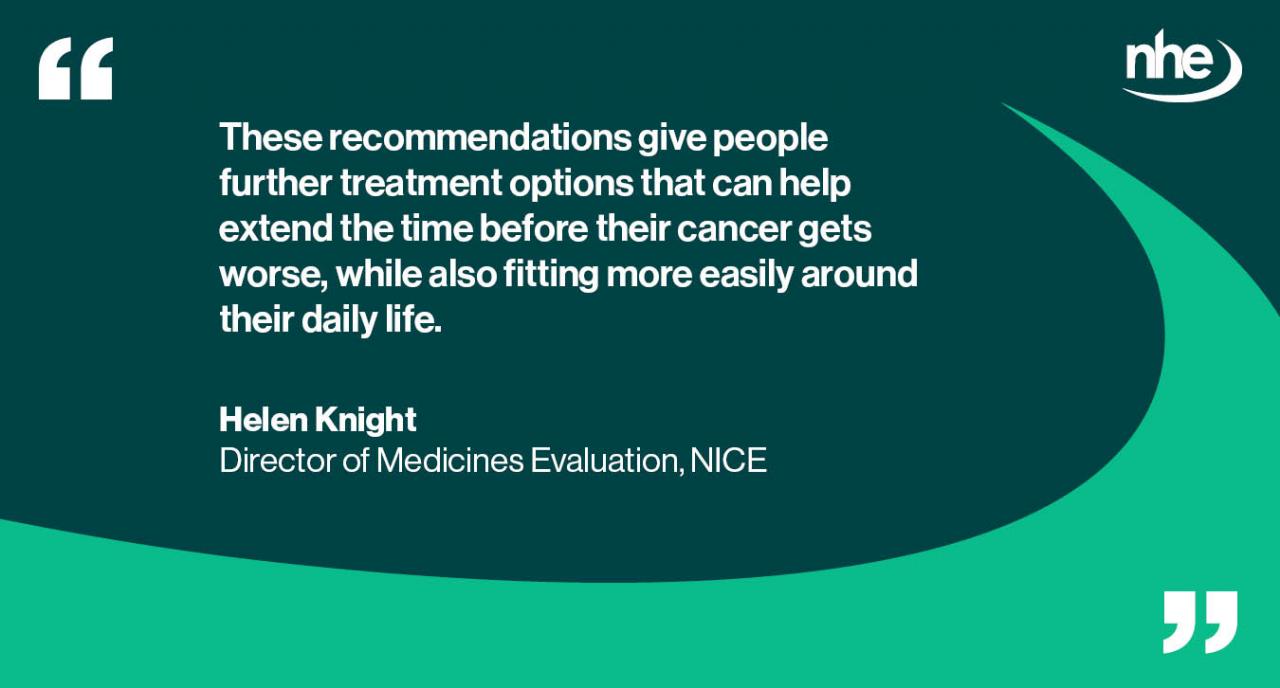
Commenting on the recommendations, Helen Knight, Director of Medicines Evaluation at NICE, said:
"Being diagnosed with mantle cell lymphoma or chronic lymphocytic leukaemia can have a profound physical and psychological impact on people and their families.
"People tell us about the anxiety of waiting to see if a treatment will work, and what might come next. These recommendations give people further treatment options that can help extend the time before their cancer gets worse, while also fitting more easily around their daily life."
The latest recommendations reinforce NICE's commitment to ensuring patients can access innovative treatments that deliver meaningful clinical benefits while supporting quality of life. For both MCL and CLL patients, the approvals offer new opportunities to delay disease progression and expand frontline treatment choice.
Image credit: iStock