

Thirty additional Academic Clinical Fellowship posts will be created in England next year under a joint investment from the National Institute for Health and Care Research and NHS England, giving more resident doctors the opportunity to combine clinical training with research.
The new posts are being introduced as part of the 4,500 additional resident doctor training places secured through the June 2026 pay agreement. Successful applicants will begin their three-year fellowships in August 2027.
The expansion is designed to strengthen the UK's clinical academic workforce and support the development of future research leaders capable of translating scientific discoveries into improved patient care, NHS performance and economic growth.
Boosting Clinical Research Capacity
The additional fellowships will become part of the NIHR Academic Clinical Fellowship programme, a cornerstone of the Integrated Academic Training (IAT) pathway delivered through a partnership between NIHR, NHS England and higher education institutions.
The programme enables resident doctors to dedicate protected time to developing research skills while continuing their clinical training, helping to build careers that bridge frontline medicine and academic research.
The announcement supports priorities set out in the NIHR's research workforce strategy for England and recommendations from three reports produced by the Office for Strategic Coordination of Health Research (OSCHR).
Professor Lucy Chappell, Chief Scientific Adviser at the Department of Health and Social Care and Chief Executive of the NIHR, said:
"Clinical academics play a vital role in bridging research and frontline practice, evaluating new diagnostics, treatments and pathways to drive improved health outcomes for patients and the public. Expanding these fellowship opportunities builds the robust research capacity that our health system needs.
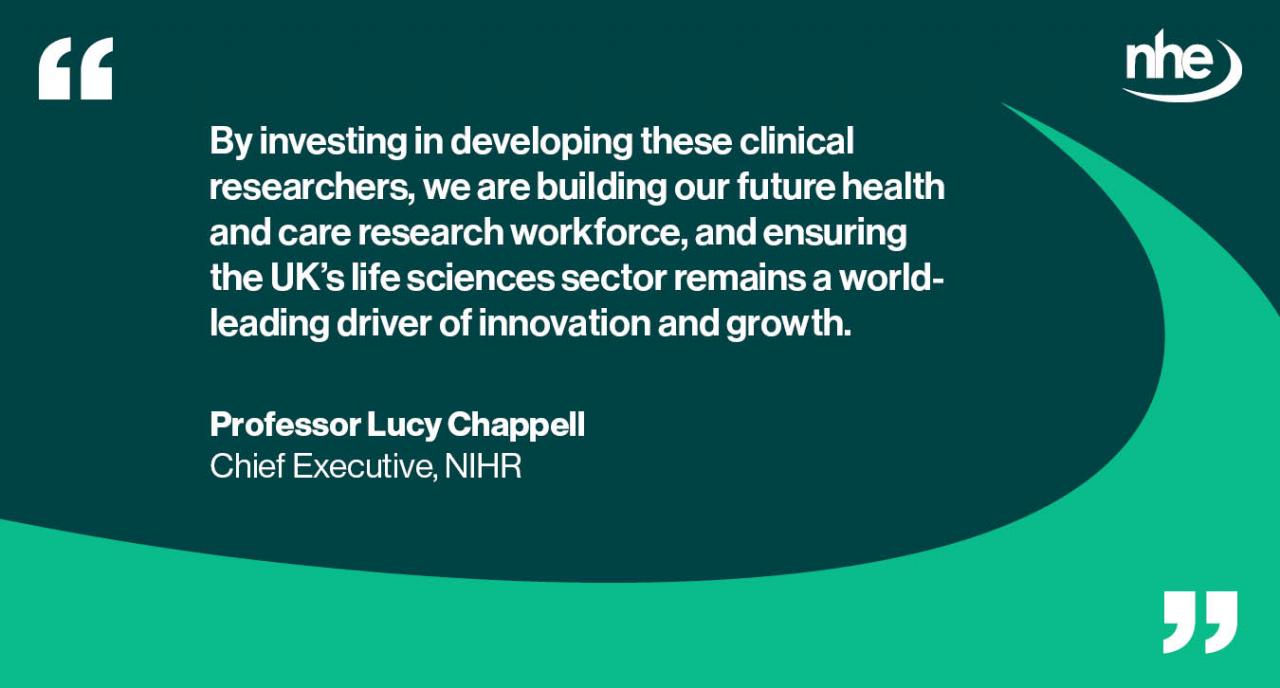
"By investing in developing these clinical researchers, we are building our future health and care research workforce, and ensuring the UK’s life sciences sector remains a world-leading driver of innovation and growth."
Why Clinical Academics Matter
Clinical academics occupy a unique position across healthcare, research and education. Working directly with patients while conducting research allows them to identify unmet clinical needs and develop solutions that improve care.
Their work helps evaluate emerging treatments, diagnostics and care pathways, ensuring innovation is grounded in everyday clinical practice and reaches patients more quickly.
By linking frontline experience with scientific discovery, they play a crucial role in:
- Improving patient outcomes
- Accelerating the adoption of innovation
- Embedding research into routine healthcare
- Strengthening evidence-based decision making
- Supporting NHS workforce development
Their contribution is also central to delivering the Government's 10-Year Health Plan for England, which seeks to create a health and care system capable of generating evidence, evaluating innovation and translating research into real-world patient benefits.
Building on Two Decades of Success
Over the past 20 years, NIHR has funded more than 5,000 Academic Clinical Fellows, supporting doctors and dentists in developing careers that combine patient care with research.
The latest investment reflects NIHR's long-term ambition to strengthen clinical academic career pathways, support progression into research leadership roles and ensure healthcare professionals can pursue research careers at every stage of their development.
By expanding opportunities for resident doctors to enter academia, the programme aims to build the expertise, leadership and research capacity needed to meet future healthcare challenges.
Supporting NHS Innovation and Better Patient Outcomes
As healthcare systems face growing demand, workforce pressures and rapid technological change, clinical academics are increasingly seen as essential to driving innovation and improving care quality.
The additional fellowship posts are expected to contribute to:
- Better patient outcomes
- Faster adoption of medical innovation
- Stronger links between research and frontline care
- Greater NHS productivity and efficiency
- A more resilient future health and care system
The investment represents a further step towards embedding research at the heart of clinical practice while ensuring the NHS continues to benefit from a pipeline of highly skilled clinician-researchers.
Image credit: iStock