

The National Institute for Health and Care Research has published its Annual Report for 2025/26, marking two decades of reshaping the UK’s health and social care research landscape. The report highlights significant gains in economic impact, research inclusion, and cutting-edge innovation across the NHS.
Record investment delivers strong economic returns
In 2025/26, the Department of Health and Social Care invested £1.7 billion into NIHR-supported research – an increase of 5% (£84 million) on the previous year. The impact of this funding is substantial, with NIHR activity generating over £13 for every £1 invested.
Early estimates suggest NIHR-funded and supported research contributed £8.8 billion in Gross Value Added to the UK economy and helped sustain 111,845 jobs nationwide. This reinforces the role of health research as a key economic driver while delivering tangible benefits to patient care.
Driving impact across the NHS
Throughout the year, NIHR aligned its research priorities with major national strategies, including the 10-Year Health Plan, the Life Sciences Sector Plan and the National Cancer Plan. This work continues to support the NHS transition towards prevention, community-based care and digital transformation.
Key breakthroughs include:
- Kidney disease treatment advances: Research in Newcastle found that most patients with a rare kidney condition can safely discontinue an expensive drug after six months – saving the NHS more than £110 million over five years while reducing side effects.
- Earlier lung cancer diagnosis: A community screening programme in Manchester using mobile units in deprived areas cut late-stage lung cancer diagnoses by 22%, helping shift care towards earlier, more treatable stages.
- Eczema care clarity: A patient-led study involving 438 participants challenged longstanding advice by confirming that daily bathing does not worsen eczema symptoms, offering reassurance to millions.
Nurturing inclusion in research
The report places strong emphasis on participation and representation, strengthening the evidence base across diverse populations.
A major milestone was the launch of the NIHR’s Sex and Gender in Research Policy, ensuring future studies consider how biological and social differences affect health outcomes.
Further investment includes:
- £50 million committed to tackling cardiovascular inequalities, particularly among older people and Black African, Black Caribbean and South Asian communities
- Growth of the Be Part of Research initiative to 702,751 registered volunteers, with 15% from historically underrepresented ethnic minority groups
- Refocusing global research efforts on health security and diseases of poverty in sub-Saharan Africa and South Asia
Powering innovation and research capacity
NIHR has also accelerated the UK’s global leadership in life sciences and health technology.
Efforts to streamline clinical research processes have reduced average commercial trial set-up times to 122 days. Meanwhile, 707 new commercially sponsored studies were added to the NIHR portfolio, the highest number in a decade, alongside 100 international recruitment firsts.
Emerging technologies supported include:
- AI-powered “SmartSocks” to detect early dementia indicators in adults with Down Syndrome
- The AI Research Screening Platform (AIR-SP), backed by nearly £6 million, to speed up cancer diagnosis across the NHS
In addition, investment in training and career development rose by 30% (£71 million), supporting over 10,400 researchers and strengthening the future workforce.
Professor Lucy Chappell, CEO of the NIHR, said:
"This year’s annual report showcases the best of the NIHR: delivering research that improves lives whilst strengthening the UK’s economy.
"We are very proud of our researchers, research participants, patients and public involvement communities who bridge the gap between world-class science and frontline health and care.
"In our 20th anniversary year, we reflect on the impact NIHR has had on research on a global stage and its role in making the UK a world leader for life sciences. We look to the next 20 years with excitement as we continue to innovate, invest, deliver impact and champion inclusion.”
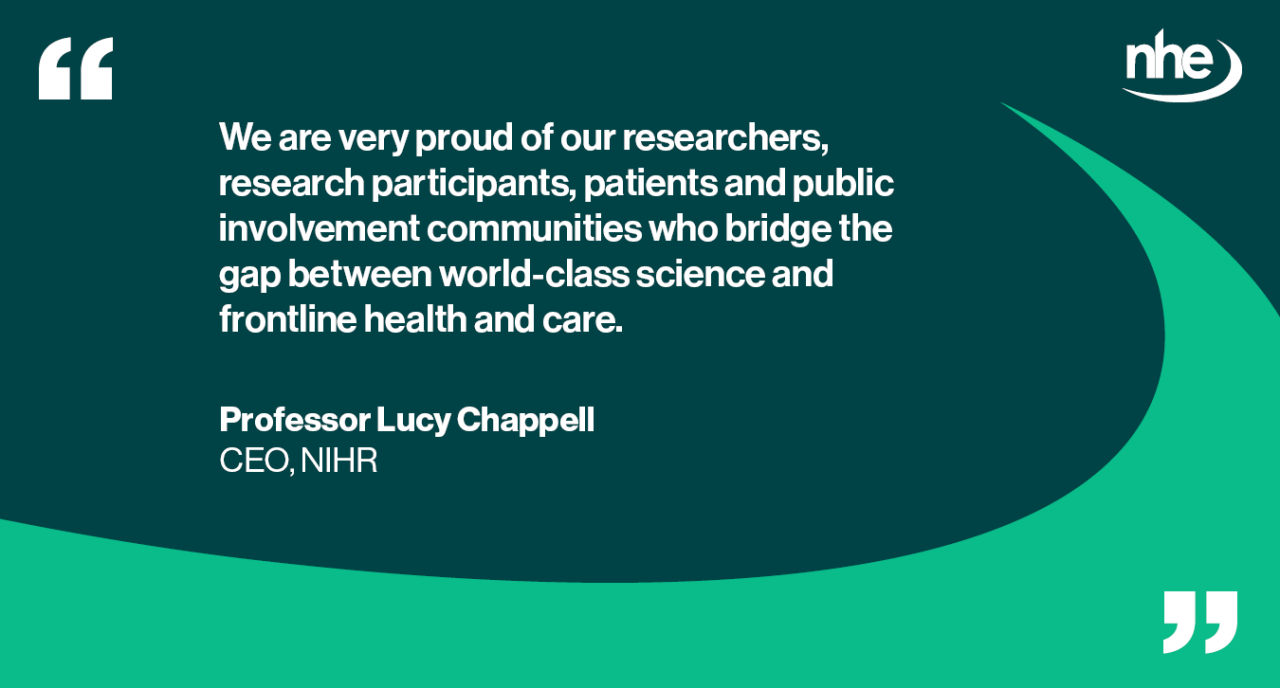
Image credit: iStock