

The National Institute for Health and Care Research is investing nearly £55 million in five new Mental Health Research Groups, marking a major expansion of its flagship mental health research programme.
The move brings the NIHR’s mental health research pipeline close to full capacity and represents a significant commitment to reducing longstanding regional inequalities in mental health care and research.
The additional MHRGs will focus on areas of England with a high burden of mental ill‑health and historically limited research capacity. According to the Mental Health Foundation, people living in England’s most deprived communities are 64% more likely to experience a common mental health disorder than those in the least deprived – highlighting the urgent need for targeted, community‑embedded research.
The regions selected for funding experience higher levels of suicide, severe mental illness and deprivation. The new MHRGs will work directly with communities that are often under‑represented in research, including:
- Mothers and parents
- Rural and coastal communities
- People with intellectual disabilities
- Individuals with complex emotional needs
- Groups who frequently “fall through the gaps” in local services
All projects had to demonstrate meaningful collaboration with local residents, patient groups and stakeholders to ensure research priorities reflect real‑world challenges.
Launched in 2023 under the Mental Health Research Initiative, the MHRG programme aims to establish up to ten long‑term research hubs across England. Each MHRG can receive up to £11 million over five years, with funding targeted at areas with high mental health need, limited research infrastructure, and low historic engagement in mental health studies.
Two initial MHRGs were awarded in 2024 at the University of Bath and the University of Hull. Alongside these early hubs, NIHR issued Leadership and Development Awards to build wider capacity for future bids.
Lucy Chappell, NIHR Chief Executive Officer, said:
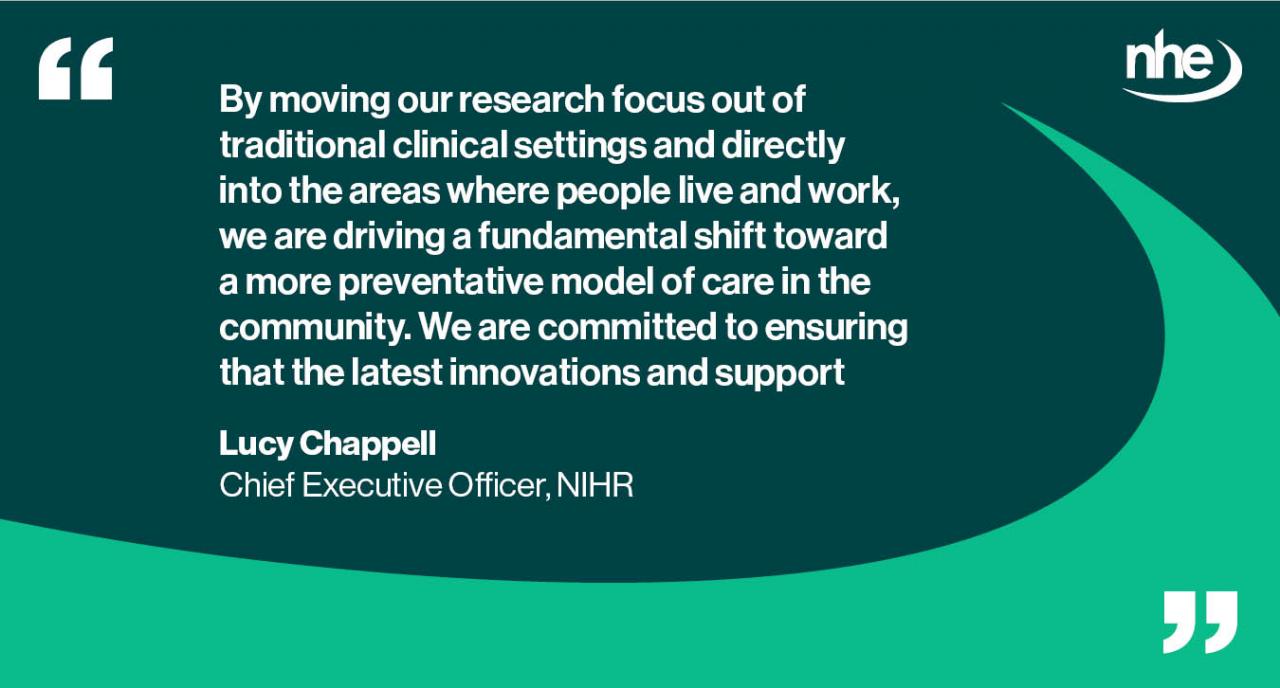
“Mental health challenges can be isolating, especially for people in some of our most under-served regions. Community allows us to tackle isolation. By moving our research focus out of traditional clinical settings and directly into the areas where people live and work, we are driving a fundamental shift toward a more preventative model of care in the community. We are committed to ensuring that the latest innovations and support reach those who need it most, long before they reach a crisis point.”
With the new awards, a total of seven MHRGs have now been confirmed – a significant milestone in transforming mental health research access and capability across England.
- University of Plymouth (South West)
In partnership with the University of Exeter and King’s College London, the Plymouth MHRG will explore how to support people who fall between existing services. Initial research will focus on serious mental illness, intellectual disabilities, and university students’ mental health.
- Keele University (North West Midlands)
Partnering with the University of Birmingham and King’s College London, this MHRG will investigate how charities, GPs, community groups and local services can better support older adults, people with overlapping physical and mental health conditions, and individuals with complex emotional needs.
- University of Huddersfield (Calderdale, Kirklees & Wakefield)
Working alongside the University of Liverpool and South West Yorkshire Partnership Teaching NHS Foundation Trust, the Huddersfield MHRG will lead research grounded in lived experience to reduce local inequalities in mental health outcomes.
- University of Lincoln (Rural, Coastal & Deprived Areas)
In partnership with the University of Nottingham, this group will create a community‑led mental health hub, developing scalable models for supporting rural, coastal and small urban‑deprived populations.
- Lancaster University
Partnering with the University of Manchester and King’s College London, Lancaster will establish a Voices with Impact Hub aimed at destigmatising severe and complex mental illness. Research will focus on supporting mothers, people affected by substance misuse, individuals who rarely attend health checks or engage with services.
Once operational, all five new MHRGs will embed their teams within local communities, generating evidence that can:
- Shape future mental health services
- Influence national policy
- Improve access to support
- Strengthen the voice of under‑represented groups
NIHR Infrastructure Scientific Director, and Director of Programme Grants for Applied Research, Professor Marian Knight added:
“This investment shows the NIHR’s commitment to both improving mental health research in this country and ensuring that we are prioritising communities with limited resources and a high burden of unmet need.
“It is vital that we embed our research in local communities, so we can improve our understanding of the mental health challenges they face, and provide the best support and treatment we can to those who need it most.”
This latest round of funding is a major step towards creating a more equitable mental health research landscape – one that ensures breakthroughs benefit the people and regions that need them most.
Image credit: iStock