

The Royal College of Emergency Medicine has published new guidance aimed at helping hospitals tackle the growing problem of violence and aggression faced by Emergency Department staff across the UK.
The launch follows alarming findings from a recent survey of around 2,000 RCEM members, which revealed that 73 per cent of emergency clinicians witness or experience violence and aggression from patients or members of the public at least once a week.
The survey formed part of RCEM's ongoing Safe to Care campaign, which was launched to address increasing concerns about staff safety in emergency medicine.
Published on 30 September, the new Toolkit for the Prevention and Management of Violence in the Emergency Department provides practical, evidence-based recommendations that hospitals can implement to protect staff and create safer clinical environments.
Available free of charge through the RCEM website, the toolkit explores the key drivers behind violent incidents in EDs, outlines recommended staff training and offers a range of practical interventions for NHS organisations.
Among its recommendations are:
- Improved monitoring and violence prevention measures, including the use of body-worn video cameras
- Adoption of trauma-informed care approaches
- Development of policies covering specific patient groups, including people under arrest, adolescents, adults experiencing mental health crises and neurodiverse patients
- Stronger partnerships with hospital security teams and local police forces
- Clear written procedures to support staff who have experienced violence while at work
The guidance comes as NHS organisations continue to report significant challenges relating to overcrowding, long waiting times and increasing demand, factors often linked to escalating tensions within emergency care settings.
Dr Ian Higginson, RCEM President, said:
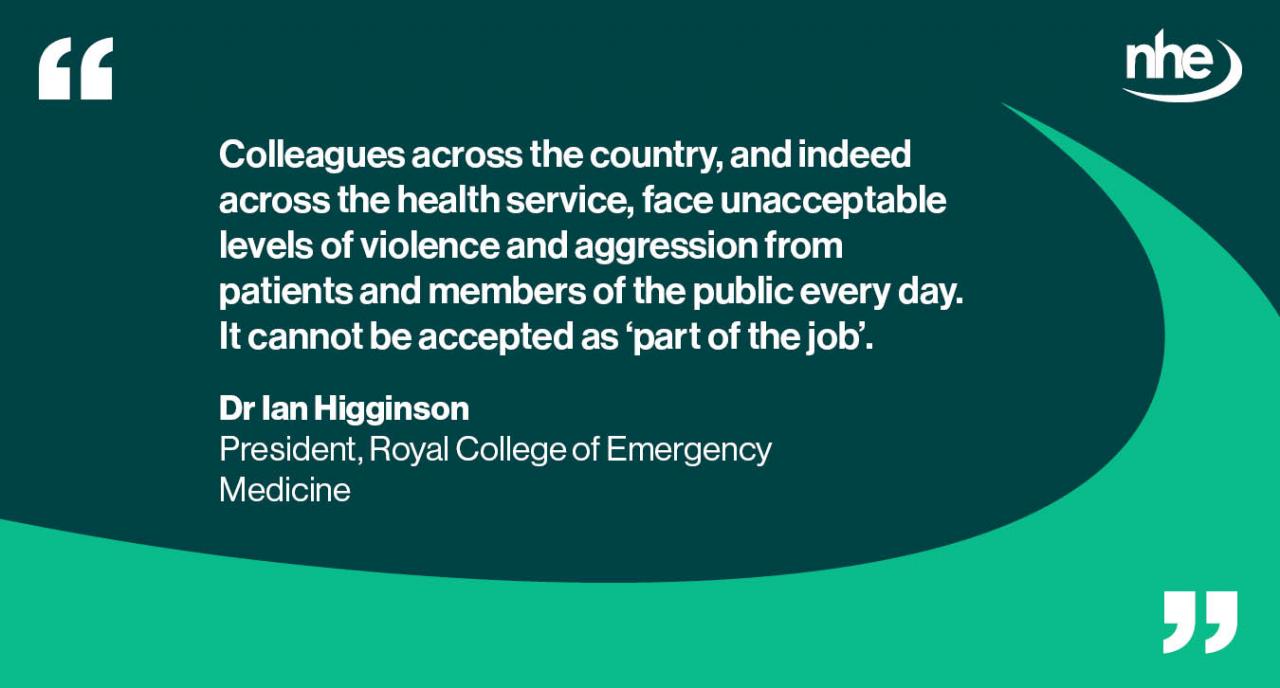
"Colleagues across the country, and indeed across the health service, face unacceptable levels of violence and aggression from patients and members of the public every day. It cannot be accepted as ‘part of the job’.
“This toolkit, available online for anyone to refer to, can be used to bring about change at the hospital level to help bring down levels of violence, monitor the issue and support those who have been impacted.
“We strongly encourage staff to read the guidance, and use it as way of informing their own approaches to this problem, and of encouraging their management teams, including CEOs, to engage with the problem with practical actions.
“However, we know that without wider support, there are a limited range of solutions available at a local level, so RCEM continues to lobby on this issue at the highest levels of government and NHS leadership to ensure structural changes are brought in to address it.”
The college hopes the toolkit will support healthcare providers in developing consistent approaches to violence prevention while ensuring staff who experience abuse or aggression receive appropriate support. RCEM says wider national action will also be required to tackle the underlying pressures contributing to violence within emergency care settings.
Image credit: iStock